What should you look for when buying?
First decide whether you’re looking for an everyday snack or something to fuel a longer ride. Then compare the nutritional information per bar. Values per 100 g can also help you compare bars of different sizes.
| Criteria |
What to check |
Who it matters most to |
| Energy and serving size |
Compare kcal per whole bar and per 100 g, and check the pack weight. |
For a modest snack after an easy ride, I want to be able to plan for the whole serving, rather than judge it by a single claim on the pack. Around 36% of consumers put the energy per serving first. |
| Carbohydrates |
Check the carbohydrates per bar against the planned duration and intensity of your ride. |
On a longer or more intense ride, I need fuel that meets my energy needs. That’s why around 29% of consumers prioritise carbohydrates and energy during a ride. |
| Protein and format |
Compare the protein per bar with its serving size and energy content. |
Between appointments or after cycling, I’m mainly looking for a portable protein snack, not a meal replacement. This is the priority for around 21% of consumers. |
| Ingredients and tolerance |
Read the ingredients list and allergen information for the specific variety. If relevant, check the protein sources and sweeteners. |
If I need to avoid certain ingredients, the recipe determines whether the bar is suitable for me. Around 14% of consumers focus primarily on this. |
Protein bars for a portion-conscious snack
This Joybuy selection includes portioned protein snacks for everyday use and around shorter rides. Check the nutritional information for the version on offer before planning to use any bar as fuel on a longer ride.
 No image available
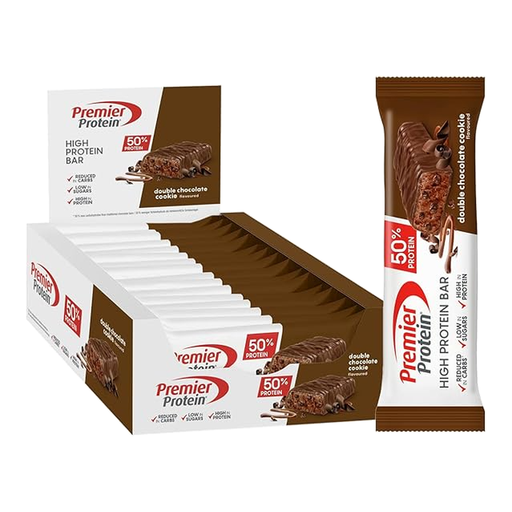
Premier Protein High Protein Bar 50% Double Chocolate Cookie, 16 × 40 g
This could work as a portioned protein snack if you want to compare the nutritional values of an individual bar with your snacking needs.
The product name specifies 16 bars at 40 g each, in the Double Chocolate Cookie flavour. Check the serving information on the pack before comparing energy or protein per bar.
View at Joybuy
 No image available
Barebells Protein Bar Cookies & Cream, 12 × 55 g
This is an option for an individually portioned snack after a short ride, provided the energy content and ingredients suit your needs.
The product name specifies 12 bars at 55 g each in the Cookies & Cream flavour. Compare the protein, carbohydrates and energy per bar when choosing.
View at Joybuy
 No image available
Barebells Vegan Protein Bar Peanut Caramel, 12 × 55 g
This is worth considering if you’re looking for a portioned snack and want to check a recipe described as vegan.
The product name specifies 12 bars at 55 g each in the Peanut Caramel flavour. Check the ingredients and allergen information for the version on offer against your requirements, and compare the energy and carbohydrates per bar.
View at Joybuy
 No image available
Power System 32% Protein Bite Power Banana, 35 g
The 35 g size is worth considering if you want to compare a small snack with the portion you need.
The product name gives banana as the flavour. Check the energy, protein and carbohydrates using the nutritional information for the version on offer. The weight alone doesn’t tell you whether it’s suitable for a longer ride.
View at Joybuy
Frequently asked questions
Is a protein bar with fewer than 200 kcal automatically ‘low in calories’?
No. According to the European Commission, the nutrition claim ‘low energy’ for solid foods requires a maximum of 40 kcal (170 kJ) per 100 g. The figure per bar alone doesn’t prove that this condition is met, although it’s still useful when comparing serving sizes.
Is a low-calorie protein bar enough to fuel a long bike ride?
Not simply because of its protein content or low energy per serving. The German Nutrition Society highlights the importance of carbohydrates in endurance sports nutrition. For longer or more intense rides, check the bar’s carbohydrates and energy in the context of the rest of your ride nutrition.
Can I replace a meal with a protein bar after cycling?
A protein bar shouldn’t be treated as a complete meal replacement. The Federal Centre for Nutrition recommends it more as an occasional snack when you’re short on time. If you’re due a meal, consider that separately from the bar.
What should I check if I have allergies or follow a particular diet?
Carefully read the ingredients list and allergen information for the exact variety you want to buy. For example, Layenberger lists milk, whey and soya protein, as well as bovine collagen hydrolysate, in its Cranberry-Cassis bar. This information shouldn’t be assumed to apply to other varieties.


