People with a set snack calorie budget
You want to plan for a sweet bar during the match and know how many kcal the portion you eat contains. As well as the figure per 100 g, the bar’s weight and the number of bars matter.


When choosing a calorie-conscious snack to enjoy while watching football, what matters most is the energy in the portion you actually plan to eat – not just the words ‘protein bar’ or a claim about no added sugar. nu3 lists the Multipower Protein Delight Bar at 142,21 kcal per 35-g bar; Barebells gives 161 kcal per 45-g bar for Chocolate Spread. As the portions are different sizes, compare the protein content and ingredients of the specific flavour too.
You want to plan for a sweet bar during the match and know how many kcal the portion you eat contains. As well as the figure per 100 g, the bar’s weight and the number of bars matter.
You’re after a chocolatey snack and want to weigh up its protein content against its energy and ingredients. A claim about no added sugar alone doesn’t tell you how many kcal a bar contains.
If you need to take ingredients such as milk, peanuts, animal collagen or sweeteners into account, check the label for each flavour individually. Allergen precautionary statements may also affect your choice.
First decide how many bars you plan to eat during the match. Then compare the nutritional information per bar and per 100 g, along with the ingredients of your chosen flavour.
| What to consider | What to check | Who it matters most to |
|---|---|---|
| Energy in your snack portion | kcal per bar, bar weight and the number of bars you plan to eat; for portions of different sizes, also compare kcal per 100 g. | If you want to set an energy limit for your snack while watching, you’ll need the figure for the portion you’ll actually eat. This is a priority for around 46% of consumers. |
| A sweet snack with protein | Protein and kcal per bar, as well as the nutritional information for sugar and fat. | You want a chocolatey bar to replace the sweet treat you had planned, without the protein claim distracting you from the rest of the nutritional information. This is a priority for around 36% of consumers. |
| Ingredients and dietary requirements | Ingredients list, highlighted allergens, precautionary statements, and information about collagen or sweeteners. | If you need to avoid certain ingredients or follow a particular diet, start by checking the specific recipe. This is the most important selection criterion for around 18% of consumers. |
A claim about added sugar doesn’t tell you how much energy is in a bar. Even a snack with this claim may contain more kcal than you want to include in your planned portion.
Check the kcal per bar and per 100 g, and treat the claim about added sugar as a separate feature.
The grams of protein alone don’t tell you how big the portion is or how much energy it contains. A bar with more protein isn’t automatically the better choice if you have a set snack calorie budget.
Compare protein and kcal for the portion you plan to eat, then check the rest of the nutritional information.
Depending on the flavour, the product ranges covered in this article may contain milk, soya, peanuts, collagen or sweeteners. Precautionary allergen statements and warnings about a laxative effect if eaten in excess may also vary by flavour.
Before buying, read the ingredients list and allergen information for the specific flavour, particularly if you’re planning to have several bars during the evening.
The nutritional information for one bar doesn’t automatically reflect your whole snack while watching football. If you eat more than one, you’ll need to account for the energy in every portion.
Decide how many you want before the match and compare products based on that amount.
Barebells offers chocolatey protein bars. For Chocolate Spread, the manufacturer lists 161 kcal and 15 g of protein per 45-g bar; these figures won’t necessarily apply to other flavours.
ESN lists 14 g of protein per 45-g bar for its Designer Bar range and promotes it as having no added sugar.
Retailer nu3 lists a 35-g serving of the Protein Delight Bar at 142,21 kcal and 11,9 g of protein. Check the label for your chosen flavour before making your choice.
These protein bars could make handy portioned sweet snacks for football night. To stay within your calorie budget, compare the nutritional information for each flavour and, for multipacks, check the amount per individual bar.
 Image unavailable
If you’re planning to have one sweet bar during football night, the 50-g serving gives you a clear basis for comparison. Check the nutritional information and, if needed, the ingredients and allergen labelling for this flavour.
 Image unavailable
If you’re buying bars for several football nights, bear in mind that the pack contains 12 bars of 45 g each. ESN says its Designer Bar range contains bovine collagen; check the ingredients and nutritional information for the Hazelnut Nougat flavour before buying.
 Image unavailable
For a planned sweet snack, the individual 55-g bar is the portion to focus on in this multipack. Check its kcal and protein, as well as the ingredients of the Cookies & Cream flavour, rather than assuming the figures for another Barebells flavour apply.
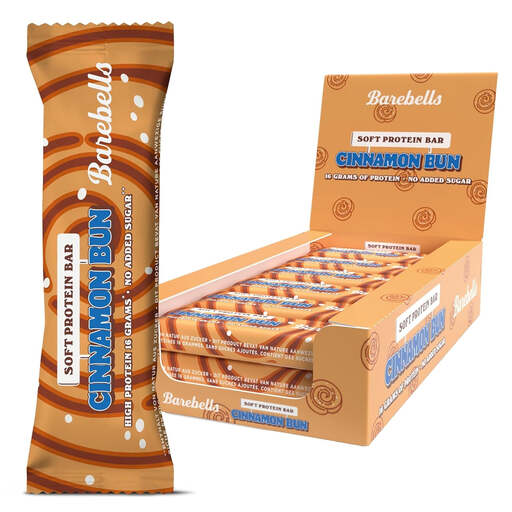 Image unavailable
If you’re planning to snack on the Cinnamon Bun flavour, factor in the number of 55-g bars you’ll actually eat. To compare it with other flavours, check the relevant nutritional information and ingredients for each one.
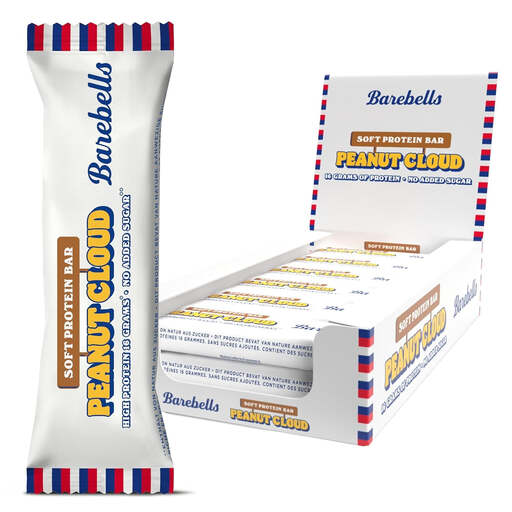 Image unavailable
If you’re considering Peanut Cloud for football night, compare the nutritional information for one 55-g bar with your planned portion. If you have ingredient or allergen requirements, check the label for this specific flavour; the name alone isn’t enough.
No, a claim about added sugar doesn’t tell you how much energy is in a portion. If you’re watching your kcal while enjoying football, check the nutritional information per bar and per 100 g too.
For your planned snack, the figure per bar you eat is the most directly relevant; comparing per 100 g can also help when bars are different sizes. According to nu3, the Multipower Protein Delight Bar contains 142,21 kcal per 35-g serving, while Barebells lists 161 kcal per 45-g bar for Chocolate Spread.
This type of warning may relate to the sweeteners in the product, which the Verbraucherzentrale says can have a laxative effect in larger amounts. Check the ingredients and label for the specific flavour, especially if you plan to eat several bars.
No, the term ‘protein bar’ doesn’t tell you that. ESN, for example, says its Designer Bar range isn’t suitable for vegetarians or vegans because it contains bovine collagen. Check the ingredients label for every other flavour too.