A protein bar can be a convenient, portion-controlled snack for adults and teenagers on a holiday outing, provided the protein content and ingredients suit your plans. However, according to the German Nutrition Society, recreational athletes who are adults do not generally need extra protein. If the bar is for a child, portion size and ingredients matter more than the protein label; the consumer advice centre generally does not consider products with sweeteners or polyols a suitable alternative to ordinary snacks for children.
Who might consider protein bars?
Active people planning a snack
If you want to pack a bar for after exercise or a longer outing, you can compare the stated protein per bar with the rest of your planned snacks. The German Nutrition Society points out, however, that adult recreational athletes do not need an increased protein intake. In this context, a bar is a convenient option, not an essential step in recovery.
Parents looking for snacks for the school holidays
For days out, trips or holiday clubs, a snack that’s easy to portion is useful. The words “High Protein” on the wrapper don’t tell you whether a bar is suitable for a child: age, portion size and ingredients all need to be considered. The consumer advice centre generally does not consider products with sweeteners or polyols a suitable alternative for children.
People with specific ingredient requirements
If you need to avoid milk, soya, nuts or certain sweeteners, check the exact variety. The ingredients list and allergen information for that product are what matter—not the brand name or the recipe of another bar in the same range.
What should you look for when buying?
First decide who the snack is for and when it will be eaten. Then compare the information per bar and the ingredients in the specific variety.
| Criteria |
What to check |
Who it matters most to |
| Protein portion on the go |
Compare the protein content and bar weight per bar, not just the nutritional values per 100 g. |
After exercise or on a day out, I want to pack a portion with a clearly stated protein content; that doesn’t mean I need a bar for every training session. For around 31% of consumers, having a portion they can plan for is the main consideration. |
| Snacks for children |
Check the portion size, ingredients and any mention of sweeteners or polyols. |
I want a snack that’s suitable for my child as part of their holiday provisions, rather than choosing one just because it has a high protein content. Around 25% of consumers prioritise suitability for children when making this choice. |
| Sugar and sweeteners |
Check the sugar and polyol content per bar, as well as the ingredients list. |
If I’m planning several snacks for a day out, I want to consider the sweeteners used as well as the sugar content. For around 25% of consumers, this is the most important consideration when buying. |
| Ingredients and allergens |
Check the protein source, full ingredients list and highlighted allergens for the exact variety. |
If I have an allergy or follow a particular diet, the recipe of the bar I choose needs to be suitable; another variety from the same brand isn’t a reliable guide. Around 19% of consumers prioritise checking the ingredients. |
Common selection mistakes
-
Assuming the protein label is a reason to buy
A high protein content doesn’t automatically make a bar the right snack for the school holidays. According to the German Nutrition Society, adults who take part in recreational sport do not need an increased protein intake.
Choose a bar for a specific benefit when you’re out and about, such as having a portion that’s easy to plan for, and consider whether an ordinary snack would also suit the occasion.
-
Confusing “no added sugar” with “no sweeteners”
A low sugar content doesn’t tell you which sweeteners a product contains. According to the consumer advice centre, polyols can have a laxative effect in larger quantities; products with sweeteners or polyols are generally not considered a suitable alternative for children.
Read the nutritional information and ingredients list for the specific variety, and consider how many bars will actually be eaten.
-
Assuming one variety represents the whole range
Protein sources and other ingredients can vary between bars. For example, Layenberger lists milk, whey and soya protein, as well as beef collagen hydrolysate, in its High Protein Bars.
If you have an allergy or follow a particular diet, check the information for the exact variety before buying and again on the pack you receive.
-
Taking values per 100 g as values per bar
Values per 100 g make it easier to compare products of different sizes, but they don’t necessarily tell you how much is in a single bar.
Check the bar weight and nutritional values per portion too. That way, you can compare the amount you’re actually planning to have as a snack.
Product ranges from relevant brands
The information below relates to specific protein bar ranges from these manufacturers, not every product from each brand. When you buy, always check the labelling for the variety you’ve chosen.
Barebells
The brand describes its chocolate-coated Original Protein Bars as a dedicated protein bar range.
- Barebells states that its Original Protein Bars contain 20 g of protein per bar.
- This figure applies to the range mentioned. Check the ingredients, allergens and sweeteners for the variety you choose.
ESN
ESN describes its Designer Protein Bar as a 45-g bar available in several varieties.
- ESN states that its bars contain 14–15 g of protein per bar, depending on the variety, and publishes nutritional information for each one.
- ESN also lists 10–14 g of polyols per bar, depending on the variety. If you’re sensitive to polyols or plan to have several bars, check the details for the specific variety.
Layenberger
Layenberger offers its High Protein Bars in several varieties and as a mixed pack.
- According to Layenberger, the bars in its mixed pack contain 15.8–16.1 g of protein and 0.2–0.8 g of sugar per bar.
- The manufacturer lists milk, whey and soya protein, as well as beef collagen hydrolysate. The ingredients in the specific variety are particularly important if you have allergies or follow a plant-based diet.
Protein bars for portion-controlled snacks
These Joybuy products are protein bars in individually portioned sizes, which may suit planned provisions for days out. The pack size is shown in each product title; if you’re choosing a bar as a sports or family snack, also check the nutritional information and ingredients for the exact variety.
 No image available
Barebells Soft Protein Bar Salted Peanut Caramel, 12 × 55 g
If you’re planning a bar as a snack on the go, you can pack a 55 g portion from this box of 12.
For this Soft variety, check the protein and sugar content per bar, as well as the ingredients and allergens on the pack; information about the Barebells Original range doesn’t automatically apply to it.
View at Joybuy
 No image available
Barebells Vegan Protein Bar Peanut Caramel, 12 × 55 g
If you’re looking for a plant-based option for your holiday provisions, this bar, which is labelled as vegan, may be worth a closer look.
The pack contains twelve bars of 55 g each. If you have dietary requirements or allergies, check the ingredients and allergen information for the version you receive.
View at Joybuy
 No image available
Power System Low Carb Cookies & Cream Protein Bar, 40 g
This single 40-g bar may suit you if you’re looking for a smaller, clearly portioned bar for a day out.
When comparing it with other portions, check the nutritional information per bar. The words “Low Carb” alone don’t replace checking the sugar content, other ingredients and sweeteners.
View at Joybuy
 No image available
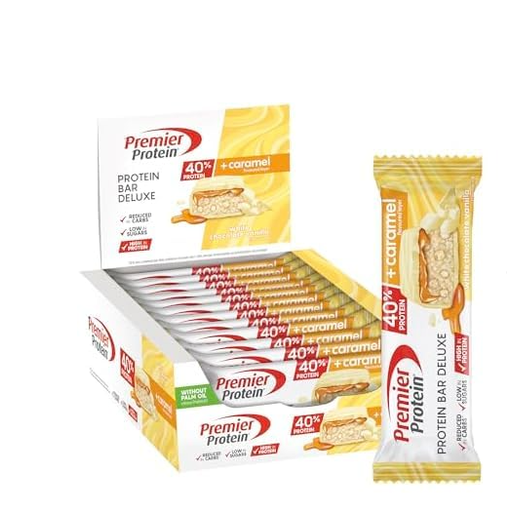
Premier Protein Protein Bar Deluxe 40 % White Chocolate Vanilla, 12 × 50 g
This box of twelve 50-g bars makes it easy to plan individual snack portions for several days out.
The “40 %” figure is part of the product name. Compare the nutritional values per bar and check the sugar, sweeteners and allergens on the specific pack.
View at Joybuy
Frequently asked questions
Do I need a protein bar after a day out during the school holidays or a recreational sports session?
No, a protein bar isn’t essential. The German Nutrition Society says adult recreational athletes don’t have an increased protein requirement; a bar can still be a convenient snack portion to take with you.
Does “no added sugar” also mean “no sweeteners”?
No. The ingredients list for each variety shows whether it contains sweeteners or polyols, while the nutritional information gives the sugar content. According to the consumer advice centre, polyols can have a laxative effect in larger quantities.
Is a protein bar a suitable snack for children during the school holidays?
Not necessarily. What matters is choosing a portion that’s right for the child and checking the bar’s ingredients—not just its protein content. The consumer advice centre generally does not consider products with sweeteners or polyols a suitable alternative for children.
How do I check allergens in a bar ordered online?
Read the ingredients and allergen information for the exact variety before ordering, then check it against the pack when it arrives. The Federal Office of Consumer Protection and Food Safety describes food labelling as an important source of information about a product’s composition.


