Families managing allergies or coeliac disease
If a particular ingredient needs to be avoided, the label on each individual variety is what matters. A vegan option or one marketed broadly as ‘free from’ won’t automatically meet your specific needs.


For a holiday lunch, it’s not the broad claim ‘free from’ that matters, but which ingredient needs to be avoided in the specific type of bar. For coeliac disease, an explicit ‘gluten-free’ label is important; ‘vegan’, on the other hand, tells you nothing about gluten, peanuts or soya. For children, a protein bar should be an occasional snack, not a replacement for a balanced lunch.
If a particular ingredient needs to be avoided, the label on each individual variety is what matters. A vegan option or one marketed broadly as ‘free from’ won’t automatically meet your specific needs.
A vegan or explicitly lactose-free option may suit your needs. You’ll still need to check for ingredients such as wheat, soya or peanuts, as well as any may-contain warnings.
A bar is easy to take along between holiday activities. It shouldn’t be planned as a child’s lunch, though: the German Nutrition Society stresses the importance of a balanced supply of nutrients.
First, work out whether an ingredient needs to be avoided for medical reasons. Then compare the information for the specific variety and decide whether the portion size and ingredients are right for the snack you have in mind.
| What to check | What to look for | Who it matters most to |
|---|---|---|
| Allergens and gluten | Ingredients, highlighted allergens and may-contain warnings for the variety; if you have coeliac disease, look for an explicit ‘gluten-free’ claim. | If someone in the family has an allergy or coeliac disease, the specific ingredient they need to avoid must be checked for every bar. Around 36% of consumers make this their top priority. |
| Vegan or lactose-free | The label you need, along with ingredients such as milk, wheat, soya and peanuts. | If you want to avoid animal-derived ingredients or lactose, start by looking for a variety labelled accordingly, but don’t assume this means it is free from all allergens. This is the main priority for around 29% of consumers. |
| Sweeteners | Check the ingredients list for sweeteners and sugar alcohols, as well as any consumption advice. | If you have a sensitive stomach, you’ll want to know what a bar is sweetened with before putting it in your bag. This is the top concern for around 21% of consumers. |
| On-the-go snack | Pack and portion size; ingredients and nutritional information in the context of the rest of the lunch. | Between holiday activities, a bar should be easy to take along without replacing a meal. This is the main consideration for around 14% of consumers. |
Vegan recipes can contain wheat, soya or peanuts. Barebells, for example, lists vegan varieties that contain wheat protein.
Identify the ingredient that needs to be avoided, then check the ingredients and, where relevant, any may-contain warnings for each flavour individually.
According to the Verbraucherzentrale, foods labelled ‘gluten-free’ can contain up to 20 mg of gluten per kg. So the term doesn’t mean zero gluten.
If you have coeliac disease, the explicit label on the specific variety is what matters; a vegan claim is no substitute for it.
KoRo’s Vegan Protein Bar Deluxe Peanut contains maltitol and sucralose, and carries a warning about a possible laxative effect if consumed in excess.
If you have a sensitive stomach, check the ingredients list and any consumption advice rather than relying on the claim on the front of the pack.
A bar alone doesn’t meet the requirements for a balanced lunch for children. The Verbraucherzentrale says that additional protein products are generally unnecessary for the usual protein intake in Germany.
At most, plan a bar as an occasional snack, and plan the holiday lunch separately.
REWE labels the Seitenbacher Proteinriegel Vanille, 60 g, as gluten-free.
KoRo’s range includes the vegan Protein Bar Deluxe Peanut.
Barebells also makes vegan protein bars; their features vary by variety.
ESN lists selected gluten-free flavours in its Designer Bar range.
Powerbar offers filters for vegan and gluten-free products.
This selection includes a chocolate product in bar form and a vegan protein bar as possible on-the-go snacks. To decide whether either is suitable when you need to avoid a particular ingredient, check the label on the specific pack.
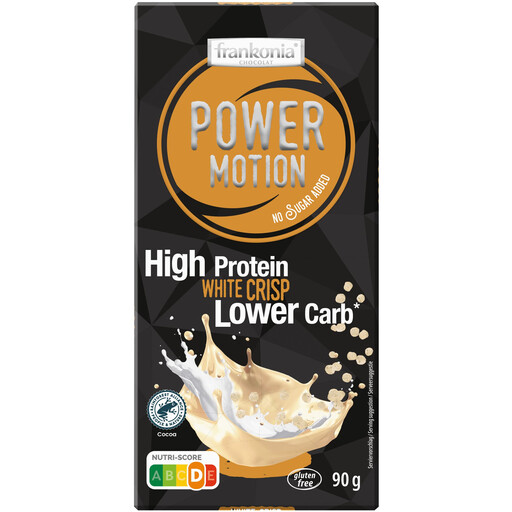 Image unavailable
A chocolate option in bar form for an occasional snack, not a complete holiday lunch.
If you need to avoid gluten, milk or soya, check the label on the specific pack. Any may-contain information and guidance on consuming maltitol are also important when choosing.
 Image unavailable
A vegan protein bar made up of individually portioned 55-g bars for an on-the-go snack; the pack contains twelve bars.
Vegan doesn’t mean gluten-free or free from allergens. If you need to avoid wheat, soya or peanuts, check the ingredients and any may-contain warnings on the specific pack. If you have concerns about tolerance, check the sweeteners too.
No. Vegan means it’s made without animal-derived ingredients; it says nothing about its gluten content or whether it’s free from other allergens. Barebells lists vegan varieties containing wheat protein, so check the specific variety.
According to the Verbraucherzentrale, the label means no more than 20 mg of gluten per kg of food, not necessarily zero gluten. If you have coeliac disease, the bar you choose should be explicitly labelled as gluten-free; check separately for any other allergens relevant to you.
It’s the ingredient you need to avoid and the information on the specific pack that matter. Read the ingredients list, including highlighted allergens, and check any may-contain warning if relevant; a general ‘free from’ claim isn’t enough.
A protein bar isn’t intended as a regular replacement for a balanced lunch. The German Nutrition Society stresses that children and teenagers need a supply of all nutrients; at most, a bar is an occasional snack.
Check the ingredients list for names such as maltitol or xylitol. The German Federal Institute for Risk Assessment explains how sweeteners must be labelled; for KoRo Vegan Protein Bar Deluxe Peanut, the manufacturer lists maltitol and warns of a possible laxative effect if consumed in excess.