Guests keeping an eye on portion size
If you’re planning to have one sweet snack, compare the kcal for the whole bar with its weight, rather than relying on the name or protein content alone.


For a calorie-conscious game night, the energy in a whole bar is more useful than the word ‘protein’ on the wrapper. The dm product page lists 125 kcal per portion for the 35-g All Stars Skyr Protein Mixed Berries bar; Barebells lists 167 kcal per bar for Hazelnut Spread. The portion sizes differ, and a higher protein content or a ‘no added sugar’ claim doesn’t, on its own, tell you how much energy a bar contains or whether it’s suitable for everyone.
If you’re planning to have one sweet snack, compare the kcal for the whole bar with its weight, rather than relying on the name or protein content alone.
If protein is one of your selection criteria, check the grams of protein per bar alongside its energy and ingredients. The German consumer advice centre points out that most people in Germany don’t need extra protein to meet their general requirements.
When you’re sharing, check the specific product: ingredients, allergen information and sweeteners can vary by flavour. If any guests have known allergies, make sure you check the options in advance.
Start by comparing the portion that will actually be eaten. Then you can weigh up flavour, protein and ingredients with your guests in mind.
| Criteria | What to check | Who it matters to |
|---|---|---|
| Energy per bar | Compare the kcal and weight of a whole bar; values per 100 g alone don’t describe the snack portion. | If I’m offering exactly one bar, I want to know its total energy content. Around 36% of consumers put this portion-size question first. |
| Flavour as a snack | Consider the flavour, energy per bar and ingredients together; a ‘no added sugar’ claim is no substitute for comparing calories. | For a sweet snack during a game, I want a flavour that suits the group without losing sight of portion size. For around 29% of consumers, enjoyment comes first. |
| Protein content | Compare the grams of protein and kcal per bar, rather than looking only at the protein content per 100 g. | I want protein content to inform my choice without treating the bar as a meal. Protein is the main consideration for around 21% of consumers. |
| Ingredients and allergens | Read the ingredients and allergen information for the specific flavour; also check any advice about sweeteners and consumption. | If several people are sharing, I need to check whether a particular flavour is suitable for the guests before serving it. This is the top buying priority for around 14% of consumers. |
Protein content alone doesn’t tell you how much energy there is in a whole bar. Different portion sizes can also make comparisons tricky.
Start by comparing the weight and kcal per bar, then assess the protein content for the same portion.
This claim doesn’t tell you the total energy content. Portion size and the other nutritional values matter too.
Check the nutritional information for your chosen flavour, especially the energy per portion, as well as the sugar and fat content.
Allergen information applies to the specific flavour, not necessarily to the whole brand. The German consumer advice centre also points out that sugar alcohols may have a laxative effect if consumed in large quantities.
Keep the original packaging with the snacks and check about any known allergies in advance. Follow the ingredients and consumption guidance for each bar.
The Federal Centre for Nutrition considers protein bars more of an occasional snack than a complete meal. For game night, that’s a different choice from planning a meal.
Choose the bar as a snack and plan your meal separately.
dm’s own-brand range includes several protein bars, including a 40-g Peanut-Caramel variety, according to dm’s product range page.
Barebells offers protein bars in sweet flavours. For Hazelnut Spread, the manufacturer lists 167 kcal and 15 g of protein per bar.
The dm product page lists White Chocolate Peanut Caramel as a 50-g protein bar, with up to 16 g of protein per portion.
The Designer Bar Peanut Caramel listed by dm is a 45-g protein bar; dm states that it contains 14 g of protein.
The 40% Protein+ Crisp range includes Caramel Peanutbutter, described on dm’s German product page.
This selection includes individually wrapped bars and multipacks for a sweet game-night snack. For each variety, check the energy per bar on the packaging before deciding on a portion size.
 No image available
An individually wrapped brownie-flavoured option if you’re planning one bar per person. The product name states 50 g; check the energy and ingredients on the packaging.
 No image available
This multipack is a good option if you want to offer several guests individual cookies-and-cream-flavoured bars. The product name states that it contains 12 bars of 55 g each; check the nutritional and allergen information for this flavour.
 No image available
A multipack with a peanut caramel flavour for guests who prefer this variety. The product name states that it contains 12 bars of 55 g each; before sharing, check the ingredients, allergens and nutritional information on the packaging.
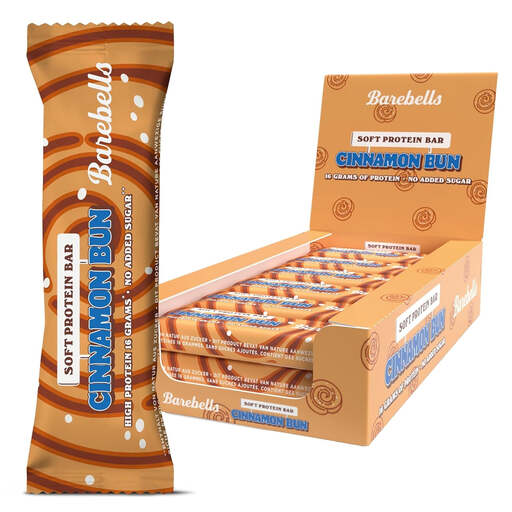 No image available
This pack is handy if you’re planning to offer individual cinnamon-bun bars to a group. The product name states that it contains 12 bars of 55 g each; compare the energy per bar and check the ingredients for this specific flavour.
Compare the energy in the amount one person will actually eat – if that’s a whole bar, look at the kcal per bar. If the packaging gives nutritional values per 100 g and per portion, remember to take each bar’s weight into account too.
No. A ‘no added sugar’ claim doesn’t tell you the total energy content. For your chosen flavour, check the kcal per bar, the other nutritional values and the portion size.
Read the ingredients list and consumption guidance for the specific product. The German consumer advice centre points out that sugar alcohols may have a laxative effect if consumed in large quantities, so it’s worth considering how many bars your guests might eat.
A standard protein bar shouldn’t be treated as a complete meal. The Federal Centre for Nutrition describes protein bars more as an occasional snack and suggests foods such as quark with nuts and fruit as another option for a between-meal snack.
Check the ingredients and allergen information on the original packaging for each flavour you’ve chosen, and ask about any known allergies in advance. A general statement about the brand isn’t enough, as the ingredients vary by product.