People who want to compare fat and energy
You want to buy individually portioned bars for games night and check the nutrition information, rather than assuming the fat content from the protein claims.


If you’re choosing a protein bar with as little fat as possible for games night, compare fat and energy per 100 g as well as per bar, rather than relying on protein or sugar claims alone. The product examples described by dm and More Nutrition contain between 14 and 18 g of fat per 100 g. If you’re buying for a group, ingredients, allergens and sweetener information may also influence your choice.
You want to buy individually portioned bars for games night and check the nutrition information, rather than assuming the fat content from the protein claims.
You’re looking for a convenient single-serve bar, but want to assess protein, fat and energy separately. The Verbraucherzentrale notes that additional protein products aren’t necessary for the general protein intake of people in Germany.
If several people are sharing, ingredient lists, declared allergens, possible traces and information about sweeteners all matter when choosing what to serve.
First, compare nutrition values using the same reference amount, then factor in the actual bar size. If you’re choosing for a group, also check the ingredients and packaging information.
| What to compare | What to check when buying | Who it matters to |
|---|---|---|
| Fat and energy | Compare fat and energy per 100 g, then check the values per bar for the portion you’re planning. A protein claim is no substitute for this comparison. | If I’m looking for a bar with less fat, I also want to know how much energy the portion contains. For around 45 % of consumers, this is their top priority. |
| Protein per portion | Check the protein per 100 g and the bar’s weight, so you can relate the figure to the portion you’ll actually eat. | For a single snack portion, protein content matters most to me, but I still assess fat and energy separately. Around 33 % of consumers put this first when choosing. |
| Ingredients and suitability | Check the specific packaging for declared allergens, possible traces, sugar substitutes and consumption advice. | If I’m providing bars for several people, I need to consider their different dietary requirements. For around 22 % of consumers, this check comes first. |
These figures answer different questions. The product information from dm and More Nutrition shows fat content of 14 to 18 g per 100 g for the protein bars covered here.
Check fat and energy per 100 g, then take the weight of one bar into account.
Depending on the product, the bars described contain ingredients such as milk, soya or peanuts; other ingredients may be listed as possible traces. For anyone affected by an allergy, the labelling on the specific bar is essential.
Check each pack before serving and provide separate snack options if needed.
According to the Verbraucherzentrale, sugar substitutes can have a laxative effect when consumed in large amounts. Several of the products described carry relevant warnings on the packaging.
Follow the consumption advice for each product, particularly if bars will be available throughout a long games night.
The Verbraucherzentrale says additional protein products aren’t necessary for the general protein intake of people in Germany. A games night alone doesn’t mean you need a protein bar.
Decide whether a protein bar is right for your group based on the portion you want, the ingredients and the taste.
dm’s own brand offers protein bars made with a range of different recipes.
The range includes Protein+ Crisp in the Caramel Peanutbutter variety, as described by dm.
Barebells offers a range of protein bars, with nutrition values varying by flavour.
The brand’s range includes the More Protein Bar.
This selection includes a savoury beef protein bar and a chocolate caramel protein bar for individually planned snacks. To compare fat content, check the nutrition information on the specific packs using the same reference amount; inclusion in this selection doesn’t confirm a ‘reduced fat’ claim.
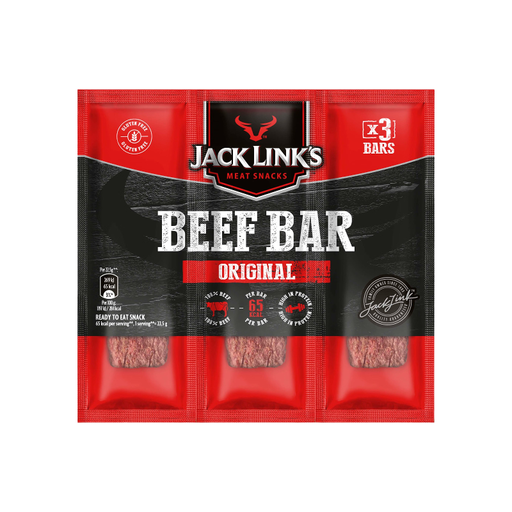 Image unavailable
A savoury option if you’re planning to serve individual bars for games night. The product title lists three bars, each weighing 22,5 g. Before buying, compare fat, energy, sugar and salt per 100 g, and check the ingredients if you’re sharing with a group.
 Image unavailable
A chocolate caramel option if you need several individually portioned snacks. The product title lists 16 × 40 g; check the pack before buying to confirm the portion size. For a nutritional comparison, also check the energy value, and if you’re sharing with a group, look for allergens and information about sweeteners.
No. For example, dm lists 40 g of protein and 14 g of fat per 100 g for PowerBar Protein+ Crisp, compared with 34 g of protein and 17 g of fat per 100 g for Sportness Peanut Caramel. Compare the figures using the same reference amount, then check the portion size of the bar.
First, use the nutrition information per 100 g as a common basis for comparison. The weight of each bar then shows how much you’ll get in your planned portion. Alongside fat and protein, check energy and sugar too.
No, the sugar content alone doesn’t answer that question. The Verbraucherzentrale notes that sugar substitutes can have a laxative effect when consumed in large amounts, so check the ingredients and consumption advice on the relevant pack.
Check the ingredient list, declared allergens and possible traces for every bar. Depending on the product, varieties described by dm may contain milk, soya, peanuts or wheat, for example. Offering separate snack options can make it easier to cater for different requirements.