Guests who lead active lifestyles
If you want a bar after a workout, the first thing to check is the protein content in the portion you’ll actually eat. A figure per 100 g only makes sense when you take the weight of the bar into account.


If you’re choosing protein bars for a garden party with sport and recovery in mind, start by comparing the stated protein content per bar and the portion size. For a mixed group of guests, the ingredients and allergens in each specific variety are also important. A high protein figure alone tells you nothing about whether a bar is suitable for vegans or how well guests might tolerate its sweeteners.
If you want a bar after a workout, the first thing to check is the protein content in the portion you’ll actually eat. A figure per 100 g only makes sense when you take the weight of the bar into account.
For these guests, the variety and texture matter just as much as the nutritional information. Manufacturers may describe, for example, classic and softer bar varieties. Which one tastes best is a matter of personal preference.
If your guests have allergies or avoid certain ingredients, check the label on every variety. You should also check for animal-derived ingredients and sweeteners before serving.
Start with the portion a guest would actually eat. Then check the ingredients in your chosen variety, and only then decide which flavours to offer.
| What to consider | What to check when buying | Who it matters to |
|---|---|---|
| Protein per bar | Compare the grams of protein per serving with the weight of the bar. A figure per 100 g doesn’t automatically tell you how much protein you’ll consume. | After a workout, I want to know how much protein is in one bar, rather than just read a figure on the front. Around 40% of consumers put this question first when choosing. |
| Ingredients and suitability | Check the ingredients list and highlighted allergens for every variety. If needed, also check for animal-derived ingredients and gluten-free claims. | If guests need to avoid certain ingredients, I don’t want to assume a product is suitable based on its brand name. For around 30% of consumers, this check comes first. |
| Flavour and portion size | Choose varieties and textures to suit your guests, and check how many bars are in the pack. If needed, check the ingredients for sweeteners too. | For me, a bar at a party should first and foremost be a sweet snack in an individual portion. Around 30% of consumers put this preference first. |
Lebensmittelklarheit points out that prominent protein figures on the front of a pack often refer to 100 g, even though a bar may weigh considerably less. For an individual snack, the amount per serving is therefore more useful.
Check the bar’s weight alongside the nutritional information, and compare the stated protein content per bar.
The two claims don’t mean the same thing. Germany’s consumer advice centre also points out that polyols can have a laxative effect when consumed in large quantities.
Check the ingredients list for the specific variety if sweeteners or your guests’ individual tolerance are a consideration.
Ingredients can vary from one variety to another. ESN says that its Designer Bar contains bovine collagen; its gluten-free claims apply only to specifically named varieties.
If your guests have allergies or follow particular diets, check the ingredients and labelling on the actual pack you’ll be serving.
Barebells offers classic protein bars and soft bars with different textures. The brand states that its classic bars contain up to 20 g of protein per bar; this figure doesn’t necessarily apply to every variety.
ESN states that its Designer Bar contains 14 g of protein per 45-g bar, and describes it as a snack for on the go or after exercise.
For its Classic Protein Bar White Chocolate Raspberry, MaxiNutrition states that each 40-g bar contains 20 g of protein.
These individually portioned bars could make handy snacks for a garden party. If protein content after exercise is a particular priority, check the figure per bar for each variety. For guests with specific dietary needs, check the labelling on the actual pack. If you’re serving them outdoors, also follow the storage instructions.
 No image available
An option if you’re looking for individually portioned bars for guests who might enjoy a snack after exercise.
According to the product name, the pack contains twelve bars, each weighing 45 g. Before serving, check the labelling on the actual pack, particularly for milk, soya, hazelnuts, bovine collagen and sweeteners.
 No image available
This variety could suit a group of guests looking for a sweet protein bar in an individual portion.
The product name states that the pack contains twelve bars, each weighing 55 g. If your guests have specific dietary needs, check the labelling for milk, soya, collagen hydrolysate and sweeteners.
 No image available
These individually portioned bars are an option if you’d like to offer a caramel and nut variety.
The product name states that the pack contains twelve bars, each weighing 50 g. Check the protein content on the actual pack, as well as the allergen labelling, particularly for peanuts, milk, soya and other nuts.
 No image available
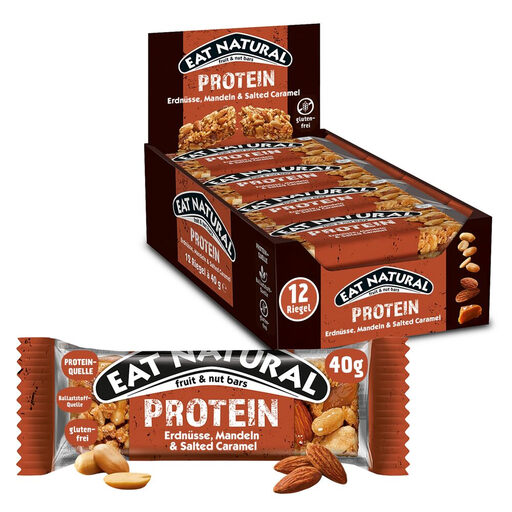
This variety could be a good choice if you’re looking for individually portioned nut and caramel bars for your guests.
The product name states that the pack contains twelve bars, each weighing 40 g. If you’re choosing bars with exercise in mind, compare the protein content per bar on the pack. If anyone has allergies, check the labelling carefully, particularly for peanuts, almonds, soya, milk and other nuts.
 No image available
This cookie variety could be a good choice if you’d like to offer individually portioned bars with a crunchy texture.
The product name states that the pack contains twelve bars, each weighing 45 g, with 30% protein. To compare the amount per serving, check the figure in grams on the pack. Also check the allergen and sweetener information before serving.
No. To compare individual snacks, you’ll also need to know the protein content per bar and its weight. Lebensmittelklarheit points out that prominent protein claims on the front of a pack often refer to 100 g.
Check the ingredients and allergen labelling on the actual pack before offering a bar. Germany’s Federal Office of Consumer Protection and Food Safety explains that the main substances that can cause allergies or intolerances must be identified in the ingredients list.
No. A ‘no added sugar’ claim doesn’t rule out sweeteners or polyols. Read the ingredients list; Germany’s consumer advice centre points out that polyols can have a laxative effect when consumed in large quantities.
No. According to ESN, the Designer Bar contains bovine collagen, so it’s neither vegetarian nor vegan. Always check other bars by variety too, rather than assuming they’re suitable based on the product range.