Hikers avoiding gluten
If you’re looking for a protein bar to take with you and need to avoid gluten, look for an explicit “gluten-free” claim on the individual pack. Check separately for any other ingredients or allergens relevant to you.


When choosing a protein bar for a hike, first check which ingredient or allergen you need to avoid, then check the information for the specific variety. “Vegan” does not mean gluten-free or free from other allergens. If you need to avoid gluten, look for an explicit “gluten-free” claim; if you have an allergy, also check the ingredients list for highlighted allergens and any precautionary statements about possible traces.
If you’re looking for a protein bar to take with you and need to avoid gluten, look for an explicit “gluten-free” claim on the individual pack. Check separately for any other ingredients or allergens relevant to you.
If you want to avoid animal-derived ingredients, a vegan label can help you choose. The Verbraucherzentrale (German consumer advice centre) notes that you can’t always tell whether a product is vegan from the ingredients list alone. However, vegan-labelled bars may still contain gluten or other allergens.
If you’re packing a bar for yourself or someone else, check each variety for the relevant allergens. According to the Lebensmittelverband Deutschland (German Food Federation), the 14 allergens that must be declared are highlighted in the ingredients list when used as ingredients. Also look out for possible trace warnings.
When choosing a protein bar for a hike, start with your personal dietary requirements. Then compare the portion size, nutritional information and ingredients of the varieties that meet them.
| What matters to you | What to check when buying | Who it matters to |
|---|---|---|
| Gluten and allergens | If you need to avoid gluten, look for a “gluten-free” claim on the pack. If you have an allergy, check for highlighted allergens and possible trace warnings. | If I need to avoid a particular allergen or gluten, a general “free from” claim isn’t enough to help me decide. Around 34% of consumers would put this specific dietary requirement first. |
| Vegan ingredients | Look for a vegan label on the variety and check its protein sources and allergens. | If I don’t want to eat animal-derived ingredients on a hike, I need clear information about the variety I’m choosing. For around 33% of consumers, vegan options would be the priority. |
| Protein and portion size | Compare the protein per bar, portion weight and nutritional information, rather than choosing based only on a protein claim. | If I want a protein-rich snack on the go, I want to know what’s in a single portion and how easy it is to carry. Around 20% of consumers would prioritise this. |
| Sweeteners and ingredients | Check the ingredients and information about sweeteners. Don’t try an unfamiliar variety for the first time on a long hike. | If I’m sensitive to certain sweeteners, I want to know what’s in the bar before I set off. This would be the most important buying consideration for around 13% of consumers. |
A bar labelled vegan or gluten-free may still contain other allergens that matter to you. A claim on the front of the pack doesn’t replace checking the specific variety.
Before buying, work out which ingredients you need to avoid, then check the ingredients list, highlighted allergens and any possible trace warnings on the pack.
Vegan ingredients can still include gluten. Lebensmittelklarheit (German food labelling information service) explains that the regulated gluten claim is the explicit wording “gluten-free”.
If you need to avoid gluten, look for this claim on the current pack and check separately for any other allergens relevant to you.
Some recipes contain sugar alcohols or sweeteners. KoRo lists maltitol and sucralose in its Vegan Protein Bar Deluxe Peanut, and warns that excessive consumption may have a laxative effect.
If you want to try a new variety, do so before your hike. For the trail, pack a snack with ingredients you already know.
A prominent protein claim doesn’t tell you everything about a product’s ingredients. The Verbraucherzentrale recommends checking the nutritional information, especially for high-protein products.
Compare the information per bar alongside the ingredients, portion size and your dietary requirements.
Barebells has a vegan protein bar range, which is worth considering if you’re looking for a plant-based bar to take with you.
KoRo offers vegan protein bars, including its Vegan Protein Bar Deluxe Peanut in a 55-g portion.
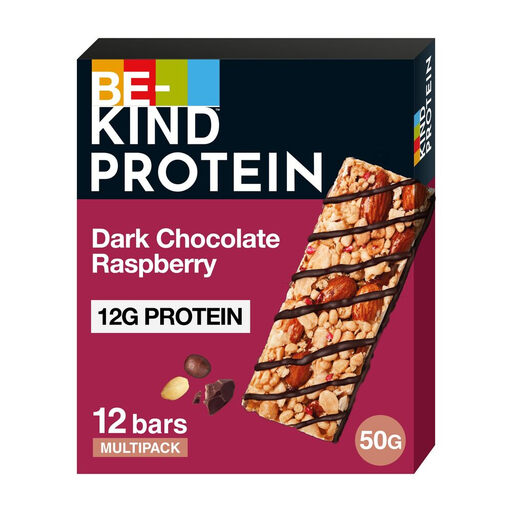
For hiking, you can choose between a BE-KIND bar described as gluten-free and a Barebells bar labelled vegan. Check the current pack to confirm whether a variety meets your specific dietary requirements.
 No image available
This bar may suit you as a hiking snack if you’re looking for a variety explicitly labelled gluten-free. Check that claim on the current pack. According to the product description, it contains peanuts, soya and almonds. Also look out for possible traces of milk and other nuts.
 No image available
This bar, described as vegan, is an option if you’re looking for a vegan snack for your hike. According to the product information, this variety contains peanuts, soya and wheat protein. If you need to avoid gluten, check the current pack for an explicit “gluten-free” claim. Also look out for possible trace warnings.
No. “Vegan” doesn’t mean a bar is free from gluten, soya, peanuts or nuts. Check the highlighted allergens in the ingredients list for the specific variety, as well as any possible trace warnings.
Look for the wording “gluten-free” on the current pack. According to Lebensmittelklarheit, this claim can only be used if the food contains no more than 20 mg of gluten per kg. A vegan label doesn’t tell you whether a product is gluten-free.
This voluntary warning doesn’t mean that traces are definitely present, but it alerts you to the possibility of accidental contamination. If you have an allergy, don’t take the warning—or its absence—as a general guarantee that a product is safe.
Not on its own: this claim doesn’t tell you everything about the recipe or whether the product will suit you. Read the ingredients list and nutritional information. For example, KoRo lists maltitol and sucralose in its Vegan Protein Bar Deluxe Peanut, and warns that excessive consumption may have a laxative effect.
Follow the storage instructions and best-before date on the pack. As the Lebensmittelverband Deutschland explains, the best-before date applies to unopened food stored under appropriate conditions.