Calorie-conscious evening snackers
You fancy something sweet in the evening and want to keep track of the energy in the portion you actually eat. So compare the kcal in a whole bar, rather than looking only at figures per 100 g.


For a calorie-conscious late-night snack, the first thing to check is the energy in a whole protein bar. Then compare its protein content and ingredients with your needs. The claim ‘no added sugar’ is no substitute for comparing calories. Sugar alcohols can also affect how well a product agrees with you if you consume larger amounts.
You fancy something sweet in the evening and want to keep track of the energy in the portion you actually eat. So compare the kcal in a whole bar, rather than looking only at figures per 100 g.
You’re looking for a portioned snack with a stated protein content. Compare the grams of protein and kcal for the same portion; percentages on the front of the pack are not the same as grams per bar.
You need to take certain allergens or sweeteners into account. Check the ingredients list, allergen information and warnings for the specific variety, rather than assuming all bars from one brand are the same.
Start by comparing like with like: kcal and protein per whole bar. Sugar information and ingredients can then help you choose a specific variety.
| Criterion | What to check | Who it matters to |
|---|---|---|
| Energy per bar | Check the kcal and weight of the whole bar; figures per 100 g alone aren’t enough to compare portions. | If I want a bar late in the evening, the energy in the whole thing matters to me. Around 33% of consumers put this need first. |
| Protein content | Compare the grams of protein per bar with the kcal in the same portion. Don’t confuse percentages with grams. | After training, I want to be able to see the protein content of my snack clearly; for around 25% of consumers, this is the top priority. |
| Sweetness and sugar information | As well as checking claims about added sugar, read the nutrition information and ingredients list. | I want an evening snack that tastes good, without relying on the information on the front of the pack alone. Around 25% of consumers put this first. |
| Ingredients and tolerance | For every variety, check the ingredients, highlighted allergens, trace warnings and other warnings. | If I need to avoid certain ingredients, checking the specific pack matters more to me than the kcal or protein content. Around 17% of consumers make this their top priority. |
In a 50 g bar, 20% protein is not the same as 20 g of protein. The North Rhine-Westphalia Consumer Advice Centre highlights this distinction when it comes to protein claims.
Check the grams of protein in the whole bar and compare them with its weight and energy content.
This claim doesn’t tell you the total energy in a bar. Even a product labelled this way should be assessed by its portion size and nutritional values.
Check the kcal per bar first, then read the information on sugar, fat and ingredients.
The Consumer Advice Centre warns that sugar alcohols can have a laxative effect in large amounts. The Barebells Chocolate Spread bar contains maltitol.
Read the ingredients and warnings for the variety you choose, particularly if you’re planning to eat more than one bar.
A portioned bar can be convenient. However, according to the Consumer Advice Centre, most people in Germany don’t necessarily need extra protein.
Choose based on the snack you want and its ingredients, not just the protein claims.
These brands offer different product ranges and varieties. For a late-night snack, the nutritional information and ingredients for the specific bar are what count.
Barebells offers protein bars in a range of product lines, including Gooey and vegan options.
ESN says its Designer Bars contain up to 15 g of protein per bar, depending on the variety.
Quest Nutrition offers protein bars, including products described by the retailer nu3.
Rossmann stocks a range of Soft Bars and Satisbites Bars from More Nutrition.
These bars could be a convenient, portioned option for a late-night snack. Their pack sizes are listed; for a calorie-conscious choice, compare the current nutritional information per whole bar.
 No image available
An option for a late-night snack if you want to compare the energy in a 45 g portion.
Pack of 12 bars, 45 g each.
Check the nutritional information per bar, as well as the ingredients and allergens on the pack being offered.
 No image available
A 55 g bar for a late-night snack, provided its nutritional values and ingredients suit your needs.
Pack of 12 bars, 55 g each.
If you need to avoid certain ingredients, check the information on the specific pack; the model name alone is no substitute for the ingredients list.
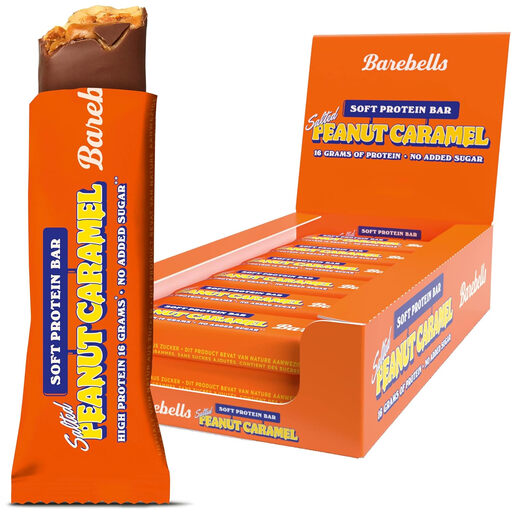 No image available
A 55 g bar for a portioned evening snack, if you like this variety.
Pack of 12 bars, 55 g each.
Compare the kcal and protein per bar, and check the ingredients and warnings if needed.
No, the claim doesn’t tell you the total energy in the protein bar. Compare the kcal per whole bar and check the nutritional information for sugar and fat, too. Despite the ‘no added sugar’ claim, Barebells lists 161 kcal per 45 g bar for its Chocolate Spread variety.
Read the ingredients and warnings for the specific variety, particularly if you’re planning to eat more than one bar. According to the Consumer Advice Centre, sugar alcohols such as maltitol can have a laxative effect in large amounts.
In Germany, ingredients that can cause allergies must be listed in the ingredients list on prepacked foods. The Federal Office of Consumer Protection and Food Safety explains how the 14 main allergens must be labelled. Also check for any trace warnings on the variety you choose.
No, a protein bar isn’t essential for a late-night snack. The Consumer Advice Centre notes that extra protein isn’t necessary for everyone in Germany. A bar can be a convenient, portioned snack option; its nutritional values and ingredients should guide your choice.