Those who train and prioritise protein
If you want to take a bar with a clearly stated protein content with you after a workout, compare the grams per bar. For example, dm lists 27 g of protein in a 45 g Sportness bar.


When choosing a protein bar to take with you to the mulled wine market, consider the protein per bar as well as the figures per 100 g, the ingredients and the serving size. A bar high in protein won’t necessarily suit a vegan diet or specific allergies. And if you’ve been working out, don’t count on it to offset the effects of alcohol.
If you want to take a bar with a clearly stated protein content with you after a workout, compare the grams per bar. For example, dm lists 27 g of protein in a 45 g Sportness bar.
Whether you’re buying a single bar to take with you or several for future outings, the bar’s weight helps you make sense of the serving information. Also compare the protein per bar rather than choosing based on size alone.
If you avoid animal-derived ingredients or need to consider specific allergens, check the actual packaging. A vegan label doesn’t mean a bar is free from soya or possible allergen traces.
First decide whether you care most about the protein in a single snack, a handy portion size for when you’re out and about, or the ingredients. Then you can compare the information on the packaging more effectively.
| What to check | What to look at | Who it matters to |
|---|---|---|
| Protein content | Compare the grams of protein per bar and per 100 g, and check the bar’s weight. | If I’m looking for a single snack with as much stated protein as possible after a workout, the serving information is key to my choice. This is a priority for around 46% of consumers. |
| Portion and availability | Check the bar’s weight and pack size, as well as local availability if you’re buying on the spur of the moment. | For a market visit, I want to take a bar whose portion size suits what I have planned. This practical consideration comes first for around 36% of consumers. |
| Ingredients and allergens | Read the ingredients list, highlighted allergens and, where relevant, any precautionary allergen and consumption advice on the packaging. | If I avoid animal-derived ingredients or need to watch out for allergens, the specific recipe determines my choice. This is the main buying consideration for around 18% of consumers. |
A percentage shows the proportion of the bar’s weight, not the number of grams in each pack. The Sportness bar listed by dm weighs 45 g and contains 27 g of protein.
When comparing bars of different sizes, check both the figures per 100 g and the grams of protein per bar.
The vegan KoRo bar listed by dm contains soya. A statement about added sugar also doesn’t tell you which allergens or sweeteners a product contains.
Check the ingredients list and information on the actual packaging for every variety. Also look out for warnings about excessive consumption where relevant.
A study published in PLoS One observed reduced muscle protein synthesis after a high alcohol intake, despite protein consumption. Its findings can’t be applied to a single glass of mulled wine.
Think of the bar as a snack with a stated protein content, not as a reliable way to offset alcohol consumption.
dm’s own brand offers protein bars with a range of stated protein contents.
The brand offers protein bars in a range of flavours and styles.
Among the KoRo protein bars listed by dm is a Chocolate Brownie variety labelled vegan.
The Protein 30 range includes bars weighing 35 g each.
The brand’s range includes Soft Core protein bars, among others.
This selection of protein bars includes a range of portion sizes and flavours, as well as a variety labelled vegan. When choosing a bar for a market visit, the information on the pack you buy is what matters.
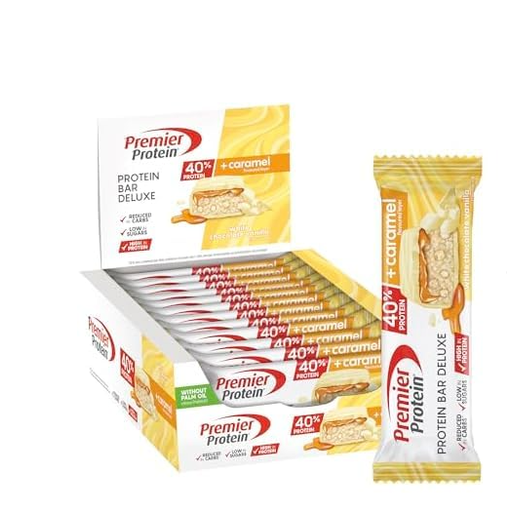 No image available
For comparing protein content, the product name states 40% protein and 50 g per bar. Check the ingredients and allergens on the packaging too before choosing.
 No image available
If you want a multipack for several outings, this option gives you twelve bars weighing 55 g each. Check the nutritional information and ingredients for the Cookies & Cream variety on the packaging.
 No image available
For a smaller bar to take with you, the product name states 30% protein and a pack of twelve bars weighing 45 g each. When comparing it with other packs, look at the protein per bar as well as the percentage.
 No image available
If you’re looking for a protein bar labelled vegan, this Peanut Caramel variety comes in a pack of twelve bars weighing 55 g each. Vegan doesn’t mean allergen-free, so check the ingredients and trace information.
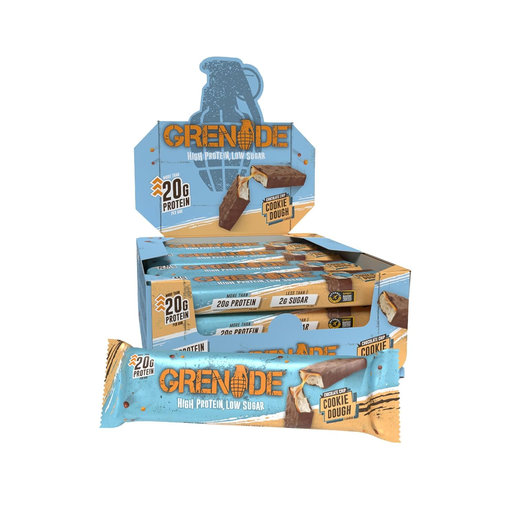 No image available
If you prefer a bar with a 60 g serving size, this pack of twelve is worth considering. To compare protein content, you’ll also need the nutritional information per bar and per 100 g.
The claim doesn’t replace checking the nutritional information for the specific bar. Compare protein per 100 g to assess products of different sizes, and protein per bar to see what’s in the portion you’re actually choosing.
Check the ingredients list and product-specific trace information. The Federal Office of Consumer Protection and Food Safety explains that the main substances that cause allergies or intolerances must be listed in the ingredients.
A protein bar isn’t a reliable way to offset alcohol consumption after a workout. A study published in PLoS One involving eight physically active men examined a high alcohol intake and observed reduced muscle protein synthesis despite protein consumption. You can’t infer the effect of a single glass of mulled wine from these findings.
No, the two claims don’t mean the same thing. If sugar, other nutritional values or ingredients matter to you, check the nutritional information and ingredients list for the variety you’ve chosen. For bars containing sugar alcohols, also look out for consumption advice.