Festival-goers keeping an eye on fat
You want to choose a protein bar to take with you, so you compare fat, saturated fat and energy per 100 g rather than looking only at the protein figure on the front of the pack.


If you’re looking for a lower-fat protein bar to take along to Oktoberfest, compare the nutritional information for specific varieties per 100 g, then take the bar size into account. A high protein figure or a ‘no added sugar’ claim won’t tell you how much fat a bar contains. Sugar, ingredients, allergens and any warnings about sweeteners are also worth considering.
You want to choose a protein bar to take with you, so you compare fat, saturated fat and energy per 100 g rather than looking only at the protein figure on the front of the pack.
You want to know how much protein is in an individual bar, and compare the amount in grams with the bar’s weight.
You look for vegan labelling or need to check for milk, soya, nuts and possible traces. You should also check the ingredients of a vegan bar individually.
For a protein bar as a snack at Oktoberfest, the fat content per 100 g is a useful starting point. Portion size and ingredients may then influence your choice.
| Criteria | What to check | Who it matters to |
|---|---|---|
| Fat content | Compare the fat and saturated fat in similar bars per 100 g; for the actual portion, also check the bar’s weight and energy content. | I want a bar to take with me that has a comparatively lower fat content, not just a prominent protein claim. This is the main consideration for around 36% of consumers. |
| Protein per portion | Check the protein in grams per bar alongside its weight; don’t confuse percentages with grams. | If I want to know how much protein is in my individual snack, I need a figure for that exact portion. Around 29% of consumers prioritise this. |
| Ingredients and allergens | Check the ingredients list, allergen information and, where relevant, any warnings about polyols for the specific variety. | If I have an allergy or want to avoid sweeteners, the specific ingredients list is my first consideration. This takes priority for around 21% of consumers. |
| Vegan options | Check whether the variety is labelled vegan and, where relevant, lactose-free; then compare fat, sugar and allergens. | I want to avoid animal-derived ingredients, and I can’t tell whether a product meets this requirement from its fat or protein content. This is the most important buying criterion for around 14% of consumers. |
Protein and fat figures describe different things. The fat content varies between individual bars, even when they’re all sold as protein bars.
Compare fat and energy per 100 g, then check the protein per bar. ‘No added sugar’ is no substitute for this comparison.
The North Rhine-Westphalia Consumer Advice Centre points out that protein figures can be presented in different ways: without knowing the bar’s weight, you can’t read a percentage as the number of grams per portion.
Look for the protein amount in grams for an individual bar and check the portion weight it relates to.
The Consumer Advice Centre warns that large amounts of sweeteners can have a laxative effect. Depending on the variety, allergens such as milk, soya or nuts may also be relevant.
Before you decide, read the ingredients, allergen information and product-specific warnings for the exact variety.
dm’s own-brand range includes protein bars with different recipes, including a 50% bar and a Natural variety labelled vegan and lactose-free.
The brand offers 30% Protein+ bars in a range of flavours.
Barebells offers classic protein bars, Soft Bars and a separate plant-based range.
Layenberger offers high-protein bars, including the Cranberry-Cassis variety.
These bars could work as a snack on the go. Use the nutritional information for each variety to decide whether its fat content, portion size and ingredients meet your needs. This selection isn’t a rating of products as ‘low fat’ or ‘reduced fat’.
 Image unavailable
A protein bar to take with you: check the fat and protein figures per 100 g, as well as the amount per bar. The information about the bar weight and pack contents differs within the product details, so check the actual portion before buying. If you have ingredient or dietary requirements, check the information about milk, soya, collagen and maltitol, as well as the warning about excessive consumption.
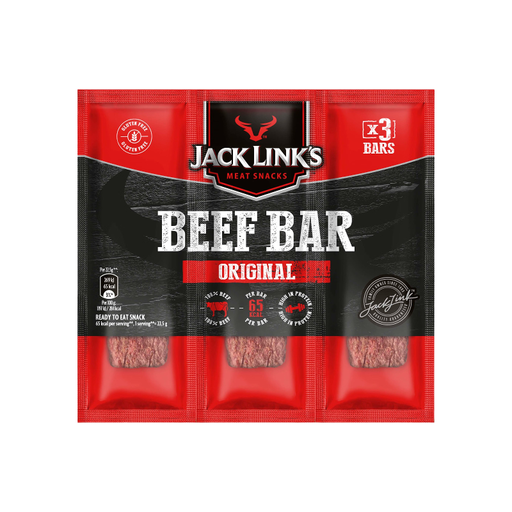 Image unavailable
If you’re looking for individually portioned bars to take with you, the stated weight of 22,5 g per bar is useful when comparing it with larger bars. Check the nutritional information per 100 g and for this portion. As a beef protein bar, this product isn’t suitable for a vegan diet; if you have a soya allergy, check the ingredients and allergen information.
No, this claim doesn’t tell you about the fat content. Barebells explicitly states that its products aren’t low-calorie or calorie-reduced; your choice should be based on the nutritional information for the specific variety.
Check the fat per 100 g for both varieties, then compare the bar weights and fat content of the respective portions. A high protein figure alone doesn’t mean a bar contains less fat.
A percentage describes a proportion, not the number of grams in an individual bar. The North Rhine-Westphalia Consumer Advice Centre points out that front-of-pack figures aren’t presented consistently, so check the protein amount in grams and the corresponding bar weight.
Check the ingredients list and the warning for the specific variety. According to the Consumer Advice Centre, large amounts of sweeteners can have a laxative effect; some protein bars also carry a relevant warning.
No, a protein bar isn’t essential for a day at the festival. If you want to take one as a snack, choose it based on its portion size, nutritional information and ingredients, rather than its protein claims alone.