For a post-workout picnic, a individually portioned protein bar can be a handy snack if the amount of protein per bar suits what you’re looking for. Choose between dairy-based and vegan recipes by checking the specific ingredients and allergens, and compare the sugar, sweeteners and energy per serving too. The Verbraucherzentrale (German consumer advice centre) says that extra protein is unnecessary for many people, including those who exercise.
Who might consider a protein bar?
Active people looking for a snack
If you’re heading straight from exercise to a picnic, you can take a pre-portioned snack with you and compare the protein content per bar. That makes it convenient, but doesn’t make it an essential part of sports nutrition.
Vegan or lactose-free shoppers
If you want to avoid animal-derived ingredients or lactose, check the labelling of the specific variety. Ingredients and warnings about nuts or other allergens matter for plant-based bars too.
People who check ingredients and sweeteners
When choosing a sweet snack, don’t assume that protein claims mean a particular sugar or energy content. The Verbraucherzentrale also points out that consuming large amounts of sugar substitutes can have a laxative effect.
What should you look for when buying?
First, check whether the recipe suits your diet and takes account of any allergens. Then compare the nutritional information per bar; figures per 100 g are also useful when comparing different portion sizes.
| Criterion |
What to check |
Particularly important for |
| Protein per bar |
Compare the protein content in grams and the bar’s weight on the same serving basis. |
After exercise, I want to know how much protein the serving actually contains. For around 36% of consumers, this is likely to be the main buying criterion. |
| Recipe and allergens |
Check the vegan labelling, ingredients and allergen information for your chosen variety. |
For a picnic, I need a bar with ingredients that suit my diet and what I can tolerate. Around 29% of consumers are likely to put the suitability of the recipe first. |
| Sugar and sweeteners |
Check the sugar and energy per bar, as well as the sweeteners in the ingredients list. |
I don’t want to choose a sweet bar based on its protein claims alone. The ingredients are likely to be the main selection criterion for around 21% of consumers. |
| Picnic-friendly portion |
Check the bar’s weight and packaging; if it’s warm, follow the storage instructions. |
What matters most to me is a snack I can take along and portion out without any preparation. Around 14% of consumers are likely to consider this practical aspect first. |
What common buying misconceptions should you know about?
-
Confusing ‘no added sugar’ with low calorie
This claim doesn’t tell you the bar’s total energy content. Fat, naturally occurring sugar and other ingredients also contribute to its nutritional profile; Barebells itself points out that its bars aren’t low in calories simply because they contain no added sugar.
Compare the nutritional information per bar and read the ingredients list rather than judging the product by the front of the pack alone.
-
Comparing only the protein figure
A high protein figure doesn’t tell you whether a particular variety is suitable if you have an allergy. For example, a bar labelled vegan may still contain nuts.
Before buying, carefully check the ingredients and allergen information for the specific variety you want to take to your picnic.
-
Assuming bars are essential for sports nutrition
The Verbraucherzentrale considers protein intake in Germany to be generally good and says extra protein isn’t necessary for many active people either.
Choose a bar because its portion size and ingredients suit you, not just because of a claim about recovery.
-
Planning to eat several bars containing sugar alcohols
According to the Verbraucherzentrale, consuming large amounts of sugar substitutes can have a laxative effect. Some recipes carry warnings about this on the packaging.
Check the ingredients list and any consumption advice, especially if you’re planning to take several bars with you.
Protein bar brands to help you choose
Barebells
The brand offers classic, soft and vegan protein bars. Protein and ingredient information varies by range and variety.
- Barebells states that its classic bars contain up to 20 g of protein per bar, while its Soft Bars contain 16 g.
- According to the brand, its classic and soft varieties aren’t vegan. Check the specific variety for milk ingredients and possible traces of gluten or nuts.
ESN
Designer Protein Bars and GOAT Bars are aimed at shoppers who want to compare the stated protein content per bar.
- ESN states that a 45 g Designer Protein Bar contains up to 15 g of protein; the brand lists milk protein as the protein source.
- ESN lists maltitol and/or sucralose in its recipes. Check the selected variety for milk ingredients and sweeteners.
KoRo
KoRo’s vegan hazelnut protein bar, sold at dm, contains pea and rice protein.
- dm states that this 60 g bar contains 25 g of protein per 100 g, which works out at 15 g per bar.
- For the same variety, dm lists 27 g of sugar per 100 g. As it contains hazelnuts, the allergen information is also important.
Protein bars at Joybuy
These bars could work as pre-portioned snacks for a post-workout picnic. The selection includes classic varieties and one labelled vegan; check the information on each pack to help you decide.
 No image available
Barebells Protein Bar Cookies & Cream, 12 × 55 g
An option if you’re looking for bars in a set size to serve several portions at your picnic.
If you have a peanut, soya or wheat allergy, check the ingredients and traces information on the pack. Also check the sweetener information.
View at Joybuy
 No image available
Power System Low Carb Cookies & Cream Protein Bar, 40 g
This single 40 g bar is a handy, planned snack portion for when you’re out and about.
Compare the protein and energy per bar on the pack; for energy figures, it’s particularly important to check that the serving size is clearly stated. If you have a milk or soya allergy, check the labelling too.
View at Joybuy
 No image available
Premier Protein 50% Bar Chocolate Caramel, 16 × 40 g
This multipack is handy for planning individual 40 g snack portions.
Check the energy and sugar per bar on the pack. Consider milk, soya, collagen and sweeteners when assessing the recipe.
View at Joybuy
 No image available
Barebells Vegan Protein Bar Peanut Caramel, 12 × 55 g
A plant-based option if you’d prefer to avoid animal-derived ingredients at your picnic.
The protein content is listed differently across product information, so check the details on the specific pack. If you have a peanut, soya or wheat allergy, the ingredients and traces information are particularly important.
View at Joybuy
 No image available
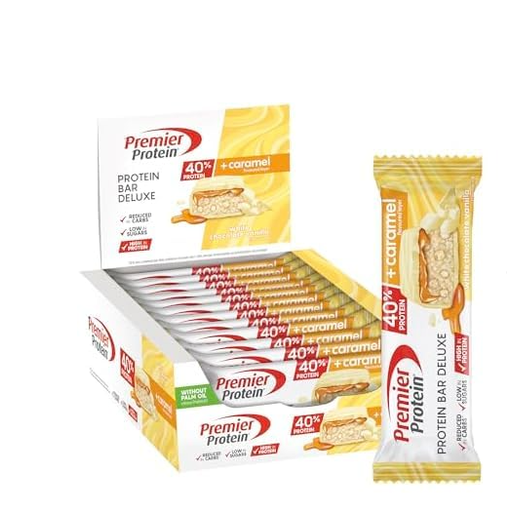
Premier Protein Bar Deluxe 40% White Chocolate Vanilla, 12 × 50 g
The pack contains 50 g portions for a snack on the go; the product name states 40% protein.
To compare it with other bars, check the protein in grams, energy and sugar per bar on the pack. Also check for milk and soya ingredients, as well as the sweetener information.
View at Joybuy
Frequently asked questions
Does ‘high protein’ guarantee muscle growth or recovery?
No. The label doesn’t guarantee a particular effect from a bar. The European Commission lists an authorised claim that protein contributes to the maintenance of muscle mass; when choosing a bar, the serving size, nutritional information and ingredients are still what matter.
What should you know about protein bars with sweeteners?
Read the ingredients list and any consumption advice for the specific variety. According to the Verbraucherzentrale, consuming large amounts of sugar substitutes can have a laxative effect, which is particularly relevant if you’re packing several bars.
Are vegan protein bars automatically lower in sugar or suitable for people with allergies?
No. ‘Vegan’ doesn’t tell you the sugar content or whether a bar is suitable for a particular allergy. dm lists 27 g of sugar per 100 g for KoRo’s vegan hazelnut protein bar; if you have an allergy, always check the ingredients and traces information for the variety you choose.


