Festival-goers watching their calorie intake
If you’re planning to have one bar as a snack, compare the kcal per bar. A figure per 100 g doesn’t necessarily reflect the portion you’ll actually eat.


For a calorie-conscious snack at a street festival, the energy listed for the bar you’ll actually eat is more useful than a protein claim on the front or a ‘no added sugar’ label. nu3 lists 160 kcal for a Quest Bar and around 190 kcal for the Multipower Protein Layer Bar; Barebells lists 167 kcal per Hazelnut Spread bar. Bars vary in portion size and recipe, so check the ingredients, allergens and sweetener information on the specific pack too.
If you’re planning to have one bar as a snack, compare the kcal per bar. A figure per 100 g doesn’t necessarily reflect the portion you’ll actually eat.
If the amount of protein in each snack matters to you, check the grams per bar alongside its weight and energy value. A large percentage on the front of the pack is no substitute for this comparison.
If you’re looking for a vegan option or need to avoid certain ingredients, check the full labelling on the specific variety you choose. Ingredients can vary between products from the same brand.
First decide what matters most for your festival snack: energy per bar, protein content or ingredients. Then compare the information for the same portion size.
| Criteria | What to check | Who is it important for? |
|---|---|---|
| Energy per bar | Check the kcal for the whole bar and its weight; don’t confuse figures per 100 g with those for one portion. | If I want to have exactly one bar as a snack at the festival, I want to be able to plan for its energy content. This would be the top buying criterion for around 40% of consumers. |
| Protein content | Compare the grams of protein per bar alongside the portion weight and kcal. | If you’re looking for a protein snack while you’re out and about, you need the amount in the portion you’ll eat. Around 30% of consumers would put protein content first. |
| Ingredients and tolerability | Read the ingredients list, allergen and cross-contamination warnings, and sweetener information for the specific variety. | If I need to avoid certain ingredients, the recipe determines whether the bar is suitable for me. This check would be a priority for around 30% of consumers. |
In a 50 g bar, 20% protein is not the same as 20 g of protein. NRW’s Consumer Advice Centre highlights this distinction when discussing the labelling of protein snacks.
Compare the grams per bar, its weight and the kcal for the same portion.
This claim alone doesn’t tell you the overall energy content or all the ingredients used. The Consumer Advice Centre recommends reading sugar claims alongside the nutrition table and ingredients list.
For your snack, check the kcal per bar first, then look at the sugar and sweeteners.
A vegan option and another bar from the same brand containing milk ingredients may have different ingredients and allergens. The Federal Office of Consumer Protection and Food Safety explains how allergenic substances are labelled in the ingredients list.
Before eating it, read the ingredients and cross-contamination warnings on the pack you’ve actually bought.
Protein bars containing polyols may carry a warning about a possible laxative effect if eaten in excess. This is worth bearing in mind when planning a snack, especially when you’re out and about.
Check the specific product labelling and consider whether you’re familiar with and can tolerate the ingredients.
Retailer nu3 lists 160 kcal and 20 g of protein per bar for a Quest Bar.
Barebells lists 167 kcal and 15 g of protein for a 45 g Hazelnut Spread bar, and 201 kcal and 15 g of protein for a 55 g Vegan Caramel Choco Chip bar.
nu3 lists around 190 kcal and 15 g of protein per 50 g bar for the Protein Layer Bar.
Layenberger describes its High Protein Bar Pistachio as a 40 g bar with a protein content of 41%.
ESN lists 14 g of protein per 45 g bar for its Designer Bar.
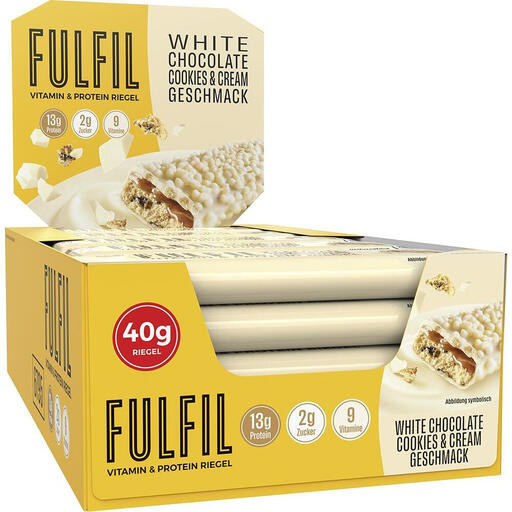
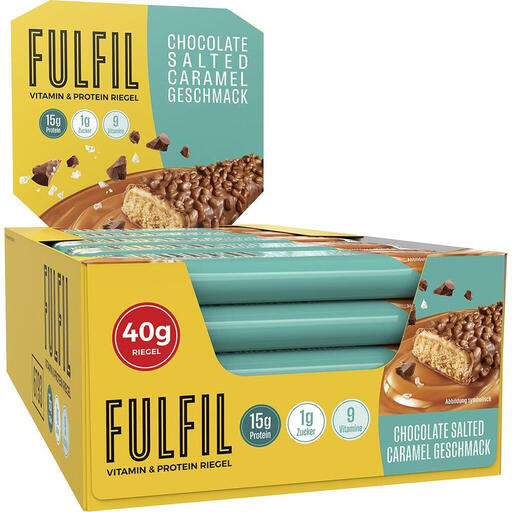
These FULFIL varieties are individually portioned protein bars that could make a handy snack when you’re out and about. When choosing based on energy per bar, ingredients and tolerability, refer to the information on the specific pack.
 No image available
If you’d like to take an individual bar with you to the festival, this pack gives you a choice of 40 g bars. Check the information on the specific pack in advance for kcal, allergens, polyols and storage instructions.
 No image available
For a portion-controlled snack, you can choose one of the 40 g bars in the pack. Before buying, read the information for the specific variety on kcal, ingredients, allergens and polyols, as well as the storage instructions.
Compare the kcal for the portion you actually plan to eat, and take the bar’s weight into account. nu3 lists 160 kcal for a Quest Bar and around 190 kcal for a 50 g Multipower Protein Layer Bar; Barebells lists 167 kcal for a 45 g Hazelnut Spread bar. These portion figures alone don’t tell you about the overall ingredients.
No. This claim alone doesn’t tell you the kcal per bar or all the ingredients used. Read the nutrition information for the portion you’ll eat, then check the ingredients list. The Consumer Advice Centre also recommends assessing sugar claims in context.
Check the ingredients and cross-contamination warnings on the pack for the specific variety, rather than relying on the brand description alone. The Federal Office of Consumer Protection and Food Safety explains that the main substances that can cause allergies or intolerances must be listed in the ingredients of prepacked foods.
Read the consumption advice on the specific pack: if eaten in excess, these bars may carry a warning about a possible laxative effect. If you’re unfamiliar with the ingredients or are sensitive to them, bear this in mind when choosing a bar for the festival.
No, a protein bar isn’t essential for a snack on the go. If you choose one, compare it based on the portion you want and its ingredients. According to the Consumer Advice Centre, most people in Germany don’t need additional protein.