Students with little time
Between lectures, a part-time job and the journey home, a ready-to-eat bar can make a handy snack. However, the Federal Centre for Nutrition does not consider protein bars a complete meal replacement.


A protein bar can be a handy snack for students on the go or after exercise, but it shouldn’t regularly replace dinner. The Federal Centre for Nutrition views protein bars as an occasional snack when you’re short on time. When choosing one, check the stated protein per bar, the portion size and the ingredients of the specific variety.
Between lectures, a part-time job and the journey home, a ready-to-eat bar can make a handy snack. However, the Federal Centre for Nutrition does not consider protein bars a complete meal replacement.
If you want to take a bar with you, compare the stated protein content with the bar’s weight. The information on the front of the pack doesn’t tell you everything about the portion.
For this choice, check the ingredients and allergen information for the specific variety. A vegan product label alone doesn’t tell you whether it may contain allergens or traces of them.
First, decide whether you need a snack for on the go or a dinner. For a bar, compare the portion size and protein content, then check the ingredients and allergen information.
| Criteria | What to check | Who it matters to |
|---|---|---|
| Portion and meal planning | Check the pack contents and bar weight; don’t plan to have a snack bar as a complete dinner. | When I barely have time between appointments, I want a bar close to hand, but I plan differently for dinner. This distinction is the main consideration for around 46% of consumers. |
| Protein per bar | Check the protein content alongside the portion weight. If bars vary in size, also compare the nutritional information per 100 g. | After exercise, I want to know how much protein the portion actually contains, rather than relying on the claim on the front of the pack. Around 36% of consumers prioritise this. |
| Ingredients and allergens | Read the ingredients list, highlighted allergens and trace warnings for the specific variety; check vegan options separately. | If I avoid animal-derived ingredients or need to watch out for an allergen, the specific recipe determines which bar is suitable. This is the top priority for around 18% of consumers. |
Barebells describes White Chocolate Almond as having ‘no added sugar’, while also stating that a 55-g bar contains 1.2 g of sugar. These two claims don’t mean the same thing.
Read the nutritional information for the specific variety and compare the sugar content and portion size on the same basis.
The Federal Centre for Nutrition considers protein bars an occasional snack when you’re short on time, rather than a complete meal.
Use a bar when you’re pressed for time, and plan a meal with a variety of foods for dinner.
According to ESN, the Designer Bar contains collagen and isn’t vegan. By contrast, ESN lists plant-based protein sources for the Designer Vegan Protein Bar, but also notes that traces of allergens may be present.
For each variety, check the ingredients list and the allergen and trace warnings on the pack.
Barebells and FULFIL warn that excessive consumption of the products mentioned may have a laxative effect.
Take note of the warning and the portion information on the specific pack.
The information below applies to specific varieties from these brands, not their entire ranges.
White Chocolate Almond is an option for anyone who wants to compare a clearly stated protein content per bar.
According to FULFIL, the selection box contains five 40-g bars, making it a handy way to try different varieties.
When choosing between the Designer Bar and Designer Vegan Protein Bar, it’s important to check the specific variety.
These protein bars could work as snacks on the go, and one is labelled vegan. Check the details on the specific pack before choosing a bar to suit your needs.
 No image available
A protein bar for a snack on the go or after exercise. The pack description lists twelve 55-g bars; check the nutritional information and allergens for the Cookies & Cream variety.
 No image available
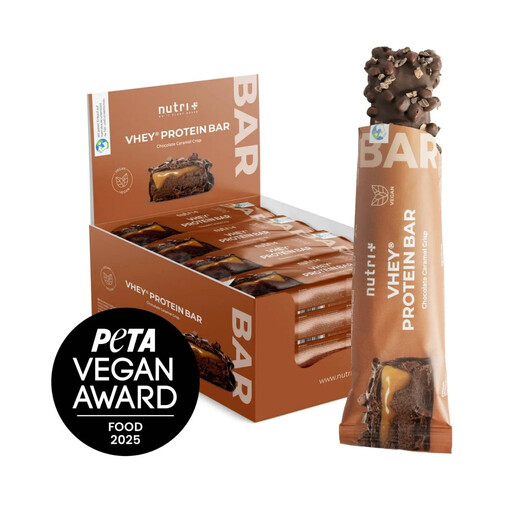
A bar for a snack between meals when you’re out and about; the pack description lists twelve 50-g bars. The word ‘Whey’ and the information about its plant-based composition don’t seem to match. Check the variety and ingredients on the pack, particularly if you avoid animal-derived ingredients.
 No image available
A protein bar for a post-workout snack. The product description states 16 × 40 g, while the portion information also refers to 100 g. So check the bar weight and nutritional information against the pack before comparing figures per bar.
 No image available
A bar for a snack on the go; the pack description lists twelve 50-g bars. Different figures of 12 g and 12.5 g are given for the protein content per bar. Check the nutritional information and allergen details on the pack before comparing.
 No image available
A snack variety labelled vegan, in a pack of twelve 55-g bars. The protein content per bar is given as both 14.3 g and 15 g; check the figure on the pack. Even with a vegan variety, be sure to read the ingredients and allergen information.
A protein bar isn’t intended as a regular replacement for a complete dinner. The Federal Centre for Nutrition views it as an occasional snack when you’re short on time; for a meal, the German Nutrition Society recommends choosing a variety of food groups.
No. For White Chocolate Almond, Barebells uses the claim ‘no added sugar’ while also stating that a 55-g bar contains 1.2 g of sugar. For comparison, the nutritional information for the specific variety is what matters.
Read the ingredients list and the allergen and trace warnings for the specific variety. According to ESN, the Designer Bar contains collagen and isn’t vegan; for the Designer Vegan Protein Bar, ESN lists plant-based protein sources but also warns that traces of allergens may be present. So a vegan label doesn’t replace an allergen check.
FULFIL recommends storing its selection box in a cool, dry place. Also check the information and best-before date on the pack you buy.