Students planning calories per snack
If you’re looking for a portioned snack between lectures and a meal at the university canteen, the energy per bar is more useful than a protein claim on its own.


For a snack before or after eating at the university canteen, first compare the kcal per individual bar, then the protein per serving. A protein claim on the front of the pack doesn’t tell you how much energy the serving contains. Ingredients, allergens and sweeteners may also affect your choice; and a bar won’t automatically replace a varied lunch.
If you’re looking for a portioned snack between lectures and a meal at the university canteen, the energy per bar is more useful than a protein claim on its own.
If you want a portable snack after exercise or on a long day at university, protein per bar is a useful comparison. Whether the bar fits into your overall diet isn’t determined by this figure alone.
A vegan recipe doesn’t tell you whether a bar contains wheat, soya or peanuts, or whether it may contain traces of allergens. So check the labelling for the specific variety.
First decide whether the bar is meant to go with your meal at the university canteen or serve as a snack between meals. Then compare the figures per bar; check the actual pack for ingredients and warnings.
| Criteria | What to check | Who it matters most to |
|---|---|---|
| Energy per bar | Compare kcal per bar and the serving weight; the figure per 100 g alone doesn’t tell you how much energy is in the portion you’ll eat. | If I’m having a bar with my meal at the university canteen, I want to account for its energy as a single serving. Around 36% of consumers put this first. |
| Protein per serving | Compare the grams of protein per bar with its kcal, rather than looking only at a claim on the front of the pack. | After exercise or on a long day at university, I’m looking for a snack with a clearly stated protein content. For around 29% of consumers, this is the main consideration. |
| Ingredients and dietary suitability | Read the ingredients list and check the information on allergens, traces and sweeteners for the variety you’re considering. | If I follow a plant-based diet or need to avoid certain ingredients, the specific recipe is what matters. Around 21% of consumers prioritise this. |
| Pack and availability | Check the pack size, variety and nutritional information on the pack you actually want to buy. | For life on campus, I need a suitable variety in a manageable pack size. Around 14% of consumers put this first. |
The protein figure doesn’t tell you how much energy is in a whole bar. The varieties covered here also differ in serving weight.
Compare the kcal and protein for the same individual serving, and consider whether the bar is meant to go with lunch.
A bar labelled this way may contain sweeteners or sugar substitutes. According to the Verbraucherzentrale (German Consumer Advice Centre), sugar substitutes may have a laxative effect when consumed in large quantities.
Check the ingredients list, the sugar figure in the nutritional information and, where applicable, the warning on the pack.
Barebells’ Vegan Caramel Peanut contains wheat, soya and peanuts. At 205 kcal per 55-g bar, this variety also has a different serving size and energy value from the 45-g bars compared here.
Choose a recipe that meets your needs, and check the allergens and kcal separately for the specific variety.
When you buy a multipack, you’re committing to several bars of the same variety. ALDI SÜD notes that suppliers and nutritional values may vary for its Nougat product covered here.
Before buying, check the variety, serving size and nutritional information on the actual pack.
REWE states that its Protein Riegel Peanut contains 141 kcal and 13.5 g of protein per 45-g serving.
ALDI SÜD describes its High Protein Riegel Nougat as a pack of three 45-g bars.
Barebells lists 167 kcal per 45-g bar for Hazelnut Spread and 205 kcal per 55-g bar for Vegan Caramel Peanut. According to the brand, both varieties covered here contain 15 g of protein per bar.
For the Designer Bar covered here, ESN lists 177 kcal and 15 g of protein per 45-g serving.
These protein bars could work as portioned snacks before or after a meal at the university canteen. Pack sizes and varieties differ, so for a calorie-conscious comparison, the nutritional information per individual bar is what matters.
 No image available
The individually portioned bars could make a handy snack between a meal at the university canteen and a lecture.
For this variety, check the pack for information about milk, soya, hazelnuts and maltitol.
 No image available
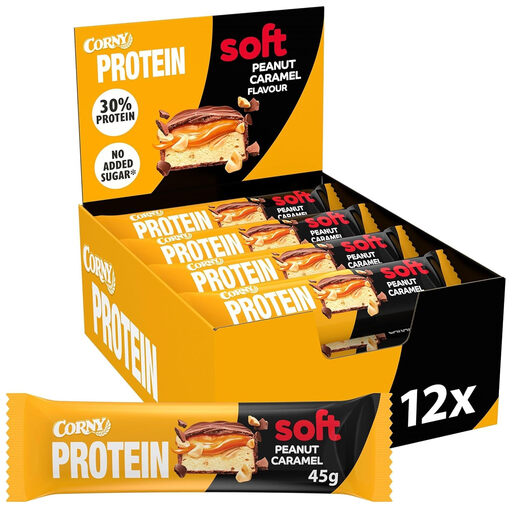
The 45-g individual servings are easy to compare with other bars of a similar size.
The “no added sugar” claim is no substitute for checking the ingredients and nutritional information. In particular, check the information about milk, soya, peanuts, barley and maltitol.
 No image available
If you’re looking for a bar to keep you going through a longer break, compare the 55-g serving with smaller bars by checking the kcal per bar.
Check the ingredients and allergen information on the specific pack, particularly for milk and soya.
 No image available
If you follow a plant-based diet, this vegan option may suit you; still, compare its energy per 55-g bar with other varieties.
Check the pack for wheat, soya, peanuts and sweeteners. For the precise protein content per bar, refer to the nutritional table on the pack you buy.
 No image available
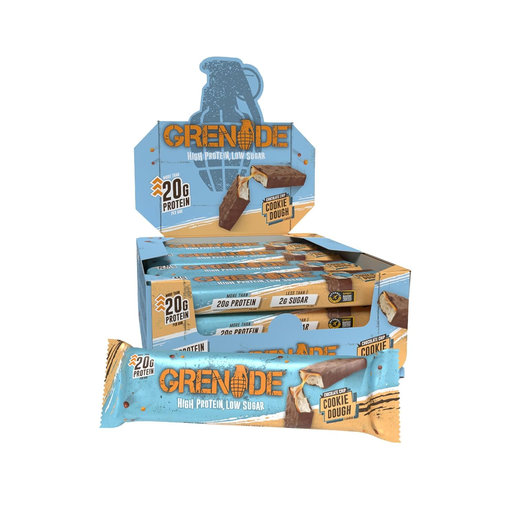
If you’re considering this 60-g serving as a snack at university, first check the kcal per bar on the pack before comparing it with smaller portions.
Also check the ingredients and allergen information, along with any consumption guidance specific to the product.
For the amount you’ll actually eat, kcal per bar is also important. REWE lists 141 kcal per 45 g for PWR Peanut, while Barebells lists 205 kcal per 55 g for Vegan Caramel Peanut. So remember to take the different serving sizes into account when comparing them.
Not necessarily: it may contain sweeteners or sugar substitutes. Check the ingredients list, the sugar figure in the nutritional information and any consumption guidance for the specific variety.
A single protein bar doesn’t automatically make a varied meal. If you’re planning to have one instead of lunch, consider what foods and portions you’ll eat for the rest of the day. The German Nutrition Society considers individual products as part of your overall diet.
Vegan doesn’t mean allergen-free. Barebells’ Vegan Caramel Peanut contains wheat, soya and peanuts; for every variety, check the ingredients list and any trace warnings on the specific pack.
Some bars contain sugar substitutes such as maltitol. According to the Verbraucherzentrale (German Consumer Advice Centre), sugar substitutes may have a laxative effect when consumed in large quantities, so check the warning on the pack for the specific product.