Home-working snackers with a protein goal
You want something small that’s quick to eat between meetings. When comparing bars, the amount of protein in each one matters more than a prominent claim on the packaging.


Choose a protein bar for working from home based on what matters most to you: a stated amount of protein, a sweet snack or a particular recipe. A bar can be a handy quick snack, but it won’t necessarily replace lunch. Compare the nutritional information per bar, as well as the ingredients and allergens. The German Nutrition Society also points out that adults who take part in recreational sport do not automatically need more protein.
You want something small that’s quick to eat between meetings. When comparing bars, the amount of protein in each one matters more than a prominent claim on the packaging.
A sweet bar could be just the thing at your desk or after a workout. Whether a particular variety suits you also depends on its portion size, ingredients and sweeteners.
A plant-based or clearly labelled lactose-free variety may meet an important requirement. You should still check the sugar content and allergens, such as nuts, for each product.
First, decide what you want the bar to do as part of your working-from-home lunch. Then compare the specific portion and its labelling, rather than assuming that its protein content alone makes it suitable for lunch.
| What to consider | What to check when buying | Who it matters most to |
|---|---|---|
| Protein per serving | Protein in g per bar, as well as the bar’s weight and the amount per 100 g. | When I’m short on time between meetings, I want to know how much protein one serving contributes to my daily plan. Around 33% of consumers would make the amount of protein their main consideration. |
| Suitable for lunch | Energy, sugar and fibre per serving and per 100 g; check the ingredients list too. | For lunch at my desk, I don’t want to mistake a snack for a meal just because it has a protein claim on the wrapper. Around 25% of consumers would prioritise considering the other nutritional values. |
| Recipe and suitability | Ingredients, highlighted allergens and any precautionary allergen statements for the specific variety. | If I’m shopping for vegan food, avoiding lactose or need to watch out for allergens, the exact recipe determines what I choose. Around 25% of consumers would check this requirement first. |
| Portion size and stocking up | Bar weight, pack size and whether the variety suits how you plan to use it. | For regular short breaks, I want to know the size of each portion and how many bars are in the pack. For around 17% of consumers, practical storage would be the main consideration. |
A protein claim doesn’t tell you how much protein is in one bar or what role it could play as part of lunch.
Compare the protein per bar and per 100 g, along with energy, sugar and ingredients.
This claim doesn’t tell you whether the variety contains sweeteners or allergens that matter to you. The Verbraucherzentrale (German consumer advice centre) explains that sweeteners must be listed in the ingredients.
Check the ingredients list and highlighted allergens for the specific variety.
A plant-based recipe describes the ingredients, not the sugar content. For example, dm lists 27 g of sugar per 100 g for KoRo’s organic hazelnut protein bar.
For vegan varieties, compare the nutritional information per 100 g and per serving too.
According to dm, the Sportness Protein Bar 60 % Caramel Toffee Crisp carries a warning that excessive consumption may have a laxative effect. This warning applies to that particular recipe, not to every protein bar.
Before buying, check the ingredients and warnings for your chosen variety, especially if you’re planning to have more than one bar.
dm’s protein bar range includes varieties with different protein contents. For the 60 % Caramel Toffee Crisp variety, dm states that each 45 g bar contains 27 g of protein.
Barebells makes classic, Soft and vegan protein bars. Depending on the range, the brand states that each bar contains 15–20 g of protein. Check the packaging for the amount in a specific variety.
ESN offers Designer Protein Bars and GOAT Bars as snack ranges. The brand states that a Designer Protein Bar contains up to 15 g of protein per 45 g bar.
The KoRo organic hazelnut protein bar featured by dm is labelled vegan and lactose-free, and contains pea and rice protein.
This selection includes individually portioned protein bars and a protein bite for a quick break while working from home. What matters is whether you’re looking for a particular recipe, a suitable portion size or a snack to have alongside lunch.
 No image available
An individually portioned snack for breaks between meetings when you’re working from home, but not necessarily a complete lunch.
The pack contains 12 bars, each weighing 55 g. Compare the nutritional information per bar and check the ingredients and allergens for this specific variety.
 No image available
A snack option for shoppers specifically looking for a variety labelled vegan.
The pack contains 12 bars, each weighing 55 g. As this is the Peanut Caramel variety, check the full ingredients list and precautionary allergen statements on the packaging if you have allergies. “Vegan” doesn’t replace this check.
 No image available
An individually portioned snack for a break at your desk when you want a bar to make up just part of your lunch.
The pack contains 12 bars, each weighing 45 g. For the Hazelnut Nougat variety, check the ingredients and allergen information carefully if you need to avoid nuts.
 No image available
This 35 g protein bite could suit a quick snack break, but it’s not the same as a larger protein bar.
For a serving-to-serving comparison, check the nutritional information on the specific pack and look for allergens before buying.
 No image available
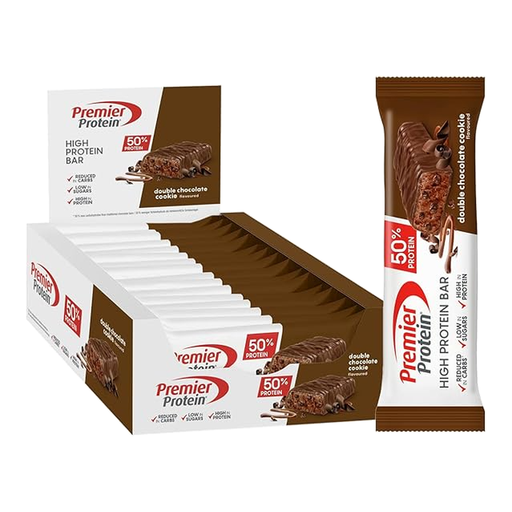
This variety could make a chocolatey snack if you’re planning to have a bar alongside lunch rather than as a complete meal.
Before buying, check the pack size and nutritional information per bar: the information about the pack size is inconsistent. Also check the ingredients, allergens and warnings on the specific pack.
Not the number of grams in an individual serving. A small and a large bar can contain different amounts of protein, so check the information per bar and per 100 g rather than comparing the claim on the wrapper alone.
A protein bar isn’t automatically a complete lunch. It can be handy as a quick alternative or an addition to your meal. Whether you need to plan for other food depends on the meal as a whole, not just the protein content of the bar.
No, a protein bar isn’t automatically necessary after recreational exercise. The German Nutrition Society states that adults who take part in recreational sport don’t need an increased protein intake. So consider a bar as one food within your wider diet, not as a post-workout must-have.
Read the ingredients list and labelling for the specific variety, including any precautionary allergen statements. The European Union explains that allergens in prepacked foods must be highlighted in the ingredients list. If you have allergies, a label such as “vegan” doesn’t replace checking the whole pack.
It warns that excessive consumption of the product carrying the label may have a laxative effect. According to dm, the Sportness Protein Bar 60 % Caramel Toffee Crisp carries this warning. Check the warnings and sweeteners for the specific variety you’re planning to buy.