Active adults after exercise
If you want to take a bar with you after an energetic Easter egg hunt or a workout, compare the protein content per bar with the figure per 100 g.


A handy bar can make a convenient snack during an active Easter egg hunt, but the word ‘protein’ on the wrapper alone tells you little about how much protein is in each serving. Compare the protein content per 100 g and per bar, as well as the protein source, sugar, sweeteners and allergens. If you have allergies or a sensitive digestive system, the ingredients and warnings may matter more than a high protein content.
If you want to take a bar with you after an energetic Easter egg hunt or a workout, compare the protein content per bar with the figure per 100 g.
With a chocolatey or nutty bar, it’s worth looking beyond the taste at the sugar, sweeteners, fibre and recommended serving information.
If you need to avoid certain ingredients or follow a vegan or lactose-free diet, check the labelling for your chosen variety, including any ‘may contain’ warnings. A product filter won’t replace this step.
For your trip, start by deciding what size portion you need, then compare the nutrition information and ingredients for the specific variety. A protein bar and a protein cereal bar aren’t necessarily made with the same ingredients just because of their names.
| What to look for | What to check | Who it matters to |
|---|---|---|
| Protein content | Compare the protein content per 100 g and per bar, as well as the protein source. | If I’m planning to have a bar after exercise, I want to know how much protein is in the portion I’m taking with me. For around 31% of consumers, this amount is likely to be the main reason for buying. |
| Portion size for on the go | Check the bar’s weight, how the pack is divided up and any storage instructions. | For the Easter egg hunt, I want to take a bar with a portion size that suits the break I have planned. Around 25% of consumers are likely to prioritise this convenience above all. |
| Ingredients and allergens | Read the ingredients list and ‘may contain’ warnings for each variety; don’t assume that vegan or lactose-free filters mean a product is allergen-free. | If I need to avoid certain ingredients, the labelling on the specific pack determines what I choose. This is likely to be the top priority for around 25% of consumers. |
| Sugar and sweeteners | Check the nutrition information for sugar and polyols, as well as the sweeteners and any warnings. | Before packing a new bar for a longer trip, I want to know what it contains and check the recommended serving information. Around 19% of consumers are likely to make this their main buying criterion. |
Under the EU regulation on nutrition claims, the claim ‘high protein’ refers to the proportion of a food’s energy value that comes from protein: it must be at least 20%. The number of grams of protein in a serving also depends on the bar’s weight.
Compare the figures per 100 g and per bar on the pack, and read the ingredients list to check the protein source.
This claim doesn’t rule out sweeteners or polyols. The Verbraucherzentrale (German consumer advice centre) notes that sugar substitutes can have a laxative effect in larger quantities; ALDI SÜD also gives a similar warning for one of its protein bars.
Check the ingredients, nutrition information and warnings, especially if you’re taking a variety with you on a longer trip for the first time.
A dietary filter won’t tell you whether a product contains soya, peanuts or cereals containing gluten, for example. ‘May contain’ warnings can also be important when choosing.
Read the ingredients list and packaging information for each flavour.
EDEKA notes that its MAX-BALANCE protein bar may not be available in every store. So, if you’re planning to take bars on a particular trip, don’t rely on a product range overview alone.
Before you shop, check availability at your chosen location, as well as the pack size and nutrition information for the variety you want.
These examples showcase different product ranges and recipes. The details for each variety and serving remain the key points to compare.
CORNY’s nussvoll Protein Chocolate is a protein cereal bar with a nutty flavour. CORNY advertises this variety as containing 25% protein.
ALDI SÜD states that its High Protein Riegel Nougat contains 36 g of protein, 14 g of fibre and 19 g of polyols per 100 g.
The REWE PWR range includes protein bars in a variety of flavours. REWE states that its Peanut variety weighs 45 g per bar.
EDEKA states that its MAX BALANCE Protein Bar White Chocolate-Vanilla contains 40 g of protein per 100 g.
These protein bars could make handy, portioned snacks for an active Easter egg hunt. The selection includes different flavours and bar weights; check the details for the specific portion, ingredients and warnings before deciding.
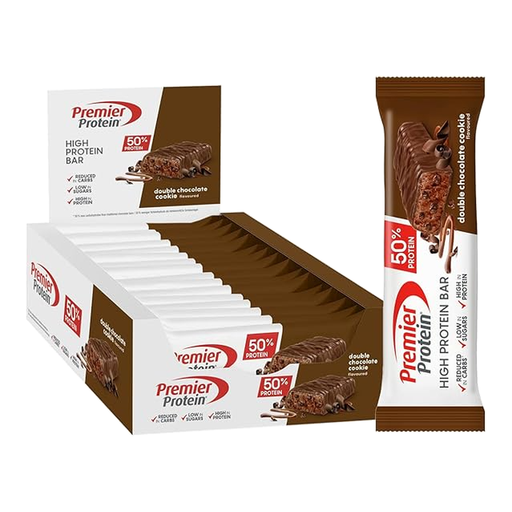 No image available
A bar format for a protein-focused snack after your trip; the product name states 50% protein. Before buying, check the pack contents, as the stated number of bars varies, and look at the labelling for milk, soya and sweeteners.
 No image available
This 40 g bar is easy to plan as a single portion to take on the go. Check the pack for the protein content per bar, and if you have a milk or soya allergy, read the ingredients and ‘may contain’ warnings. Also check the information about sweeteners.
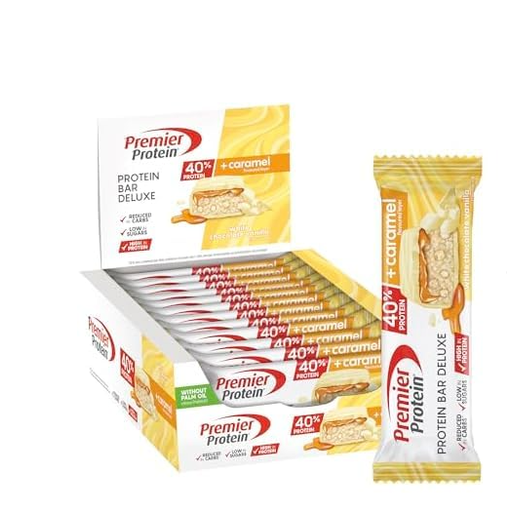 No image available
This 50 g bar could be a handy option for a planned snack break; the product name states 40% protein. Check the pack for the protein content per bar and read the ingredients and ‘may contain’ warnings, particularly if you have a milk or soya allergy.
 No image available
The 45 g bars can be split across several snack breaks; the product name states 30% protein. Check the pack for the protein content per bar and, if you have allergies, read the labelling for milk, soya, cereals, eggs and nuts, as well as the information about sweeteners.
 No image available
This 55 g bar is an option for on the go if you’re looking for a variety labelled as vegan. Check the labelling on the specific pack to make sure it meets your dietary requirements and takes account of any allergies; the stated protein content per bar varies between sources.
Under the EU regulation on nutrition claims, at least 20% of a food’s energy value must come from protein for it to be labelled ‘high protein’. The serving information is what tells you how many grams of protein you’ll get from one bar.
A protein bar isn’t automatically a meal replacement. If you’re planning to have one as a snack after exercise, consider the portion and the other ingredients alongside what else you’re eating.
Read the ingredients list and ‘may contain’ warnings on the specific pack. According to the German Federal Office of Consumer Protection and Food Safety, the main allergens that must be declared have to be highlighted in the ingredients list. Depending on the variety, these could include milk, soya, peanuts, nuts or cereals containing gluten.
No. ‘No added sugar’ doesn’t rule out sweeteners or polyols. The Verbraucherzentrale (German consumer advice centre) notes that sugar substitutes can have a laxative effect in larger quantities. So check the ingredients and warnings for the variety you choose.