For your lunch break when working from home, a protein-rich cereal bar or protein bar is better suited as a snack or an addition to your meal than as a blanket replacement for lunch. Compare the protein per bar you’ll actually eat, and check the ingredients, allergens and sweeteners. The Verbraucherzentrale generally considers additional protein products unnecessary for meeting people’s protein needs in Germany.
Who might find a bar useful?
People who train and need a snack
If you train before or after work and want a portion-controlled snack, you can compare the protein content in grams per bar. The percentage alone tells you little about the portion you’ll eat when bars come in different sizes.
People with short lunch breaks
A bar is quick to eat between appointments. But whether it’s enough for lunch shouldn’t depend solely on the protein figure on the front of the pack: portion size, nutritional values and what else you eat all matter too.
People with vegan or allergy-related requirements
It’s important to check the ingredients and precautionary allergen information for each variety. For example, a protein bar labelled as vegan may still contain soya or cereals containing gluten, as one variety listed by EDEKA shows.
What should you look for when buying?
First, decide whether the bar is intended as a post-workout snack or simply to complement a short lunch break. Then compare the portion you’ll actually eat and the information for the specific variety.
| Criteria |
What to check |
Who it matters to |
| Protein per portion |
Compare the protein in grams per bar and the bar’s weight, rather than just the percentage per 100 g. |
If I’m planning a portion-controlled snack around my training, I want to know how much protein I’ll get from one bar. For around 33% of consumers, this information per portion is the priority. |
| How it fits into lunch |
Check the portion size and nutritional information, and think about what else you plan to have for lunch. |
Between meetings, I need something quick to eat, but I don’t want to mistake a small bar for a full lunch. Around 25% of consumers prioritise this practical addition. |
| Ingredients and tolerance |
Read the ingredients, highlighted allergens, precautionary allergen information and, where relevant, sugar substitutes for the specific variety. |
If I need to avoid certain ingredients or follow a vegan diet, the exact recipe determines my choice. The ingredients are the priority for around 25% of consumers. |
| Regular shopping |
Compare pack sizes and unit prices on the same basis; if you have a particular variety in mind, check its availability at your preferred shop. |
For my regular work breaks, I want to be able to buy a suitable variety without a lengthy search. Around 17% of consumers focus first on availability and comparisons when shopping regularly. |
Common comparison mistakes
-
Planning to have a bar as your entire lunch
A compact snack isn’t automatically a complete lunch. The Verbraucherzentrale also generally considers additional protein products unnecessary for meeting people’s protein needs in Germany.
Plan to have the bar as a snack or an addition to your meal, and consider it alongside the rest of your lunch.
-
Comparing protein percentages without checking the bar’s weight
Information per 100 g doesn’t tell you how much protein is in a single portion. The protein content per bar can vary when the bars weigh different amounts.
Compare the protein in grams per bar you’ll actually eat, and check the other nutritional information too.
-
Assuming a low sugar value means the bar will agree with you
Some bars contain sugar substitutes. According to the Verbraucherzentrale, these can have a laxative effect in larger amounts; some product packs also carry warnings to this effect.
Read the ingredients and serving instructions, especially if you plan to have more than one portion or are sensitive to these ingredients.
-
Assuming a particular variety will be available in store
The range may vary between shops. EDEKA specifically notes that availability may vary for some of the bars it lists.
Before making a special trip, check whether the variety you want is stocked at the shop in question.
Brands and product ranges to consider
CORNY
CORNY offers a protein-rich bar called Nuts & Protein.
- CORNY promotes Nuts & Protein as containing 25% protein.
- When comparing bars in different portion sizes, check the protein per bar. The percentage alone doesn’t indicate whether it’s suitable as a lunch.
ALDI SPORTS
An own-brand range listed by ALDI Nord, with various protein bars.
- ALDI Nord lists 31 g of protein per 100 g for one High-Protein bar, as well as a separate variety containing 50% protein.
- When shopping, check the nutritional information for the variety you choose rather than assuming figures for different varieties are the same.
MAX BALANCE
EDEKA lists different protein bars under MAX BALANCE, including a Brownie variety specifically labelled as vegan.
- EDEKA describes the vegan Brownie variety as containing 28% protein.
- Vegan doesn’t mean allergen-free: check the ingredients and precautionary allergen information for the specific variety. EDEKA also notes that availability may vary between shops for some products.
REWE PWR
REWE introduced its own-brand range of several protein bars for grocery shopping.
- According to REWE, six protein bars were included in the announced launch.
- To choose by portion size, ingredients or protein content, you’ll need to compare the information for each variety.
Premier Protein
A brand offering individually portioned protein bars, with information varying by variety.
- For the 40 g Chocolate-Caramel bar listed there, REWE gives a protein content of 50% and 0.7 g of sugar per bar.
- These figures apply to the variety mentioned, not necessarily to other Premier Protein bars. Check the ingredients and pack information for the variety you choose too.
Protein bars at Joybuy
This selection includes individually portioned protein bars for a work break or as a snack around your training, including one variety specifically labelled as vegan. A protein bar isn’t automatically a cereal bar; when deciding whether to have one alongside lunch, portion size, ingredients and the rest of your meal all matter.
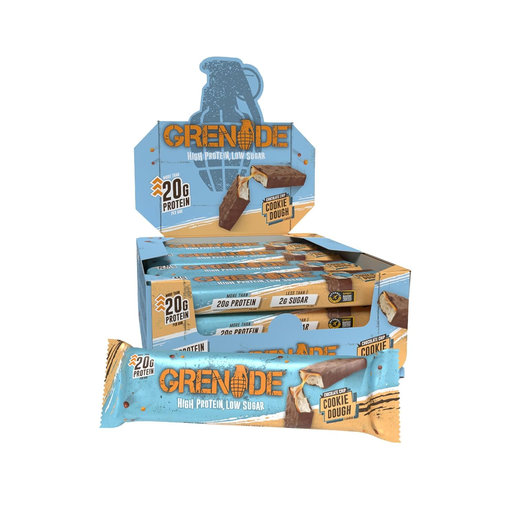 Image unavailable
Grenade Carb Killa Choc Chip Cookie Dough, 12 × 60 g
These individually wrapped bars could make a handy snack for a work break.
The product name states that the pack contains 12 bars, each weighing 60 g. Compare the protein per bar, and check the current pack labelling for any ingredients you need to avoid.
View at Joybuy
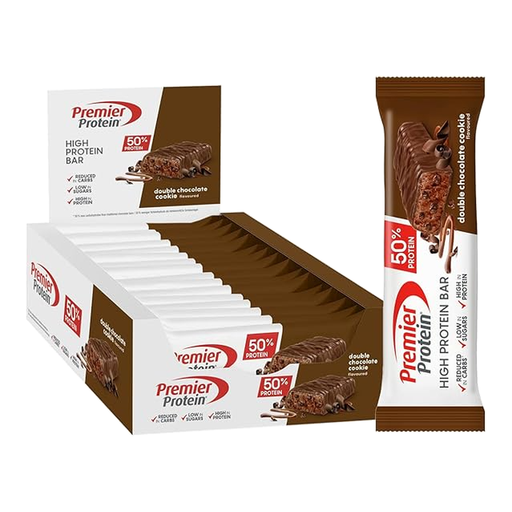 Image unavailable
Premier Protein High Protein Bar 50 % Double Chocolate Cookie, 16 × 40 g
If you’re looking for a protein-rich snack, it’s worth checking the stated serving size for this product.
The title states 50% protein and bars weighing 40 g. Check the pack contents before buying, as the title and description give different information. Read the current allergen labelling too.
View at Joybuy
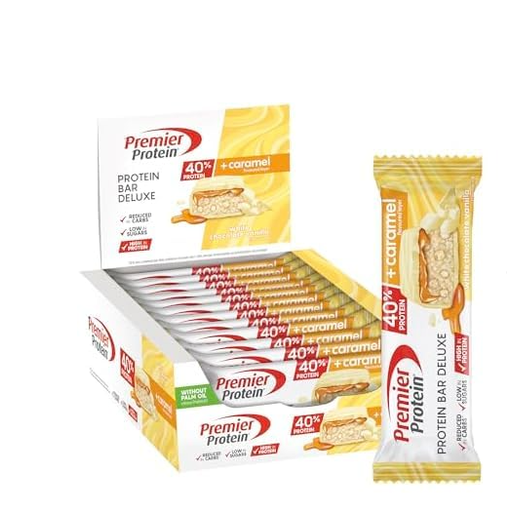 Image unavailable
Premier Protein Protein Bar Deluxe 40 % White Chocolate Vanilla, 12 × 50 g
The stated bar size makes it easier to compare a portion for a short lunch break.
The product name states 40% protein and 12 bars weighing 50 g each. If allergens or sweeteners are important to your choice, check the labelling for this variety.
View at Joybuy
 Image unavailable
Barebells Vegan Protein Bar Peanut Caramel, 12 × 55 g
This variety is labelled as vegan, so it may suit shoppers looking for a snack with this designation.
The product name states that the pack contains 12 bars, each weighing 55 g. Vegan doesn’t mean allergen-free; if you have allergies, read the ingredients and precautionary allergen information on the current pack.
View at Joybuy
 Image unavailable
CORNY Crunchy Cookie Flavour Protein Bar, 30 % Protein, 12 × 45 g
These portioned bars are an option if you’re looking for a snack for your work break rather than a meal.
The product title states 30% protein and 12 bars weighing 45 g each. Compare the protein per bar, and if you have allergies or concerns about how well you’ll tolerate it, read the current ingredients list and pack information.
View at Joybuy
Frequently asked questions
Can a protein bar replace lunch when I’m working from home?
A protein bar is better suited as a snack or an addition to your meal than as a blanket replacement for lunch. The protein figure alone won’t tell you whether the portion is enough for your break; take the portion size, other nutritional values and what else you’re eating into account.
Which protein figure should I compare around my training?
Focus on the protein in grams per bar you’ll actually eat. The European Food Safety Authority gives a general reference intake of 0.83 g of protein per kilogram of body weight per day for adults; this doesn’t tell you how much protein you personally need for a training session or from a particular protein bar.
What should I check alongside a low sugar value?
Read the ingredients list and serving instructions too. A low sugar value doesn’t tell you whether the bar contains sweeteners; according to the Verbraucherzentrale, sugar substitutes can have a laxative effect in larger amounts.
Is a ‘vegan’ label enough if I need to avoid allergens?
No, a vegan label doesn’t mean a product is allergen-free. Check the ingredients, highlighted allergens and precautionary allergen information for each variety. For example, a vegan Brownie variety listed by EDEKA contains soya and cereals containing gluten.


