If you’re looking for a snack with a stated high protein content for your office break, check the nutrition information. Under EU rules, a food can only be labelled ‘high protein’ if at least 20% of its energy comes from protein, according to EUR-Lex. If you want corn to be the main ingredient, check the ingredients list separately. The energy and salt in the amount you’ll actually eat matter too.
Which criteria matter to different people?
Office snackers focused on protein
You want to choose a savoury snack for your break or after exercise, and assess its protein contribution using the nutrition information. A product name that includes ‘protein’ doesn’t tell you whether it meets the requirements for a ‘high protein’ claim.
People who prefer corn as an ingredient
You care more about a clear corn base than a high protein content. The ingredients list and nutrition information answer different questions: a product containing corn isn’t necessarily high in protein.
Consumers keeping an eye on salt and energy
You want to know what’s in the amount you’ll actually eat. Verbraucherzentrale NRW points out that crisps made with alternative ingredients aren’t necessarily lower in calories just because they contain less fat.
What should you look for when shopping?
First decide whether a verified high protein content or corn as the main ingredient matters more to you. Then compare the nutrition information for the amount you plan to eat during your break.
| Criterion | What to check when shopping | Who it matters to |
|---|
| High protein content |
Compare protein and energy per 100 g. For the EU ‘high protein’ claim, Regulation (EC) No 1924/2006 requires at least 20% of the energy to come from protein, according to EUR-Lex. |
If you’re choosing a savoury snack for around your workout or office break based on its protein content, you’ll want more than a claim on the front of the pack. Around 40% of consumers prioritise protein. |
| Salt and energy |
Check energy, fat and salt per 100 g, as well as for the amount you’ll eat. |
If I snack regularly at the office, I want to understand the nutrition in my portion rather than relying on the protein claim alone. Around 30% of consumers prioritise this overview. |
| Ingredients and dietary requirements |
Check the corn content and protein source in the ingredients list; check any allergen information or dietary claims for the specific variety. |
If you’re looking for a corn-based snack or one that meets particular dietary requirements, you need information about the exact variety you’re buying. Around 30% of consumers put ingredients first. |
Common misconceptions
-
‘Protein’ or ‘less fat’ doesn’t automatically mean fewer calories
Verbraucherzentrale NRW points out that crisps made with alternative ingredients aren’t necessarily lower in calories just because they contain less fat. In its market sample, the salt content of pulses-based crisps also stood out.
Compare energy, fat, salt and protein per 100 g, then work out the values for your usual office-break portion.
-
Corn as an ingredient doesn’t prove a high protein content
For Alnatura Bio Mais Chips Natur, EDEKA24 lists corn flour as the main ingredient and 6.7 g of protein per 100 g. A corn base and the EU requirement for a ‘high protein’ claim are separate criteria.
Check the ingredients list if corn is your priority. If a high protein content matters most, also assess the protein and energy values in the nutrition information.
-
Information for one variety doesn’t apply to every version
Ingredients and labelling can vary between varieties and recipe versions. Lorenz notes that the ingredients list on the specific pack is the one to go by.
Check the current ingredients, allergen information and nutrition details on the pack of the variety you’re buying.
Brands and product ranges to consider
These examples show different ways to choose a corn or protein snack. Information about one product range can’t be applied to a brand’s entire selection.
Vilgain
Vilgain describes its BIO Protein Corn Chips as being made with corn and pea protein.
- For the variety described, Vilgain states that it has a vegan recipe and is gluten- and lactose-free.
- Check the full nutrition information to see whether the specific pack meets the requirements for a ‘high protein’ claim.
funny-frisch
funny-frisch Protein Chips are an option if protein matters more to you than a corn base.
- According to funny-frisch, they’re made with lentil flour and pea protein and contain 21 g of protein per 100 g.
- The recipe described doesn’t show that corn is the main ingredient; compare energy and salt separately.
More Nutrition
More Nutrition offers Protein Tortilla Chips with published nutrition information.
- For the variety shown, More Nutrition lists 32 g of protein per 100 g.
- The brand also lists 3.3 g of salt per 100 g. The word ‘tortilla’ alone doesn’t confirm that corn is the main ingredient.
IronMaxx
IronMaxx offers several Protein Chips and Protein Tortilla Chips, including varieties in 50 g or 60 g packs.
- A single pack can be handy when planning a snack for your office break.
- Check the ingredients, dietary information and nutrition values for the specific variety you choose.
REWE
REWE lists protein snacks and also stocks Nushin Mais Chips, a product with published ingredients and nutrition information.
- For Nushin Mais Chips, REWE lists 17 g of protein and 2.857 kJ of energy per 100 g.
- These figures don’t amount to at least 20% of the energy coming from protein. If you’re choosing the product for its protein content, check the information on the specific pack.
A Joybuy snack for your office break
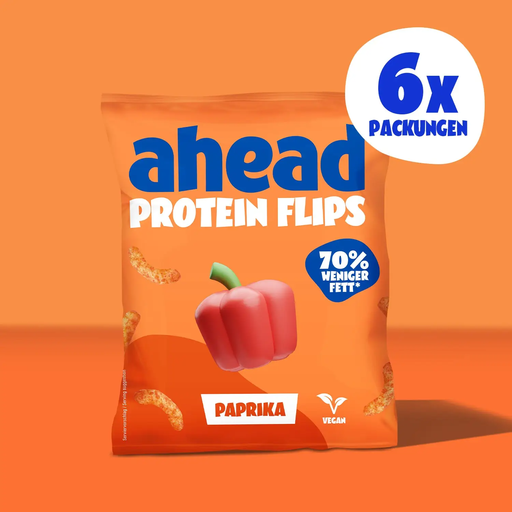
The Joybuy selection features a paprika-flavoured snack in a pack of six individual bags for your office break. If you’re specifically looking for corn as the main ingredient or a ‘high protein’ claim, check each criterion separately on the specific pack.
 No image available
ahead Protein Flips Paprika, 6 × 50 g
Take one of the six 50 g bags with you for your office break. Check the ingredients, allergens and nutrition information on the pack if corn as the main ingredient or a stated high protein content is important to your choice.
View at Joybuy
Frequently asked questions
Does ‘high protein’ simply mean a particularly high number of grams of protein?
No. For the EU ‘high protein’ claim, at least 20% of a food’s total energy must come from protein, according to EUR-Lex and Regulation (EC) No 1924/2006. So, as well as the amount of protein, the energy information is relevant.
Are corn or pulses-based crisps automatically a better choice for an office break?
Not just because of their ingredients. Verbraucherzentrale NRW points out that crisps made with alternative ingredients aren’t necessarily lower in calories just because they contain less fat. In its market sample, the salt content of pulses-based crisps also stood out. Compare the nutrition information for the products you’re actually choosing between.
How can I tell whether a snack is mainly made from corn?
Look for corn or corn flour in the ingredients list, and check for a stated percentage where available. The Alnatura Bio Mais Chips Natur listed by EDEKA24 contain 77% corn flour, according to the ingredients list; the stated protein content of 6.7 g per 100 g is a separate detail.
Is older online information about ingredients and allergens enough?
The labelling on the pack you buy is what matters. Lorenz notes that packs with different recipe versions may be on sale at the same time, so check the current ingredients list and allergen information.


