People keeping an eye on fat
You’re looking for a bar that contains protein, but also want to know how much fat it has per 100 g and per serving.


Choose a protein or cereal bar for a protein-focused snack by checking the nutritional information for the specific variety, rather than relying on the protein claim alone. Compare fat and protein per 100 g and per bar. Also check the ingredients and allergen information before deciding whether the portion meets your needs.
You’re looking for a bar that contains protein, but also want to know how much fat it has per 100 g and per serving.
You want to choose a snack to enjoy on the go, so you compare the stated protein content per bar with the other nutritional values.
You need to take certain ingredients or allergens into account, so you read the ingredients list and the information on the specific pack before buying.
First, compare the nutritional values using the same reference amount, then work them out for the weight of the bar. Whether a protein or cereal bar meets your needs depends on the specific variety.
| Criteria | What to check | Who it matters to |
|---|---|---|
| Fat content | Compare fat per 100 g and use the bar’s weight to work out the amount per serving. | If I want protein without losing sight of the fat content, the actual serving size matters to me. For around 40% of consumers, limiting fat is the top priority. |
| Protein content | Check protein per 100 g and the number of grams per bar; don’t confuse percentages with grams. | When choosing a snack to enjoy on the go, I want to know how much protein is in each bar. Around 30% of consumers prioritise this amount. |
| Ingredients | Check the ingredients list, allergen information and details of sugar alcohols on the pack. | If I need to avoid certain ingredients or am sensitive to sugar alcohols, the recipe is what matters most to me. Around 20% of consumers put this check first. |
| Specific variety | When buying, compare the nutritional information for the variety and pack actually on offer. | I want to choose a bar that’s available in the version I’ve checked where I shop. For around 10% of consumers, this comes first. |
EDEKA lists 9.7 g and 13 g of fat per 100 g for two MAX BALANCE protein bars, while ALDI SÜD lists 15 g per 100 g for the ALDI SPORTS Nougat bar. A protein claim alone won’t tell you how much fat a bar contains.
Compare the fat content per 100 g, then also work it out for the weight of each bar.
The North Rhine-Westphalia Consumer Advice Centre points out that 20% protein in a 50 g bar doesn’t mean the bar contains 20 g of protein.
Check the nutritional information and take the serving weight into account to work out the protein content per bar.
A bar that’s low in sugar may contain sugar alcohols. According to the Hamburg Consumer Advice Centre, these can cause bloating or diarrhoea in people who are sensitive to them.
If sugar alcohols are relevant to your choice, check the ingredients list for ingredients such as maltitol or sorbitol.
ALDI SÜD notes that the Nougat bar may come from different suppliers. So don’t assume that information for one version also applies to another pack.
When you buy, check the nutritional information and ingredients on the pack you’re actually choosing.
CORNY’s range includes the Protein Crunchy Vanilla & White Choc Flavour, which is listed as containing 30% protein.
ALDI SÜD lists 36 g of protein and 15 g of fat per 100 g for the ALDI SPORTS High Protein Nougat bar.
EDEKA lists 50 g of protein and 9.7 g of fat per 100 g for the MAX BALANCE Stracciatella protein bar.
In September 2026, REWE announced the launch of its own-brand PWR range, with six protein bars.
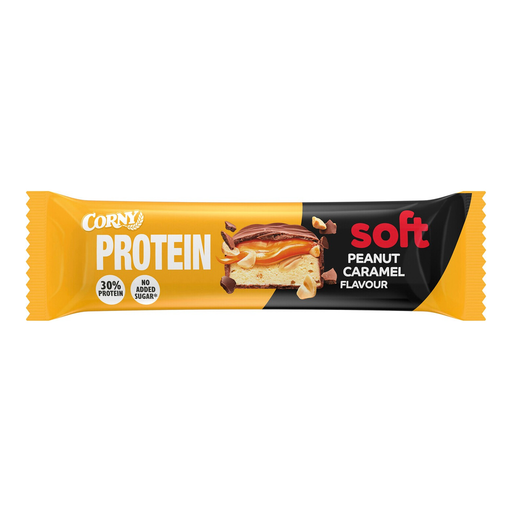
This 45 g protein bar is a protein-focused snack option. Check the nutritional information on the specific pack to see whether its fat content meets your needs.
 No image available
A single protein bar for a snack: the stated bar size is 45 g. Check the fat and protein content on the pack both per 100 g and for this bar, and read the ingredients and allergen information if needed.
No. EDEKA lists 9.7 g and 13 g of fat per 100 g for two MAX BALANCE varieties, while ALDI SÜD lists 15 g per 100 g for the ALDI SPORTS Nougat bar. Compare the specific variety rather than relying on the protein claim alone.
First compare fat and protein per 100 g, then use the bar’s weight to work out the amount per serving. This shows you what’s in each individual bar.
No. These bars may contain sugar alcohols, which, according to the Hamburg Consumer Advice Centre, can cause bloating or diarrhoea in people who are sensitive to them. Check the ingredients list for the specific variety.
Check the highlighted allergens and ‘may contain’ warnings on the specific pack. Milk and soya are among the allergens relevant to the EDEKA protein bars described here; information about other allergens varies by variety.
No, a protein bar isn’t essential. The Consumer Advice Centre points out that you can also get protein from everyday foods. A bar is one possible snack, but you should check its nutritional information and ingredients separately.