Who should pay close attention to their choice?

People who train and focus on protein

You want to factor the protein in your movie-night snack into your plans. The amount per portion you’ll actually eat is more useful than a prominent claim on the front of the pack. According to the German Nutrition Society, adults who do recreational sport and train regularly at moderate intensity do not necessarily need more protein.

Popcorn fans settling in for a film

You care more about popcorn’s familiar texture and having a bowl to share than getting as much protein as possible. You can choose classic popcorn as a snack without assuming it’s the same as a product labelled “High Protein”.

People with dietary or allergen requirements

If a snack needs to suit your diet or exclude certain ingredients, check the ingredients list, highlighted allergens and any ‘may contain’ warnings on the pack you buy. The term “protein snack” alone tells you nothing about these aspects.

What should you look for when buying?

First decide whether you definitely want popcorn. Then compare the nutritional values for your portion and check the ingredients on the specific pack.

What to consider What to check Who it matters most to
Protein per portion Compare the protein and energy for the amount you plan to eat. If a product claims “High Protein”, also check the proportion of its energy that comes from protein. If I want to factor protein into my movie-night snack, the amount needs to match the portion I’ll actually eat. Around 42% of consumers put this portion question first.
Ingredients and allergens Read the ingredients list, highlighted allergens and any ‘may contain’ warnings on the pack. If I follow a particular diet or need to avoid certain ingredients, I need to know what the snack contains. This suitability is the main concern for around 33% of consumers.
Popcorn experience Check what type of product it is: popcorn, flips and crisps are different snacks. If you’re buying popcorn, also compare the information for the variety you’ve chosen. If I’m sharing a bowl, I don’t want to swap the familiar texture of popcorn for a different snack. Around 25% of consumers put this experience first.

Common comparison mistakes

  • Assuming “Protein” on the front means “High Protein”

    A protein claim tells you neither the product’s overall nutritional make-up nor, by itself, what proportion of its energy comes from protein. Lebensmittelklarheit says that a “High Protein” claim requires at least 20% of the energy to come from protein.

    Check the energy and protein, as well as the sugar, fat and salt in the nutrition information. To work out the proportion of energy from protein, multiply the protein in grams by 4 kcal, then divide the result by the energy in kcal.

  • Assuming the value per 100 g is the same as your portion

    If you eat a smaller portion, you’ll take in a different amount of protein too. funny-frisch lists 21 g of protein per 100 g and 6.2 g per 30-g portion for its Protein Chips Barbecue Style. Salt and energy are also worth comparing per portion.

    Decide on a realistic snack portion for you and calculate the nutritional values for that amount.

  • Confusing flips, crisps or powder with popcorn

    A crunchy protein snack could be an option for movie night, but it contains different ingredients and isn’t popcorn. Protein powder with a popcorn flavour isn’t a ready-to-eat popped snack either.

    Before comparing products, decide whether popcorn is a must-have or if another type of snack would work for you.

  • Judging allergens by a product page alone

    The labelling on the pack you buy is what matters. Manufacturer funny-frisch specifically advises checking the ingredients list on the pack of its Protein Chips.

    Before eating, check the current ingredients list, highlighted allergens and any ‘may contain’ warnings.

Brands and ranges to consider

funny-frisch

Protein Chips Barbecue Style are a snack made with ingredients such as lentil flour, maize flour and pea protein isolate – they’re not popcorn.

  • The manufacturer lists 21 g of protein per 100 g and 6.2 g per 30-g portion.
  • The manufacturer also lists 1.9 g of salt per 100 g. Always check the pack you buy for ingredients and allergens.

Lorenz

Lorenz has a range of snack lines, including Crunchips and Saltletts. These range names don’t automatically mean the product is protein popcorn.

  • Choose the type of snack based on the specific product, rather than the brand name.
  • Whether a variety suits your protein goals depends on its own nutrition information and portion size.

REWE Beste Wahl / REWE

REWE Beste Wahl includes ice cream under its “High Protein” range, while the wider REWE range also features other protein products, such as bars. These are different types of product from popcorn.

  • First check what type of product you’re looking at within the range.
  • Don’t apply the protein information for ice cream or a bar to popcorn; compare the pack information for the specific snack.

Protein snacks on Joybuy

If you’re open to a different crunchy snack instead of popcorn, these paprika protein flips could be an alternative. Use the information on the specific pack when comparing nutritional values.
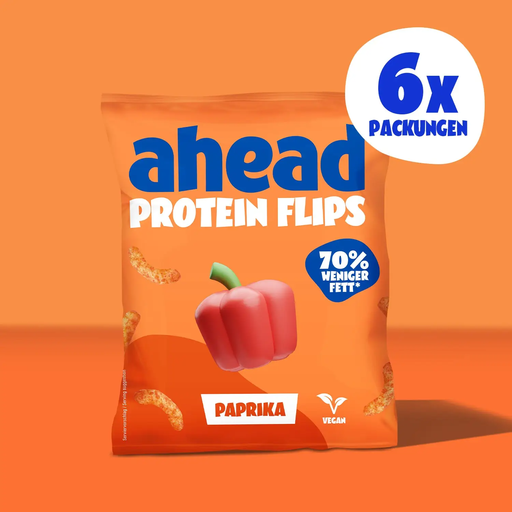
ahead Protein Flips Paprika, tray of 6 × 50 g

ahead Protein Flips Paprika, tray of 6 × 50 g

These flips could be an option for movie night if popcorn isn’t essential for you; they’re a different type of snack.

Pack size: 6 × 50 g. Check the nutrition information, ingredients and allergens on the specific pack for your portion.

View on Joybuy

Frequently asked questions

How do I check a “High Protein” claim on popcorn?

Lebensmittelklarheit says that at least 20% of the total energy must come from protein. Multiply the protein in grams by 4 kcal, divide by the energy in kcal, then multiply by 100. The amount in grams per 100 g alone doesn’t answer this question.

Is a “High Protein” snack automatically a better choice because I do sport?

No. The claim alone tells you nothing about sugar, fat or salt. According to the German Nutrition Society, adults who do recreational sport and complete four or five 30-minute training sessions at moderate intensity don’t necessarily need to increase their protein intake.

Why should I compare protein per portion?

Because you may not eat exactly 100 g during movie night. funny-frisch lists 21 g of protein per 100 g for its Protein Chips Barbecue Style, but 6.2 g per 30-g portion. So calculate the amount for the portion you actually plan to eat.

How do I check the ingredients and allergens in a protein snack?

Read the ingredients list, highlighted allergens and any ‘may contain’ warnings on the specific pack. The Verbraucherzentrale explains that allergens present in packaged foods must be highlighted in the ingredients list; the product name alone isn’t enough to help you choose.

Are protein crisps or protein flips the same as protein popcorn?

No, they’re different types of snack. For example, funny-frisch Protein Chips Barbecue Style contain lentil flour, maize flour and pea protein isolate. If popcorn’s texture matters to you, look specifically for a product that is actually popcorn.