People who train and snack at work
If you want to include a specific amount of protein after a workout or between appointments, check the amount per portion as well as the figure per 100 g. The pack size may not be the same as a serving.


If you’re looking for a snack with a higher protein content for your office snack tin, compare lentil crackers or legume-based cakes with classic rice cakes. REWE lists 10 g of protein per 40 g pack for Reis-fit Risbellis High Protein, while EDEKA and ALDI SÜD list 8.7 g and 6.7 g per 100 g respectively for two classic rice cakes. Plain rice cakes, on the other hand, can make a neutral base for toppings. Your choice should depend on the portion you’ll actually eat, the ingredients, allergen warnings and, for seasoned varieties, the salt content.
If you want to include a specific amount of protein after a workout or between appointments, check the amount per portion as well as the figure per 100 g. The pack size may not be the same as a serving.
The ingredients in the specific product matter, as do any relevant ‘may contain’ warnings. A plant-based recipe doesn’t mean you can skip checking for allergens that affect you.
For a shared snack tin, taste, portion size and storage all matter. If you snack regularly, variety is another factor to consider, including switching between rice-based and other products.
A good choice if: You’re looking for a ready-to-eat portion with a specific amount of protein. REWE lists 10 g of protein per 40 g pack for Reis-fit Risbellis High Protein.
Bear in mind: This product is made mainly from lentil flour, is seasoned and, according to REWE, contains 0.58 g of salt per pack. It isn’t a plain rice cake.
A good choice if: You want a dry snack for your tin and prefer a plant-based recipe. REWE lists 18.4 g of protein per 100 g for Verival Bio Protein Waffeln.
Bear in mind: Verival’s cakes are made with corn, legumes and pea protein, not rice. The amount of protein in your snack depends on how much you eat.
A good choice if: You’d rather have a mild-tasting base for toppings than a rice cake that’s high in protein on its own. EDEKA lists rice as an ingredient in its Bio Reiswaffeln Natur.
Bear in mind: EDEKA lists 8.7 g of protein per 100 g for these cakes. If you’re choosing this snack for its protein content, remember to include the topping and the whole portion in your calculations.
| What to consider | What to check when buying | Who it matters most to |
|---|---|---|
| Protein content | Compare the protein per 100 g with the amount in the portion you’re planning to eat; a pack doesn’t necessarily equal one portion. | After a workout, I want to know how much protein is in the snack I’ll actually eat, rather than relying on the front of the pack. For around 46% of consumers, this protein content is the main priority. |
| Ingredients and allergens | Read the ingredients list, allergen labelling and any relevant ‘may contain’ warnings on the specific pack. | If I’m looking for plant-based ingredients or need to avoid certain allergens, the exact recipe determines what I choose. Around 18% of consumers prioritise this. |
| Portion and the working day | Compare the pack size and salt per planned portion with how you intend to use it; check the storage instructions too. | For the shared snack tin, I want to choose something with a flavour and portion size that work for the working day. For around 18% of consumers, ease of use is the most important factor. |
| Variety if you snack regularly | Check whether the snack is made with rice, corn or legumes, and avoid keeping the tin stocked exclusively with rice products. | If I reach for the office snack tin regularly, I don’t want to eat the same base ingredient every time. Around 18% of consumers prioritise variety. |
The word ‘cake’ tells you little about the protein content. REWE lists 26 g of protein per 100 g for Reis-fit Risbellis High Protein, EDEKA lists 8.7 g for Bio Reiswaffeln Natur, and ALDI SÜD lists 6.7 g per 100 g for salted organic rice cakes. The amounts you actually eat may still differ.
So, compare the protein in the portion you’re planning to eat as well. A plain rice cake can also be used as a base for a topping that suits you.
REWE lists 1.45 g of salt per 100 g for its seasoned Reis-fit lentil crackers, while EDEKA lists 0.01 g per 100 g for its plain rice cakes. The products differ not only in protein content, but also in seasoning and salt content.
Compare the salt content with the amount you intend to eat, and choose a flavour that suits how you’ll use the snack tin.
The German Federal Institute for Risk Assessment notes that rice products, including rice cakes, can contain relatively high levels of inorganic arsenic. If you eat them often, it’s worth varying the type of product you choose.
If needed, alternate between rice, corn and legume products rather than keeping the tin stocked with rice cakes all the time.
EDEKA notes that the information for its Bio Reiswaffeln Natur may differ from what’s printed on the packaging. ALDI SÜD says that nutritional values for its salted organic rice cakes may vary depending on the supplier.
Before buying, check the nutritional information and ingredients on the specific pack, and see whether the variety you want is available locally.
If the variety you want isn’t available there, you may need to make an extra shopping trip.
REWE stocks different types of cakes and crackers, including the Verival Protein Waffeln and Reis-fit Risbellis High Protein compared here.
EDEKA Bio Reiswaffeln Natur are a classic rice option, not a high-protein rice cake.
Classic rice cakes are a relevant option at ALDI; other protein products sold there aren’t rice cakes.
Kallo’s Organic Unsalted Wholegrain Rice Cakes are an unsalted wholegrain rice cake option.
A recipe from Lidl Kochen features plain rice cakes topped with cream cheese as a snack.
Seitenbacher is relevant here only for other types of protein snacks, not as a rice cake option.
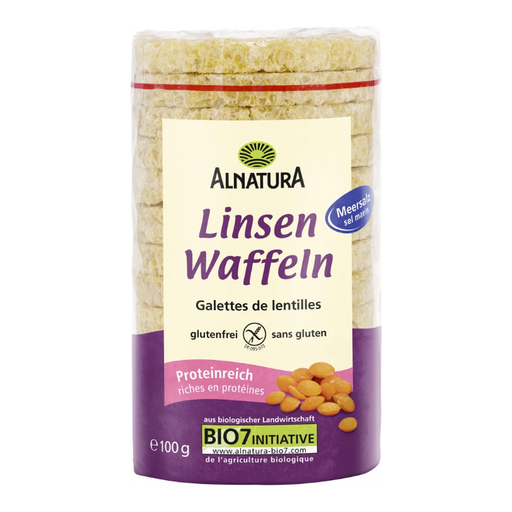
These lentil cakes could work as a dry snack for your office snack tin. If you choose them for their protein content, check the nutritional information on the pack for the portion you’re planning to eat.
 No image available
A lentil-based option for anyone who’d like to put something other than a classic rice cake in their office snack tin.
Pack size: 100 g. Check the nutritional information for your planned portion and, if you have relevant allergies, the labelling on the specific pack.
No, a snack like this isn’t automatically necessary. The German Nutrition Society doesn’t make a separate protein recommendation for adults who take part in recreational sport. Whether a higher-protein rice cake fits into your snack plan also depends on the rest of your diet.
No. The specific amount of protein in the portion you’re planning to take to work matters too. Compare the nutritional information per 100 g with the amount you actually intend to eat, and check the ingredients list and salt content as well.
If you eat them often, varying the types of products you choose is a sensible approach. The German Federal Institute for Risk Assessment notes that rice cakes and other rice products can contain relatively high levels of inorganic arsenic.
Check the ingredients and any relevant ‘may contain’ warnings on the specific pack. EDEKA notes that its Bio Reiswaffeln Natur may contain traces of sesame; Kallo says its Organic Unsalted Wholegrain Rice Cakes may contain traces of milk, sesame and soya. Information for one product doesn’t automatically apply to other rice cakes.
Keep the tin tightly closed and follow the storage instructions on the pack you’ve bought. The product information for the protein cakes and lentil crackers covered here recommends storing them in a dry place and protecting them from heat or moisture.