What should you look for when buying?
First, consider whether you want the waffle itself to provide protein or mainly to serve as a base for a topping.
Lentil waffles
A good choice if: The protein content of the waffle is your priority; EDEKA lists 25 g per 100 g for its organic high-protein lentil waffles.
Worth considering: The ingredients differ from those in rice waffles. Check the specific pack for salt and allergen warnings, too.
Protein waffles with maize and pulses
A good choice if: You want to compare the rest of the nutritional information as well as the protein content; REWE lists 18.4 g of protein and 11 g of fibre per 100 g for the Verival organic protein waffles in its range.
Worth considering: Their ingredients differ from those of plain rice cakes. If you have an intolerance, check the declaration on the specific pack.
Unsalted rice cakes
A good choice if: You want a neutral base for a topping and the protein content of the waffle itself isn’t a priority.
Worth considering: EDEKA lists 8.7 g of protein per 100 g for its plain organic rice cakes. For snacks for toddlers, it’s also important to offer variety rather than relying on rice-based products, as the German Federal Institute for Risk Assessment explains.
| Criteria |
What to check when buying |
Who it matters to |
| Protein content of the waffle |
Compare the protein per 100 g with the amount you’ll actually eat. |
When I’m looking for a quick snack, I want the waffle itself to provide some protein. This is the main buying motivation for around 42% of consumers. |
| A snack between meals |
Check the pack size and ingredients; plan to have the snack alongside meals. |
When I’m busy with the baby, I want to be able to grab something to eat without making a waffle my whole meal. This is the main priority for around 33% of consumers. |
| Choosing separately for adults and children |
For children’s snacks, check the age guidance, ingredients and allergen warnings on the pack. |
If I’m also shopping for a toddler, I don’t want to choose their snack based only on my own preferences. Around 25% of consumers prioritise these checks when making their choice. |
Suitable products at Joybuy
These lentil waffles may suit parents who want to check the protein content of a quick snack. If you’re choosing them for a child, it’s especially important to check the information on the pack.
 No image available
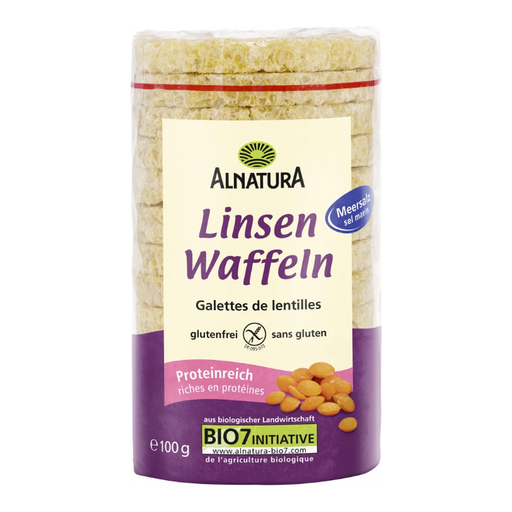
Alnatura organic lentil cakes, 100 g
A lentil waffle option if you’re looking for a quick snack or a base for a topping.
Pack size: 100 g. The information about soya is inconsistent; if you have a soya allergy, it’s especially important to check the current packaging before eating. If the waffles are for a child, check the age guidance too.
View at Joybuy
Frequently asked questions
How can I tell how much protein is in a portion of waffles?
Compare the protein listed per 100 g with the amount you actually plan to eat. The words “high protein” alone don’t tell you how much protein is in your portion.
Can protein waffles replace a meal when you’re a busy parent?
No, a protein waffle is a snack, not a complete meal. For breastfeeding, the German Nutrition Society and the Federal Centre for Nutrition recommend a regular, varied diet.
Should you choose rice cakes for toddlers in the same way as for adults?
No, check the age guidance and ingredients of the specific product separately if it’s for a toddler. The German Federal Institute for Risk Assessment also advises against making rice-based products the sole basis of an infant’s or toddler’s diet.
What should I look out for if I have an allergy?
The ingredients and allergen warnings on the specific pack are what matter. EDEKA notes that its plain organic rice cakes may contain traces of sesame. The information available for the Alnatura product shown here is inconsistent about soya, so if you have a soya allergy, check the current packaging especially carefully.
Are higher-protein waffles automatically a better choice when breastfeeding?
No, a higher protein figure alone doesn’t determine whether a snack is suitable. Consider your diet as a whole, as well as the ingredients and nutrition information for the product; the German Nutrition Society recommends a varied diet during breastfeeding.


