Catering organisers
If you’re offering several varieties, you need to be able to match the ingredients and allergen information to each bar. This lets guests check the details for the variety actually being served.


For conference catering, choose protein bars based on the specific dietary requirements guests have told you about, rather than relying on a blanket idea of ‘allergen-free’. Check the ingredients, allergens and, where relevant, precautionary allergen information for every flavour you plan to offer. ‘Vegan’ or ‘gluten-free’ only addresses part of the picture. If protein content matters for your catering, compare the amount per bar and take the rest of the recipe into account too.
If you’re offering several varieties, you need to be able to match the ingredients and allergen information to each bar. This lets guests check the details for the variety actually being served.
For gluten-free, lactose-free, vegan or soya-free diets, it’s the label for each individual variety that matters. One suitable claim doesn’t remove the need to check the other ingredients and allergens.
For these guests, the portion size and protein content per bar are important. If they’re watching their intake of particular sweeteners, they’ll also need to check the ingredients and nutritional information for that variety.
Ask guests about their requirements before placing your order, then check the current labelling for each variety you plan to offer. Only then can you decide which free-from claims and nutritional values matter for your selection.
| What matters | What to check before buying | Who it matters most to |
|---|---|---|
| Match ingredients and allergens to each bar | Full ingredients list, highlighted allergens and precautionary allergen information for each variety; make sure each bar is clearly identifiable when laid out. | If I’m buying for guests with allergies, I need to be able to find the information for every bar being served. This variety-specific information is a priority for around 36% of consumers. |
| Choose the right free-from claims | Match guests’ stated requirements to the labelling on each variety; don’t assume ‘vegan’ and ‘gluten-free’ mean the same thing. | If my guests have different dietary requirements, I want to offer a clearly labelled option for each one. The right free-from claim comes first for around 29% of consumers. |
| Consider the recipe and portion size | Check the ingredients list for sugar alcohols and look at the nutritional information per bar, particularly if guests can help themselves to more than one. | With snacks available for guests to help themselves, I want to take sweeteners and the size of each portion into account. Around 21% of consumers put these recipe and portion-related considerations first. |
| Assess the protein content | Compare the protein per bar, not just per 100 g, and continue to check the other ingredients. | If guests have specifically asked for a high-protein snack, I want to know how much protein is in each portion being served. This is the main reason for buying for around 14% of consumers. |
These claims describe different things. A vegan peanut bar may not be suitable for guests with a peanut allergy, while ‘gluten-free’ says nothing about other allergens.
Check the full label for every variety you plan to offer against the requirements guests have told you about.
According to the German Food Federation, ‘May contain traces of …’ is a voluntary warning about possible accidental presence, not proof that an ingredient is present. It may still be relevant when deciding whether a product is suitable for an individual.
Check ingredients and precautionary allergen information separately. If guests need to avoid certain foods strictly, find out which products may be suitable for them.
The amount per 100 g doesn’t automatically tell you how much protein is in the portion being served. Lebensmittelklarheit points out that protein bars often weigh considerably less than 100 g.
Compare the protein content per bar if protein is one of your catering criteria.
The consumer advice centre warns that consuming large amounts of sugar substitutes can have a laxative effect. This is worth bearing in mind when bars are freely available and guests may take more than one portion.
Check the ingredients for sugar alcohols and consider portion size when choosing your varieties.
The details below apply to specific product ranges or varieties. For catering, the label on the particular bar you choose is what matters.
HistaFood describes its organic protein bar as gluten-free, lactose-free, vegan and soya-free, among other things. That means several specific requirements can be checked against the same variety.
ALL STARS offers a protein bar variety called Protein Crunchy Peanut Caramel, described as vegan and gluten-free.
Vetain describes its CRISPY range as vegan protein bars. Whether a bar meets other dietary requirements depends on the flavour.
These protein bars could work as individually portioned snacks for conference catering. Whether a variety meets your guests’ dietary requirements depends on its current ingredients and allergen labelling, as well as the information for that specific variant.
 Image unavailable
If you’re looking for a vegan bar option, this variety is only suitable if peanuts and soya are compatible with your guests’ requirements.
The product name states that the pack contains 12 bars, each weighing 55 g. Check the current ingredients and precautionary allergen information before serving; the protein-per-bar information is inconsistent.
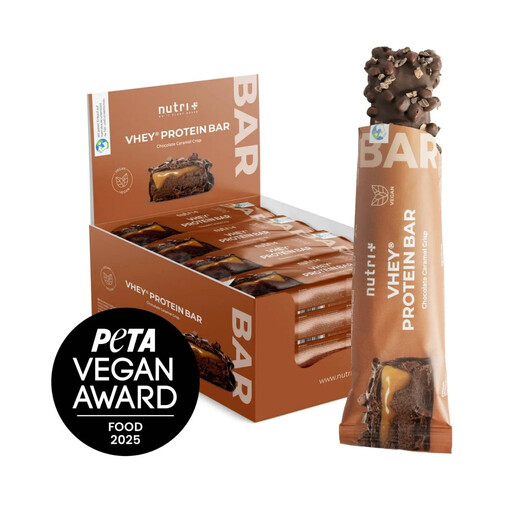 Image unavailable
This variety could work as a portioned protein bar for catering if its current ingredients and allergen labelling meet your guests’ requirements.
The product name states that the box contains 12 bars, each weighing 50 g. The word ‘Whey’ in the name conflicts with the vegan description, so don’t treat this as a vegan option until you’ve checked the information on the current packaging.
No. ‘Vegan’ doesn’t mean allergen-free. A vegan variety could contain peanuts, for example, so check the ingredients, highlighted allergens and any precautionary allergen information against the specific allergies guests have told you about.
No. ‘Gluten-free’ doesn’t make a claim about allergens such as peanuts, soya or milk. For guests following a gluten-free diet, the variety needs to be explicitly labelled as gluten-free. Check any other exclusions separately against its ingredients and allergen information.
Keep each variety and its original label clearly identifiable, and have the ingredients and allergen information for every variety available separately. If a variety or batch changes, check the information again against the bars you’re serving.
Check the ingredients and portion size, particularly if guests can take more than one bar. The consumer advice centre warns that consuming large amounts of sugar substitutes can have a laxative effect.