When choosing a protein bar for the summer holidays, the words ‘reduced fat’ alone don’t tell you enough. Compare fat and energy per 100 g and per bar: the claim describes a reduction compared with a similar product, not necessarily a low fat content. Then decide whether protein, sugar, ingredients or allergens matter most for your snack. You’ll still need to check the portion size and whether the bar suits you.
What matters most to different people?
Holiday snackers keeping an eye on fat and energy
If you’re looking for a bar to take on day trips or journeys, compare the nutritional values per 100 g and per bar. Lebensmittelklarheit points out that ‘reduced fat’ is a comparative claim and doesn’t mean the same as ‘low fat’.
Active travellers prioritising protein
If you want a snack in a handy portion between activities, the amount of protein per bar could help you choose. However, Verbraucherzentrale doesn’t describe protein bars as a necessary substitute for everyday protein-rich foods.
Fans of sweet snacks with no added sugar
If this claim appeals to you, also check the sugar and fat content and the ingredients list for the specific variety. Sweeteners, allergens and consumption advice may influence your choice more than the claim on the front of the pack.
What should you look for when buying?
Start by comparing the fat content per 100 g, then check the nutritional values for the portion you actually plan to eat. The other criteria can help you choose between bars with different ingredients.
| What to consider | What to check when buying | Who it matters to |
|---|
| Fat and energy |
Compare fat and kcal per 100 g and per bar; if it says ‘reduced fat’, check which product it is compared with. |
For a snack on the go, I want to know how much fat and energy the whole portion contains. Around 31% of consumers put this comparison first. |
| Protein per portion |
Check the grams of protein per bar alongside its weight. |
Between activities, I’m mainly looking for a portion-sized bar with a clear protein figure; around 25% of consumers prioritise this. |
| Sugar and sweeteners |
Check the sugar content per bar, the ingredients and any consumption advice. |
I want a sweet snack that suits my preferences around sugar and sweeteners. This is the deciding factor for around 25% of consumers. |
| Allergens and travel practicalities |
Check the allergen and may-contain information for the variety, as well as the pack size and storage instructions. |
Before packing a bar, I need to check whether its ingredients are suitable for me and how it should be stored; around 19% of consumers make this their main buying requirement. |
Common misconceptions
-
Assuming ‘reduced fat’ means ‘low fat’
A fat reduction is measured against a similar product; on its own, it doesn’t tell you how much fat the bar you choose contains. Lebensmittelklarheit distinguishes the relative claim ‘reduced fat’ from ‘low fat’, which means no more than 3 g of fat per 100 g.
Check what product it is compared with, then look at the fat and energy figures both per 100 g and per bar.
-
Assuming high protein means it’s a better product overall
The amount of protein doesn’t tell you how much fat or energy the bar contains, or whether you need a protein bar for your travels. Verbraucherzentrale points out that protein intake in Germany is generally good.
Compare the nutritional values for the specific portion and consider whether you want a portion-sized protein bar at all, rather than a different kind of snack.
-
Overlooking consumption advice when choosing a low-sugar bar
Some protein bars containing sweeteners carry a warning that eating too much may have a laxative effect. ‘No added sugar’ also tells you nothing about the fat content.
Read the ingredients and warnings for your chosen variety, especially if you’re planning to eat more than one bar while you’re out.
-
Putting allergens second to your nutritional goals
Ingredients and may-contain information vary by bar and variety. A suitable fat or protein content doesn’t make a product suitable if you have a relevant allergy.
Check the allergen information on the specific pack before choosing a bar for your trip.
Brands to consider
Barebells
Barebells offers protein bars in a range of textures and flavours.
- According to Barebells, depending on the variety, its bars contain 15 to 20 g of protein each and have no added sugar.
- These claims don’t prove that all varieties have reduced fat. Compare the fat, energy and ingredients for the specific variety.
ESN
ESN’s Designer Bar is a sweet-tasting protein bar.
- ESN states that its bars contain up to 15 g of protein each and have ‘no added sugar’.
- ESN warns that excessive consumption may have a laxative effect and that traces of allergens may be present. The sugar claim doesn’t mean the bar is low in fat.
Multipower
Nutritional information for the Multipower Protein Layer Bar is available for a 50 g portion.
- Retailer nu3 gives the figures for this portion as 15 g of protein and 9 g of fat, so you can consider both values for this bar.
- The protein figure alone doesn’t justify classifying it as reduced fat. Also check the ingredients and consumption advice for the specific variety.
Protein bars and snacks at Joybuy
This selection includes a savoury beef protein bar and a sweet protein bar for on the go. Compare the information on each pack rather than assuming either is reduced fat simply because it belongs to this product category.
 No image available
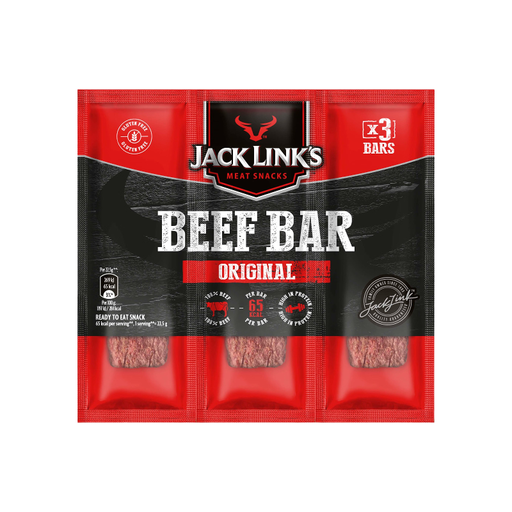
Jack Link's Original Beef Protein Bars, 3 × 22,5 g
A savoury bar could be a good choice if you don’t fancy a sweet protein bar while you’re out. According to the product name, the pack contains three bars weighing 22,5 g each. For a nutritional comparison, check the figures per bar and the storage instructions on the pack.
View at Joybuy
 No image available
Premier Protein 50% Bar Chocolate Caramel, 16 × 40 g
This sweet multipack could be a good choice if you want to take protein bars with you for several occasions. The product name lists 16 bars weighing 40 g each. Before buying, check the bar weight against the pack and look there for the nutritional values, allergen information and consumption advice for the specific variety.
View at Joybuy
Frequently asked questions
Is a reduced-fat protein bar automatically low in fat?
No. Lebensmittelklarheit explains that ‘reduced fat’ means at least 30% less fat than a similar product, while ‘low fat’ means no more than 3 g of fat per 100 g. So be sure to check the actual fat content of the variety as well.
Does ‘no added sugar’ also mean low in fat or energy?
No. A claim about added sugar tells you nothing about the fat or energy content. Compare the nutritional information per 100 g and per bar, and read the ingredients list.
Why do some protein bars carry a warning about a laxative effect?
Some bars containing sweeteners warn that excessive consumption may have a laxative effect. Check the warning for the specific variety and bear it in mind when deciding how many bars to eat while you’re out.
Do I need a protein bar for the summer holidays?
Not necessarily. Verbraucherzentrale describes protein intake in Germany as generally good. A protein bar is simply a handy, portion-sized snack option if that’s what you’re looking for when you’re out and about.
Which allergen information should I check before buying?
Read the ingredients and may-contain information for the specific variety, especially if milk, soya, peanuts or nuts are relevant to you. Information about a brand as a whole is no substitute for the labelling on the pack you choose.


