A individually wrapped protein bar can be a handy snack for the school break or on the way to training. Compare the amount of protein per bar rather than looking only at the percentage advertised, and check the ingredients and allergens for the specific variety. The consumer advice centre points out that a specialist bar is not generally necessary, even for sport, and is no substitute for a proper lunch.
Who might find this selection useful?
Pupils who train after school
If you’re planning a snack between lessons and training, the protein content per bar you’ll actually eat makes it easier to compare options. The German Nutrition Society points out that you can also get protein from everyday plant-based and animal-based foods.
Pupils with a long break
An individually portioned bar is easy to pack for a break. It’s a snack, though, not a replacement for a proper lunch.
Families checking ingredients and allergens
If you need to avoid milk, soya, nuts or cereals containing gluten, check the label for the specific variety. You can’t tell whether a bar is suitable just from the words ‘protein bar’.
What should you look for when buying?
For a school snack, first decide whether a bar is right for the break you have in mind. Then compare the portion size and its nutritional information. If you have allergies, the ingredients label comes first.
| What to consider |
What to check before buying |
Who it matters to |
| Protein per bar |
Compare the protein in grams per portion with the weight of each bar. 50% protein in a 45 g bar works out at 22.5 g per bar; this figure applies only to the 45 g version. |
I have sport after school and want to know how much protein is in the portion I’ll eat. For around 36% of consumers, this information per portion is the priority. |
| Portability and portion size |
Check the pack size and whether bars are individually wrapped, and plan to have the bar as a snack alongside lunch. |
I need something that’s easy to pack and portion for a short break. This is the most important factor for around 29% of consumers. |
| Allergens and ingredients |
Read the ingredients list and highlighted allergens for the exact variety. A label such as ‘vegan’ on its own doesn’t answer every question about allergens. |
If I need to avoid certain ingredients, the label on the specific pack matters more to me than its protein content. Around 21% of consumers put this check first. |
| Sugar and sweeteners |
Check the nutritional information per bar and the ingredients list for sugar, sweeteners and polyols. |
I want to understand what’s in the bar rather than rely solely on a claim on the front of the pack. This is a priority for around 14% of consumers. |
Common misconceptions
-
Confusing ‘50% protein’ with 50 g of protein
The percentage refers to the product’s weight: a 45 g bar with 50% protein works out at 22.5 g. So you can’t compare two different-sized bars by percentage alone.
Compare the protein content and other nutritional values for the portion you’ll actually eat. In a market review, the North Rhine-Westphalia Consumer Advice Centre also noted that protein claims on bars are not always easy to compare.
-
Planning to have the bar as a complete school lunch
A bar on its own doesn’t make a complete meal. The consumer advice centre says that extra protein products are often unnecessary, even for people who play sport.
If you need one, plan to have the bar as a snack and decide separately what to take or eat for lunch.
-
Assuming you know the allergens from the type of product
Recipes vary between flavours. The CORNY Nuts & Protein Chocolate variety described by REWE contains peanuts, soya and milk; this tells you nothing about other bars. Under Annex II of the EU Food Information Regulation, cereals containing gluten must be labelled as allergens when present.
Before buying, check the current ingredients and allergen information on the exact pack you plan to eat.
-
Judging the whole bar by a sugar claim
A single claim on the front of the pack doesn’t tell you everything about the recipe. For example, the CORNY variety documented by REWE lists polyols.
Also read the ingredients list and nutritional information per portion, particularly if sweeteners or polyols matter to your choice.
Brands to help you choose
CORNY
REWE describes CORNY Nuts & Protein Chocolate as an individually portioned bar with peanuts, almonds and chocolate. The nutritional information for the documented portion lists 9.5 g of protein.
- The documented variety is individually wrapped, making it easy to plan as a break-time snack.
- According to REWE, this variety contains peanuts, soya and milk. Check the ingredients and allergens on the current pack.
MAX BALANCE (EDEKA)
EDEKA’s MAX BALANCE range includes a 45 g peanut-flavoured protein bar labelled as containing 50% protein, as well as a 35 g almond biscuit variety labelled as vegan and containing 25% protein.
- The different portion sizes and protein percentages make it useful to compare the amount in grams per bar.
- Check the ingredients and allergen information separately for each variety; a label on one variety doesn’t apply to the whole range.
ALDI SPORTS
ALDI Nord describes two 45 g bars with different protein claims: 50% for the protein bar and 31 g per 100 g for another variety.
- If you know the portion weight, you can convert each figure into grams per bar.
- ALDI Nord notes that special-buy items are available in limited quantities and may sell out early. Check availability in store.
REWE PWR
In September 2026, REWE introduced its own-brand PWR range, featuring six protein bars.
- The range includes several types of bar, and you can compare the details on each pack individually.
- When choosing a school snack, what matters is the nutritional information, ingredients and allergens for the specific variety, not the brand’s positioning.
Protein bars at Joybuy
These two protein bars could work as individually portioned snacks for a school break. Compare their pack sizes and, before buying, check whether the ingredients are suitable for the person who’ll be eating them.
 Image unavailable
Corny Crunchy Cookie Flavour Protein Bar, 30%, 12 × 45 g
For a break or the journey to training, if you’re planning to have a bar as a snack. According to the product name, the pack contains 12 bars of 45 g each; 30% protein works out at 13.5 g per bar. Check the current ingredients and allergen information, as well as the nutritional details on the pack.
View at Joybuy
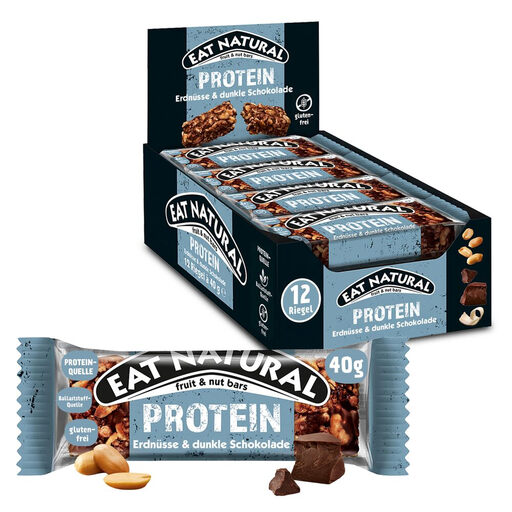 Image unavailable
Eat Natural Protein Bars Peanuts & Dark Chocolate, 12 × 40 g
For a school break if you’re looking for a bar with peanuts and dark chocolate. According to the product name, the pack contains 12 bars of 40 g each. This variety isn’t suitable if you have a peanut allergy; check the other ingredients and allergens on the current pack too.
View at Joybuy
Frequently asked questions
Does a 45 g bar with 50% protein contain 50 g of protein?
No. A 45 g portion with 50% protein works out at 22.5 g of protein. When comparing bars, check whether the figure is per 100 g or per individual bar.
Do pupils need a high-protein bar after sport?
Not necessarily: the consumer advice centre says that extra protein is often unnecessary, even for people who play sport. The German Nutrition Society points out that you can also get protein from everyday plant-based and animal-based foods. A bar can be a handy snack, but it isn’t essential for eating after sport.
How do I check for gluten and other allergens in a protein bar?
Read the ingredients list and highlighted allergens for the specific variety and pack. Under Annex II of the EU Food Information Regulation, cereals containing gluten must be labelled as allergens when present. Depending on the recipe, milk, soya, peanuts or other nuts may also be relevant.
Is ‘no added sugar’ enough to help me choose?
No. It doesn’t tell you everything about a bar’s ingredients or nutritional values. The consumer advice centre recommends checking the nutritional information as well when assessing sugar and sugar substitutes. So compare the details per portion you’ll eat with the ingredients list.


