When choosing a protein bar to restock quickly, check the current ingredients and allergen information for the specific variety rather than relying on labels such as “vegan” or “gluten-free” alone. A gluten-free or lactose-free claim answers only that particular question. Other ingredients, any precautionary allergen statement that matters to you, and the protein content per bar are separate things to consider.
Who this choice matters to
People who need to avoid a particular allergen
If you’re reaching for a bar on the go, check whether the specific variety lists the allergen in question as an ingredient and whether any precautionary allergen statement is relevant to you. The Federal Office of Consumer Protection and Food Safety explains allergen labelling, while the German Food Federation outlines the meaning of voluntary precautionary statements.
People choosing gluten-free or lactose-free options
You’re looking for a suitably labelled variety and want to compare the protein content per bar. Keep in mind that a lactose-free claim doesn’t automatically mean a bar is made without milk protein, egg or soya.
People restocking bars while out and about
If your usual variety isn’t available, any replacement still needs to meet your requirements for ingredients and pack information. For bars containing sugar substitutes, the ingredients list and warnings may also be important when choosing.
What to look for when restocking
If you need to avoid a particular allergen, first check the ingredients and precautionary allergen statements for the variety available. Then compare the gluten-free or lactose-free claim you’re looking for, the protein content per bar and, where relevant, the sweeteners.
| What matters to you |
What to check |
Who it matters to |
| Avoiding a particular allergen |
Read the ingredients list and check which allergens are emphasised for that variety; assess any relevant precautionary allergen statement separately. |
If I need to avoid a particular allergen, I can’t choose a replacement bar by looking at the front of the pack alone. This specific allergen-avoidance requirement would be the main consideration for around 40% of consumers. |
| Gluten or lactose, and protein content |
Check the relevant claim, as well as the protein source and grams of protein per bar. |
I’m looking for a suitably labelled bar and want to know how much protein each serving contains. Around 30% of consumers would prioritise this combination. |
| Restocking a suitable variety |
Check the specific variety against the range available, and read the pack details even if you’re buying a replacement. |
When I’m out and about, I need a variety I can actually buy without compromising on what matters to me. For around 20% of consumers, being able to restock would be the main priority. |
| Sugar substitutes |
Check the ingredients list and warnings for substances such as maltitol. |
If I’m keeping an eye on sugar substitutes, “no added sugar” on its own doesn’t tell me everything I need to know. Around 10% of consumers would put this first. |
Common selection mistakes
-
Assuming “vegan” or “gluten-free” means free from all allergens
These claims refer to different characteristics. For example, KoRo’s Vegan Bio Protein Bar Pistachio White Choc, described as vegan and gluten-free, contains cashews and pistachios. BioTechUSA’s Zero Bar, described as gluten-free and lactose-free, lists egg- and soya-based protein sources, among other ingredients.
Always check your specific allergen against the ingredients and precautionary allergen statements for the current variety.
-
Assuming every variety from a familiar brand is the same
Ingredients and precautionary allergen statements can differ from one variety to another. Barebells itself points out that some bars contain nuts and that precautionary statements may relate to gluten, among other things.
Each time you restock, check the labelling on the bar you’re actually buying.
-
Assuming “no added sugar” means it will suit everyone
The consumer advice centre notes that sugar substitutes can have a laxative effect when consumed in large quantities. For its Sportness Yoghurt-Cereal variety, dm lists maltitol and includes a corresponding warning.
Check the ingredients and warnings if sugar substitutes are a factor in your choice.
-
Relying on a shop filter as your final ingredients check
A filter can narrow down the options, but it won’t tell you everything about other allergens or the pack of the bar currently available. REWE’s displayed range also depends on your location.
Use filters to make an initial selection, then check the variety and its labelling before you buy.
Brands to help you choose
BioTechUSA
The Zero Bar is an example of a protein bar described as gluten-free and lactose-free. BioTechUSA lists 20 g of protein per 50-g bar.
- According to BioTechUSA, the Zero Bar is gluten-free and lactose-free.
- The recipe described includes whey protein isolate, egg white, calcium caseinate and soya protein, among other ingredients. Check the current variety separately for any allergens that matter to you.
KoRo
The Vegan Bio Protein Bar Pistachio White Choc is a plant-based bar option that KoRo describes as gluten-free.
- KoRo describes this specific variety as vegan and gluten-free.
- The recipe contains cashews and pistachios; “vegan” and “gluten-free” don’t mean it’s free from nuts.
Barebells
Barebells is a useful comparison brand for protein bars whose suitability for avoiding a particular allergen depends on the variety.
- The brand publishes nutritional and allergen information for its bars.
- Barebells warns that traces of gluten may be present. Nuts and other allergen information can also vary by variety, so check the specific pack.
Sportness
The Yoghurt-Cereal variety described by dm is an example of an individually wrapped 40-g protein bar to pick up when restocking.
- Ingredients, allergen information and consumption advice are provided for this variety.
- The variety lists milk, soya and peanuts, as well as possible traces of other allergens. dm also warns that excessive consumption may have a laxative effect.
Protein bars at Joybuy
This individually portioned protein bar could be a handy option to restock while you’re out and about. If you want to avoid gluten or particular allergens, check the labelling on the current pack to decide whether this specific variety is right for you.
 No image available
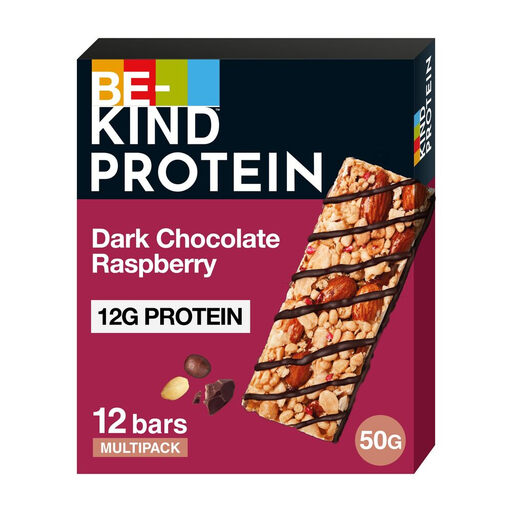
BE-KIND Protein Dark Chocolate Raspberry, 12 × 50 g RG
A handy individually portioned bar to take with you; if you’re avoiding gluten, check the labelling on the current pack.
Pack of 12 bars, 50 g each.
If you’re allergic to peanuts, soya or almonds, don’t rely on a gluten-free claim alone; also check for information about milk and other nuts.
View at Joybuy
Frequently asked questions
Do allergens have to be listed on packaged protein bars?
Yes. According to the Federal Office of Consumer Protection and Food Safety, the 14 substances or products that can cause allergies or intolerances must be named in the ingredients list of prepacked foods. Check the current pack for the specific variety you’re considering.
What does “May contain traces of…” mean?
A precautionary allergen statement doesn’t mean the allergen named is definitely present in the bar. The German Food Federation explains that this voluntary statement alerts you to the possibility of accidental presence. Whether a bar with such a statement is suitable for you depends on the allergen in question and your individual requirements.
How should I store a protein bar as a spare?
Follow the storage instructions on the pack. For its Yoghurt-Cereal variety, dm recommends storing it in a cool, dry place and keeping it out of direct sunlight. Instructions may differ for other varieties.
How can I tell whether a recall affects my bar?
If there’s a food safety alert, compare the affected variety and batch with your pack and follow the advice given. The relevant state authorities and the Federal Office of Consumer Protection and Food Safety publish these notices through their official food alert portal.


