What should you look for when buying?
When comparing protein bars, first compare their nutritional values on the same per-100-g basis, then check the amount per bar. Ingredients and allergen information should also inform your choice of a specific variety before you add it to your basket.
| Criteria |
What to check |
Who it matters most to |
| Fat content |
Fat per 100 g and per bar; for “reduced fat” claims, also check what the comparison is based on. |
If my main aim is to consume less fat, the word “protein” on the packaging isn’t enough to help me decide. For around 50% of consumers, fat content is the top priority when choosing. |
| Protein per portion |
Protein per bar and the bar’s weight; for product comparisons, also check protein per 100 g. |
When planning a snack, I want to know how much protein is in a portion, not just the amount per 100 g. Around 30% of consumers put this question about portion size first. |
| Ingredients and allergens |
Ingredients list, highlighted allergens, and any warnings about traces or consumption for the specific variety. |
Before ordering online, I need to be able to check for potential allergens and ingredients that matter to me. This is the main criterion for around 20% of consumers. |
Brands and specific varieties to consider
The nutritional values below apply to the specific varieties named, not to a brand’s entire range.
REWE PWR
REWE lists its Protein Riegel White Chocolate Crisp as a 45 g bar, with nutritional values given per 100 g and per bar.
- According to REWE, this variety contains 7 g of fat and 50 g of protein per 100 g; each 45 g bar contains 3.2 g of fat and 22.5 g of protein.
- This variety therefore exceeds the “low fat” limit given by Lebensmittelklarheit. When ordering, also check the information about milk, soya and potential allergen traces.
ESN
EDEKA24 lists nutritional values per 100 g for the Designer Bar Dark Chocolate Raspberry variety.
- EDEKA24 states that this variety contains 29 g of protein per 100 g.
- At 17 g of fat per 100 g, this specific variety as listed does not meet a strict “low fat” requirement.
More Nutrition
The Soft Protein Bar White Chocolate Peanut Caramel is a More Nutrition variety listed by EDEKA24.
- EDEKA24 states that this variety contains 32 g of protein per 100 g.
- EDEKA24 also lists 18 g of fat per 100 g and includes a warning about excessive consumption. For this variety, also check the information about milk, peanuts and soya.
Seitenbacher
REWE lists a 70 g Seitenbacher protein bar described as gluten-free.
- REWE states that this variety contains 35 g of protein per 100 g.
- At 18 g of fat per 100 g, it does not meet a strict “low fat” requirement. Also check the trace warnings for the specific variety.
Protein bars at Joybuy
These protein bars are options to consider if you want to compare the fat, protein and ingredients of specific varieties when shopping online. Check the nutritional information to see whether a variety meets your fat target: a protein bar isn’t automatically “low fat” just because of its name.
 No image available
Premier Protein 50% Bar Chocolate Caramel, 16 × 40 g
An option if you’re looking for a protein bar with a chocolate caramel flavour in individual snack portions. Check the fat content and ingredients for the specific variety before ordering.
The product title states that the pack contains 16 bars, each weighing 40 g. Check the actual pack contents before buying, as the pack information varies.
View at Joybuy
 No image available
Power System Low Carb Cookies & Cream Protein Bar, 40 g
If you’re looking for a protein bar with a Cookies & Cream flavour in a clearly labelled 40 g portion, you can compare its nutritional values with other bars on a per-100-g basis.
In particular, check the fat content, ingredients, allergens and consumption advice for the specific variety.
View at Joybuy
 No image available
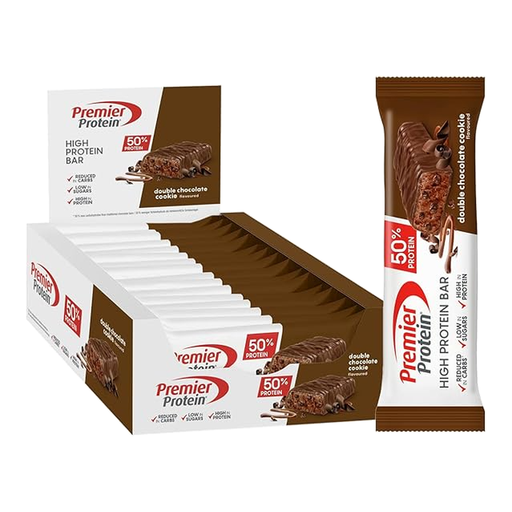
Premier Protein High Protein Bar 50% Double Chocolate Cookie, 16 × 40 g
This Double Chocolate Cookie variety could be a good option if the specific flavour matters to you as well as the nutritional values. Compare its fat content separately from its protein content.
The product title states that the pack contains 16 bars, each weighing 40 g. Check the pack contents before ordering, as the information varies. Also read the ingredients and consumption advice.
View at Joybuy
 No image available
Corny Protein Crunchy Vanilla & White Choc Flavour, 12 × 45 g
This multipack is an option if you’d like to order several bars in the Vanilla & White Choc Flavour variety. Check the fat content per 100 g before choosing it for a snack plan that prioritises low fat.
The product title states that the pack contains 12 bars, each weighing 45 g. Also read the allergen information for the specific variety before buying.
View at Joybuy
Frequently asked questions
What’s the difference between “low fat” and “reduced fat”?
For solid foods, “low fat” means a fat content of no more than 3 g per 100 g, as explained by Lebensmittelklarheit. “Reduced fat”, on the other hand, describes a reduction compared with a similar product. So when choosing a protein bar, check both the absolute fat content and what a reduced-fat claim is based on.
What product information do I need before ordering online?
To decide whether a specific protein bar is right for you, you should be able to read its ingredients, allergen and nutritional information before buying. According to the Verbraucherzentrale, online food retailers are generally required to provide the same mandatory information as on the packaging; the best-before date is exempt until you complete your purchase. Don’t judge a variety by its product name alone.
Does more protein automatically mean less fat?
No. You need to compare the protein and fat content separately. EDEKA24 lists ESN Designer Bar Dark Chocolate Raspberry as containing 29 g of protein and 17 g of fat per 100 g; More Soft Protein Bar White Chocolate Peanut Caramel contains 32 g of protein and 18 g of fat per 100 g. If you’re interested in the amount per snack, also take the bar’s weight into account.
What should I look for in the allergen and sweetener information?
Always check the ingredients, allergen and consumption information for the exact variety. The details for the REWE PWR variety reviewed here list milk and soya; milk, peanuts and soya are among the relevant allergens for More Soft Protein Bar White Chocolate Peanut Caramel. EDEKA24 also includes a warning about excessive consumption for the More variety.


