For planned protein intake on the go
You want to take a individually portioned snack with you and factor the protein content of the bar into your overall diet.


For a protein-focused diet on the go, choose protein bars by comparing the nutrition information per 100 g and per bar you actually eat, rather than relying on the protein claim alone. A tasting box lets you try several flavours; if you need to avoid certain ingredients or are keeping an eye on sweeteners, check each bar individually before choosing a box.
You want to take a individually portioned snack with you and factor the protein content of the bar into your overall diet.
As well as protein, you compare sugar, energy and ingredients. If a product contains sugar substitutes, you also take note of the information on the pack.
You’re looking for a plant-based recipe or need to avoid certain allergens. Check the labelling for each flavour, rather than relying on the name of the box.
Decide whether you want to try individual flavours or stock up on several bars. If you choose a mixed box, check the labelling for every flavour it contains.
| What to consider | What to check when buying | Who it matters to |
|---|---|---|
| Protein per serving | Protein in g per 100 g and per bar; if serving information is not provided, check the bar’s weight too. | If I eat a bar on the go, I want to factor its protein content into my daily plan. This is the top priority for around 33% of consumers. |
| Sugar and sweeteners | Energy and sugar per 100 g and per bar, plus sweeteners and information on the pack. | If you regularly include a sweet snack in your diet, you’ll want to consider sugar, energy and the sweeteners used together. This is the main concern for around 25% of consumers. |
| Vegan ingredients and allergens | Vegan labelling, ingredients, highlighted allergens and any precautionary statements for each flavour. | If I need to avoid animal-derived ingredients or allergens that affect me, the name of a bar isn’t enough. Around 25% of consumers prioritise checking these ingredients. |
| Flavours and stocking up | Number of bars, flavour list, bar weights, best-before date and storage instructions. | When buying several bars, I want to be able to try different flavours without committing to a mix that doesn’t suit me. Around 17% of consumers prioritise trying flavours and stocking up. |
A claim on the pack doesn’t tell you on its own how much protein, energy and sugar your serving contains. ‘No added sugar’ also doesn’t automatically mean that a bar is sugar-free.
Compare the nutrition information per 100 g and per bar, and read the ingredients list. Treat the bar as a snack, rather than automatically using it as a meal replacement.
The flavours inside may differ in their ingredients and allergens. The Barebells Lieblingsriegel Box, for example, includes ingredients such as milk protein, collagen, soya and hazelnuts. Precautionary allergen statements are also relevant when choosing.
Check each flavour individually. If you need to avoid certain ingredients completely, it may be easier to assess a single bar or a box with a consistent recipe.
Flavours that don’t meet your requirements may go uneaten in a mixed box.
A vegan recipe may contain wheat, soya or nuts, for example. Sugar and energy content also vary from product to product.
Check vegan labelling, allergens and nutrition information separately, and read any precautionary allergen statements if needed.
When buying several packs, the best-before date, condition of the packaging and suitable storage become more important than they would for a single bar.
Follow the product’s storage instructions and keep your stock away from moisture.
The Lieblingsriegel Box is aimed at consumers who want to try several types of protein bar or stock up on individually portioned bars.
The Banana Bread protein bar described by dm-drogerie markt is a vegan, individually portioned option.
The hazelnut protein bar described by dm-drogerie markt is a vegan option made with pea and rice protein.
This selection includes individually portioned protein bars in multipacks, for taking on the go or stocking up. Check the ingredients and nutrition information for the serving you’ll eat for each flavour. A multipack isn’t necessarily a tasting box with a variety of flavours.
 No image available
A multipack of individually portioned snacks for taking on the go. When choosing, check the protein and other nutrition information per bar. The recipe contains milk ingredients, collagen, soya and sweeteners. Also check precautionary allergen and consumption information.
 No image available
A vegan, individually portioned option for taking on the go. The recipe contains wheat, soya, peanuts and sweeteners. Before buying, check the allergen and precautionary allergen information, as well as the nutrition information per bar.
 No image available
An individually portioned bar in a multipack. As well as the nutrition information per bar, check the recipe for milk, peanuts and soya, along with information about sweeteners and possible traces of other allergens.
 No image available
A multipack of individually wrapped bars. If protein per serving matters to you, check the protein and salt content on the pack. When checking the ingredients, pay particular attention to peanuts, milk, soya and almonds, as well as possible traces of other nuts.
 No image available
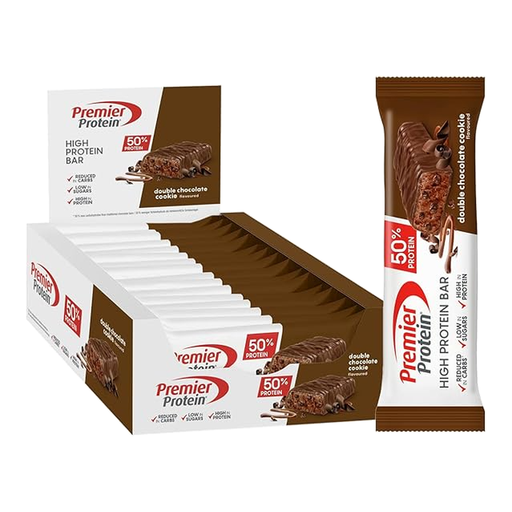
A protein bar for a snack on the go. The product title states 50% protein; to compare servings, check the number of bars, bar weight and full nutrition information on the pack. The recipe contains milk, soya, collagen and sweeteners.
A protein bar is a snack, so you should consider its protein content alongside the rest of the food you eat that day. The German Nutrition Society notes that adults who do recreational sport do not automatically need more protein. If your individual needs differ, it’s a good idea to seek personalised professional advice.
Both figures are useful when comparing bars of different sizes. The per-100 g figure lets you compare nutrition values, while the per-bar figure reflects the portion you’ll eat. If only per-100 g figures are given, you’ll also need the bar’s weight.
No. Sweeteners alone don’t determine whether a bar meets your needs. Compare energy, sugar and ingredients; if the bar contains sugar substitutes, also check the pack for advice about excessive consumption.
Check the ingredients and allergen information for every flavour individually. The German Federal Office of Consumer Protection and Food Safety explains that allergens which must be declared are highlighted in the ingredients list. Vegan labelling doesn’t replace this check.
Follow the storage instructions on each pack and check the best-before date before buying in bulk. Store the bars so their packaging stays dry and undamaged.