
Lieferung heute & morgen

Qualitätsgarantie

Willkommens-Angebote freischalten: KOSTENLOSE Lieferung | Bis zu 80 % RABATT | Kostenlose 30-Tage-JoyPlus-Testphase
App herunterladen
A protein wafer bar can be a practical snack for people who do fitness or strength training, office workers and anyone with an active lifestyle. It fits easily into your gym bag, office drawer or backpack when you’re out and about. However, protein wafer bars can vary significantly in protein content, sweeteners, portion size and nutritional values.
As a Joybuy Product Recommendation Officer, I filter the most important product details and show you what to look for when buying. This helps you avoid choosing a bar that promotes itself as containing “protein” but is actually made mostly from sugar, syrup or fat.
It’s not just the protein content per 100 g that matters. Also check how much each bar weighs and how much protein it actually contains per portion. A small bar with a high percentage may provide less protein than a larger bar with a lower percentage.
For example, the MaxiNutrition Muesli Nut Butter Protein Wafer Bars list 25 g protein per 100 g. With a portion size of 39 g, this equals 9.7 g protein per bar.
A protein bar with no added sugar can still contain naturally occurring sugars. Sweeteners such as maltitol are also commonly used. According to the product details, MaxiNutrition Waffle Bar Hazelnut Spread contains 1.7 g sugar per 39 g bar, while no sugar is added.
Maltitol may have a laxative effect if consumed excessively. This warning should be taken into account when checking the product information. “No added sugar” should therefore not automatically be equated with “sugar-free” or “low-calorie”.
A crisp wafer with a creamy filling can soften in warm conditions. Products containing chocolate should be stored somewhere dry and cool, away from direct heat. If you regularly carry the bar in your car, gym bag or backpack, you should consider the recommended storage conditions.
Three values are useful for making a quick comparison:
According to the product details, the MaxiNutrition Waffle Bar provides 9.7 g protein per bar at a weight of 39 g. The protein content comes partly from whey protein, soya protein isolate and milk protein.
Read both the ingredients list and the nutrition table. A product labelled “No Added Sugar” may contain sweeteners and still provide carbohydrates. The MaxiNutrition bar lists 33 g carbohydrates, 4.3 g sugar and 34 g fat per 100 g.
This makes the bar an energy-dense snack, rather than a substitute for a complete meal. The stated 202 kcal per 39 g bar can help you plan a snack between meals or after training.
A protein wafer bar with hazelnut and chocolate flavour may contain several allergens. According to the product description, the MaxiNutrition bar contains wheat, milk, soya and hazelnuts. It may also contain traces of other nuts.
If you have allergies or intolerances, always check the current packaging. Product details in online shops may change; the ingredients list, allergen information and warnings on the packaging are the information that matters.
The following recommendations categorise the products according to specific everyday situations. The focus is on clear, verifiable details such as pack size, ingredients, protein content and storage.
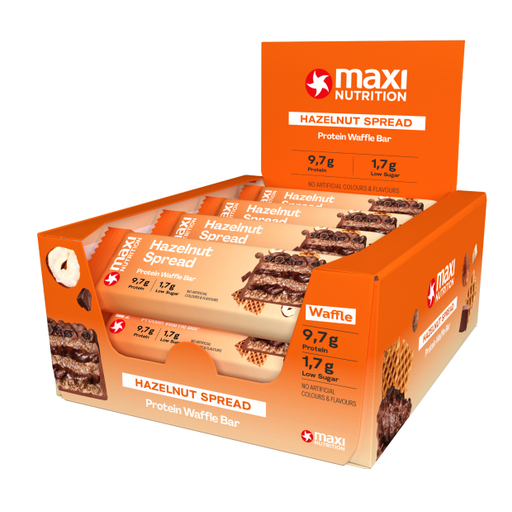
Why this product suits this profile: The 12-pack contains twelve individually portioned bars with a hazelnut and chocolate flavour. With 9.7 g protein per bar, it’s easy to include the right amount in your daily routine.
According to the product details, the portion contains 1.7 g sugar and no added sugar. At the same time, the ingredients list includes maltitol; the warning about a possible laxative effect if consumed excessively should be taken into account.
25 g protein per 100 g, 9.7 g per 39 g bar and a total quantity of 468 g in the 12-pack.
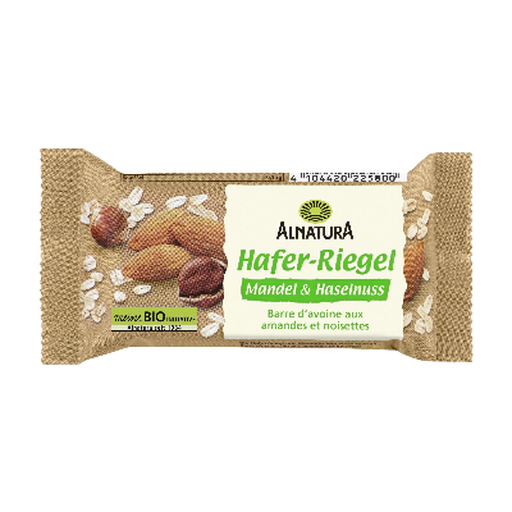
Why this product suits this profile: This choice is aimed at people who prefer organic ingredients, a straightforward recipe and a vegan oat flapjack bar. The bar contains roasted almonds and hazelnuts.
The protein content is stated as 8.8 g per 100 g, so it is not confused with a high-protein claim. The ingredients and possible traces are also listed transparently.
According to the ingredients list, 46% wholegrain oats and 6% roasted almonds and hazelnuts respectively; vegan and made from organic agriculture.
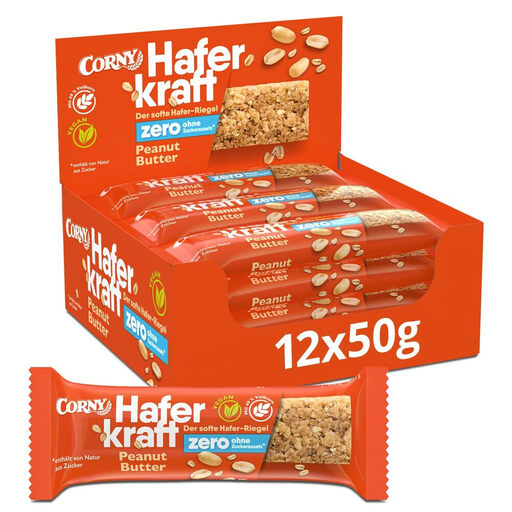
Why this product suits this profile: The 12-pack is ideal for people who regularly plan a snack for travelling, the office or outdoor activities and prefer a peanut flavour.
The information distinguishes between “no added sugar” and naturally occurring sugar. The protein content is 4.9 g per 100 g, clearly setting it apart from a protein wafer bar.
12 individually portioned 50 g bars, vegan according to the product details and containing 49% wholegrain oats.
We’ve put together a complete, regularly updated list of products that fully meet these strict selection criteria and the safety regulations applicable in the EU.
This depends on your personal protein requirements, the rest of your diet and the portion size. For the MaxiNutrition product, the recommended intake is one to two bars per day as a snack or protein supplement. One bar is not a substitute for a balanced meal.
You’ll find the best-before date on the relevant packaging. Unopened bars should be stored somewhere dry and cool, away from heat. Once opened, the individual portion should be eaten promptly, as the wafer and filling may lose their crispness.
It can be used as a convenient snack after training or between two meals. Check the protein content, calories, carbohydrates and allergens before choosing one. A bar with 9.7 g protein per portion provides a clearly defined amount, but it should be considered as part of your overall daily diet.