
Lieferung heute & morgen

Qualitätsgarantie

Willkommens-Angebote freischalten: KOSTENLOSE Lieferung | Bis zu 80 % RABATT | Kostenlose 30-Tage-JoyPlus-Testphase
App herunterladen
A well-maintained garden with healthy trees and shrubs requires precise and regular pruning. However, having the right tool for every task—from delicate shaping of roses to removing thick branches—can be a challenge. Using an unsuitable tool not only results in messy cuts that can harm the plant but also leads to unnecessary strain.
This article serves as a guide. It introduces different types of cutting tools and explains which features are relevant for specific gardening jobs. The goal is to provide you with a solid foundation for assembling a functional pruning shear set tailored to the needs of your garden.
The selection of the right tool depends on several factors. Three essential aspects are the cutting mechanism, material quality, and power source.
For cutting live wood, which is the case for most gardening tasks, the bypass lopper is the preferred choice. With this mechanism, two sharp blades glide past each other, much like a pair of scissors. This creates a clean, precise cut that is gentle on the plant and promotes rapid healing. Anvil shears, on the other hand, have one blade that closes onto a flat metal surface (the anvil). They are better suited for dead or very hard wood but can crush the plant tissue on living branches.
The durability and cutting performance of a tool are largely determined by the materials used.
For thinner twigs and branches, manual shears are often sufficient and offer maximum control. However, for larger gardens with many trees or for the regular trimming of branches with a diameter over 3-4 cm, a motorised tool can make the work significantly easier. A cordless pruning saw or a cordless mini chainsaw provides the necessary power to cut through thick branches quickly and without significant effort. Models compatible with the battery systems of established brands offer additional flexibility for users who already own such devices.
Based on the criteria mentioned above, we have compiled a selection of tools that cover different application areas in the garden.
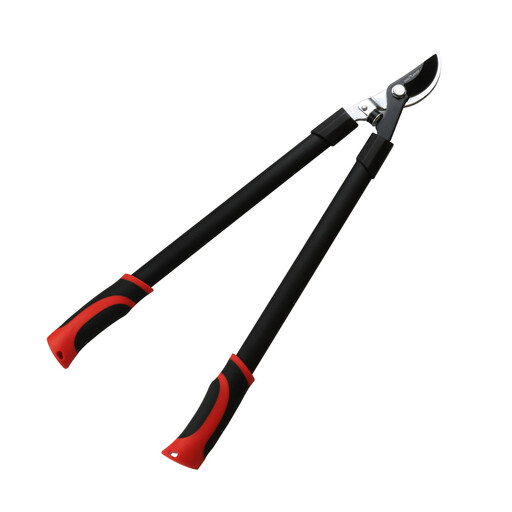
Why it stands out: This lopper is designed for demanding tasks. The blade, made of SK-5 carbon steel, enables clean cuts on branches up to 1.25 inches (approx. 3.2 cm) in diameter. The Ilaflon coating on the blade provides rust protection. The long handles, made of thickened iron tubing, create high leverage, which reduces the effort required when cutting thicker branches.
Advantages:
Who it's for: Homeowners and hobby gardeners with larger gardens who regularly prune shrubs and young trees and need a robust, manual tool for thicker branches.
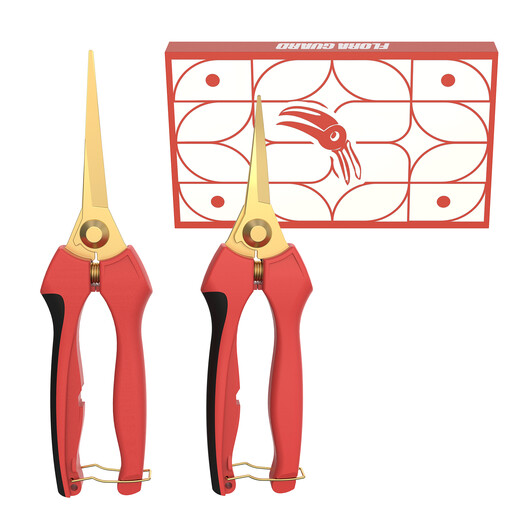
Why it stands out: This professional pruning shear set combines two specialised tools for fine and precise work. It includes a shear with a curved blade for delicate cuts on flowers and bonsai, as well as a shear with a straight blade for general trimming of thinner twigs. The blades, made of titanium-coated stainless steel (hardness HRC54±2), offer high corrosion resistance and sharpness for cuts up to 1.25 cm thick.
Advantages:
Who it's for: Garden enthusiasts who value detail work, such as tending to roses, perennials, bonsai, or harvesting herbs. It is an ideal complement to a larger lopper.
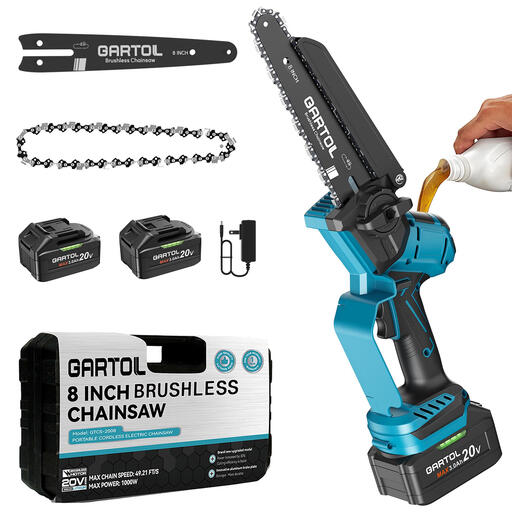
Why it stands out: When manual power is no longer enough, this cordless mini chainsaw offers a powerful solution. The 1000W brushless motor achieves a chain speed of up to 49.2 ft/s (approx. 15 m/s) and, according to the manufacturer, cuts through 8-inch branches (approx. 20 cm) in about 8 seconds. A key advantage is its compatibility with Makita 18V LXT batteries, making it particularly attractive for users who are already part of this ecosystem. The automatic oiling system ensures continuous lubrication of the chain and bar.
Advantages:
Who it's for: Experienced users, homeowners with a large number of trees, or tradespeople looking for an efficient solution for sawing thick branches and smaller logs. The battery compatibility makes it a perfect addition to existing Makita tool collections.
Every garden is unique and places individual demands on the tree pruning tools used. The products presented here cover common scenarios, but you may need a different size, a special feature, or another type of tool.
If you are looking for more options, you will find a diverse selection of cutting tools for different needs in our broader category.
Explore Our Full Range of Garden Trimmers
Bypass shears work like household scissors: two blades glide past each other to create a clean cut. They are ideal for live, green wood. Anvil shears have a single blade that presses against a flat counter surface (the anvil). This mechanism is well-suited for dry and hard deadwood but can crush the tissue of fresh branches.
Regular maintenance extends the life and preserves the function of your tools. Clean the blades of sap and dirt after each use. Dry the tools thoroughly to prevent rust. A drop of oil on the joints and blades ensures smooth operation. Sharpen the blades as needed with a suitable sharpening tool.
A mini chainsaw is the better choice when you regularly cut branches that are too thick for manual loppers (typically over 4-5 cm in diameter). It saves considerable time and effort, especially when many cuts are required, such as when thinning tree canopies or processing firewood. For precise shaping or work on thinner twigs, however, a manual shear remains the tool of choice.