
Lieferung heute & morgen

Qualitätsgarantie

Willkommens-Angebote freischalten: KOSTENLOSE Lieferung | Bis zu 80 % RABATT | Kostenlose 30-Tage-JoyPlus-Testphase
App herunterladen
Anyone looking to buy a pulse oximeter is usually seeking a compact device for easily checking oxygen saturation and pulse on the finger. Typical uses include monitoring your health at home, while out and about, during exercise or when travelling. For people with asthma or COPD, a pulse oximeter can form part of their personal health monitoring routine – but it does not replace a medical examination or diagnosis.
When comparing models, a low price is not the only consideration. What really matters is a suitable measurement routine, an easy-to-read display, straightforward operation, and clear information about power supply and safety.
Terms such as “professional” or “clinical” are of little significance without specific evidence to support them. A device may display SpO2 and pulse readings, but the result can be affected by factors including finger position, movement, circulation and correct use.
Look for clear product information and easy-to-understand instructions. A reading on its own is not proof that a value can be medically interpreted.
A small display with only one fixed orientation can be impractical for older people or in changing lighting conditions. With a fingertip pulse oximeter, check whether the display can be rotated and whether its brightness can be adjusted.
An OLED display or colour display can make readings easier to see. However, it is still important that the numbers are large enough and that oxygen saturation and pulse can be clearly distinguished from one another.
Many pulse oximeters for home use run on AAA batteries. An automatic shut-off helps reduce power consumption if the device is not switched off manually after use. A battery warning prevents a low charge from only becoming apparent during a measurement.
A lanyard, low weight and a sturdy finger clip can also be more useful in everyday life than additional display modes.
A pulse oximeter typically measures:
If you want to measure blood oxygen levels regularly, look for a clear display of both readings. For exercise and travel, a low weight and simple one-button operation are useful. If you have asthma or COPD, discuss your personal monitoring routine with your doctor’s practice.
The device should sit securely on your finger without applying uncomfortable pressure. Cold fingers can make measurements more difficult. Warm your hands before use and keep your finger still. According to the available product information, nail varnish, artificial nails or heavy calluses can affect light transmission and therefore the reading.
Do not use a pulse oximeter on injured, irritated or inflamed fingers. A reading provides a snapshot and is not a substitute for continuous medical monitoring.
Useful features include:
Also check which batteries are included and how the device may be cleaned. A finger pulse monitor should not be immersed in water or used in damp conditions.
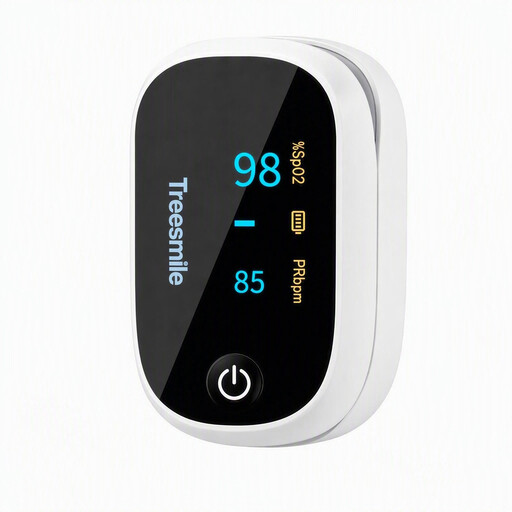
Why this product suits this profile: This compact fingertip pulse oximeter displays SpO2 and pulse simultaneously, and is designed for occasional checks at home or while out and about.
The display can be positioned in four directions and its backlight brightness can be adjusted. A battery warning and automatic shut-off address common operating and power-related issues.
Dual display for SpO2 and pulse, four orientations, adjustable backlighting, plus a lightweight, battery-powered design.
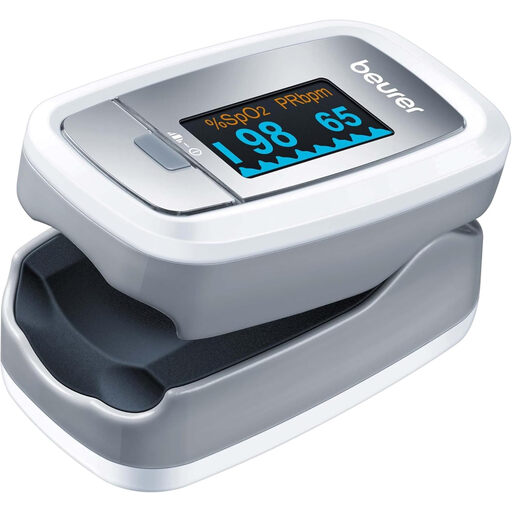
Why this product suits this profile: According to the available product information, this model is classified as a medical device and offers simple one-button operation for spot checks at home or while out and about.
Automatic orientation means the readings remain easy to see when the device is held differently. Automatic shut-off and a battery-level indicator support regular use.
TFT colour display, two display formats, automatic orientation, 2 AAA batteries and dimensions of 61 × 36 × 32 mm.
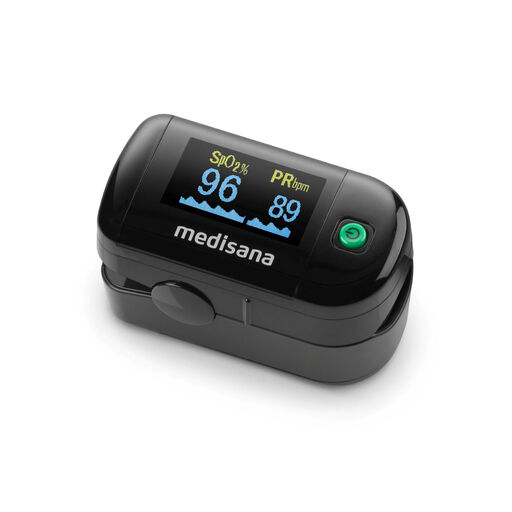
Why this product suits this profile: This model is ideal for users looking for a lightweight device with several display options and clearly defined technical specifications for regular spot checks.
According to the product information, the OLED display offers six viewing perspectives and ten brightness levels. Automatic shut-off after eight seconds helps reduce unnecessary battery consumption.
Weight of 53 g including batteries, six display views, ten brightness levels, one-touch operation and lanyard.
We have put together a complete, regularly updated list of products that fully meet these strict selection criteria and the safety regulations applicable in the EU.
For the most consistent measurement possible with a pulse oximeter for home use, follow these steps:
A single unusual reading should not be interpreted in isolation. If readings remain unusual or symptoms such as shortness of breath, chest pain, severe weakness or confusion occur, contact a medical professional immediately. In an emergency, call 112.
Its service life depends on build quality, battery consumption, cleaning and storage. Store the device in a dry place, do not expose it to excessive heat and remove the batteries if it will not be used for an extended period. Do not continue using it if there is visible damage or it malfunctions.
Running costs mainly come from AAA batteries. Automatic shut-off and a battery warning can help limit consumption in everyday use. If you use the device frequently, it is worth checking the stated shut-off time and the battery configuration supplied.
A pulse oximeter can be used for spot checks, including while out and about, hiking or travelling. If you have COPD or asthma, discuss the timing of measurements, your personal reference readings and how to respond to unusual results with your doctor’s practice. For athletes, readings can provide additional information but do not replace a medical assessment.