If you have coeliac disease, rye pumpernickel is not gluten-free: REWE lists wholegrain rye meal as an ingredient in its organic pumpernickel, and the German Coeliac Society classifies rye as a gluten-containing grain. For lunch at home, choose bread that is clearly labelled gluten-free. Whether crispbread, rolls or home-baked bread is most practical depends on how much time you have to prepare it. Check the ingredients and any other allergens on the individual product.
Who needs to know the difference?
People with coeliac disease who eat bread at lunchtime
For a sandwich-style lunch, they need bread that is clearly labelled gluten-free. Rye pumpernickel is not a suitable substitute: the German Coeliac Society classifies rye as a gluten-containing grain.
People with little time for their lunch break
It makes a difference whether bread can be topped and eaten straight away or needs preparing first. The pack format, ingredients and preparation instructions can help you plan.
People who like pumpernickel and do not need gluten-free bread
They can choose rye pumpernickel based on its taste and ingredients. REWE Bio Pumpernickel contains wholegrain rye meal, so it should not be confused with a gluten-free alternative.
What should you look for when buying bread?
If you have coeliac disease, first check the specific pack to see whether the bread is labelled gluten-free. Then consider the preparation involved, ingredients and nutritional information to find an option that suits your lunch.
| What matters to you | What to check when buying | Who it matters to |
|---|
| Gluten-free food for coeliac disease |
Check the ‘gluten-free’ label on the specific pack and read the ingredients list; do not judge pumpernickel by its name or colour alone. |
If I have coeliac disease, I need to distinguish rye pumpernickel from bread that is explicitly labelled gluten-free. This is the main consideration when buying bread for around 50% of consumers. |
| Preparation during your lunch break |
Match the format, preparation instructions and pack size to the time you have available. |
Between meetings, I want to be able to eat my bread without lengthy preparation. This is the main buying consideration for around 30% of consumers. |
| Ingredients and nutritional information |
Compare the ingredients, other allergen information, and the fibre, salt and sugar per 100 g for each product. |
If I am replacing pumpernickel, I want to know what ingredients and nutritional values the alternative bread actually contains. Around 20% of consumers put this first. |
Common mistakes when choosing
-
Assuming dark bread is gluten-free
Colour tells you nothing about gluten. REWE lists wholegrain rye meal as an ingredient in its organic pumpernickel; according to the German Coeliac Society, rye contains gluten.
If you need gluten-free bread, check the label on the specific product and read its ingredients list.
-
Assuming ‘wheat-free’ means ‘gluten-free’
Bread without wheat may contain other gluten-containing grains. The German Coeliac Society lists rye and barley as well as wheat.
If you have coeliac disease, do not assume a bread is safe just because it is free from one type of grain. Check that it is explicitly labelled gluten-free.
-
Overlooking other allergens and nutritional information
A gluten-free label does not also answer questions about other allergens or nutritional content. For example, REWE frei von Landbrot lists other possible allergen traces.
If this information is relevant to you, compare the allergen information and nutritional values on the individual pack.
Brands to help you choose
REWE frei von
REWE sells a 400 g loaf under this own-label range that is labelled gluten-free.
- A specific option if you are looking for packaged gluten-free bread instead of rye pumpernickel.
- The loaf contains gluten-free wheat starch; check the product for other allergen information.
Poensgen
REWE sells a Poensgen loaf described as gluten-free and lactose-free.
- This particular loaf offers another packaged bread option to compare.
- The information for this loaf does not automatically apply to other products from the brand; check each pack.
Schär
REWE’s gluten-free bread range includes Schär Meisterbäckers Classic Soft Slices, among other products.
- A choice of bread formats lets you pick what suits the meal you have planned.
- Ingredients, allergens and preparation instructions vary by product, so check each one individually.
Gluten-free lunch options
This selection includes gluten-free crispbread, rolls and a bread mix. Crispbread and rolls come in different formats, while the bread mix needs to be prepared first. Check the information on the specific pack for all three products.
 No image available
Schär gluten-free dark crispbread, 125 g
A crispbread option for a topped lunch; it is not soft sliced bread or traditional pumpernickel. Check the ingredients and allergen information on the pack.
View at Joybuy
 No image available
Schär gluten-free Kaiser rolls, 350 g
A roll format for lunch, if the preparation fits into your day. Before buying, check the storage and preparation instructions, as well as the allergen information.
View at Joybuy
 No image available
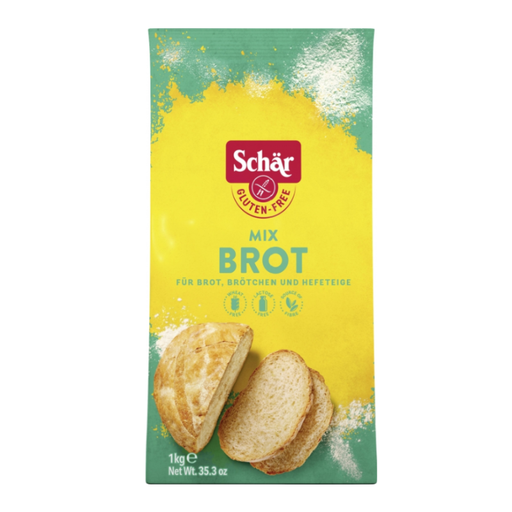
Schär gluten-free bread baking mix, 1 kg
For making your own bread ahead of a later lunch. This mix is not ready-to-eat sliced bread; check the ingredients, allergen information and baking instructions on the pack.
View at Joybuy
Frequently asked questions
Is ordinary pumpernickel suitable for people with coeliac disease?
Rye pumpernickel is not gluten-free. According to its ingredients list, REWE Bio Pumpernickel contains wholegrain rye meal, and the German Coeliac Society classifies rye as a gluten-containing grain. So it is the label on the specific bread that matters, not its name.
Does gluten-free wheat starch rule out a bread for people with coeliac disease?
Gluten-free wheat starch alone is not a reason to avoid bread that is explicitly labelled gluten-free. REWE frei von Landbrot is described as gluten-free and contains gluten-free wheat starch. If relevant to you, also check the ingredients and information about other allergens.
What should I check on a bread pack for a quick lunch?
If you have coeliac disease, first check the gluten-free label and ingredients, then look at the bread format and any preparation steps. Allergen information, nutritional values and pack size can help you choose between bread you can top straight away, rolls and a baking mix.


