Hosting a group
You’re planning pumpkin soup for several people or want to make sure there’s enough for seconds. Usable cooking capacity matters more to you than the stated capacity in litres.


For several portions, compare the usable capacity of the specific appliance rather than relying on its stated pot capacity alone. If you want to blend the soup in the same appliance, a cook-and-blend function could be a good fit; check that the planned quantity will fit in the mixing bowl. A pressure multi-cooker offers another cooking method, which involves releasing the pressure and, if necessary, blending the soup separately.
You’re planning pumpkin soup for several people or want to make sure there’s enough for seconds. Usable cooking capacity matters more to you than the stated capacity in litres.
You’d like to cook and blend the soup without having to transfer it to another container. A blending function and a mixing bowl large enough for your planned quantity are essential.
You’re planning a meal for an evening with friends and are allowing for pressure build-up, pressure release and keeping the food warm, as well as cooking time.
A good fit if: You’re cooking for several guests and don’t mind blending the soup separately.
The trade-off: Pressure build-up and release are part of the process; a soup programme doesn’t mean the appliance has a built-in blending function.
A good fit if: You want to cook and blend in the same appliance, and the mixing bowl can hold your recipe quantity.
The trade-off: Check the mixing bowl capacity; a steaming attachment doesn’t increase the amount of liquid soup the bowl can hold.
For an evening with friends, it’s worth deciding first how many portions you need and whether you want to blend the soup in the appliance. You can then work out which cooking process suits you best.
| What matters | What to check before buying | Who it matters to |
|---|---|---|
| Enough soup in one batch | Compare the usable capacity and fill markings of the specific appliance with the quantity in your recipe. | If I’m cooking for several guests, I want to know whether I can make the planned quantity in one batch. Around 36 % of consumers put portion size first. |
| Blending without transferring the soup | Check whether the exact model includes a blending blade and how much liquid the mixing bowl can hold. | If I want to make creamy soup directly in my cooking appliance, I look for a blending function and a mixing bowl with enough capacity. Around 29 % of consumers prioritise blending in the appliance. |
| A cooking process you can plan around mealtime | Allow for browning, cooking, pressure release and blending as separate steps; use the keep-warm function as described in the model’s instructions. | If I want dinner on the table at a particular time, I need to allow for more than just the set cooking time. Around 21 % of consumers prioritise a predictable cooking process. |
| Cleaning and ongoing costs | Check the cleaning instructions, compatible spare parts and terms for any optional recipe services for the exact version. | If I plan to use the appliance regularly, I want to understand the effort involved and any possible ongoing costs in advance. Around 14 % of consumers focus mainly on care and ongoing costs. |
Manufacturers quote different figures: Rommelsbacher lists a 6-litre pot with a usable capacity of 4 litres for the MD 1000; Tefal gives the Turbo Cuisine CY754830 a capacity of 5,0 litres and a usable volume of 3,2 litres.
Compare your recipe quantity with the usable capacity and fill markings of the specific model.
Tefal’s recipe for the Turbo Cuisine & Fry CY7788 calls for a separate blender after cooking. This doesn’t prove that other models offer the same function.
Check the cooking function and blending blade separately for the exact model you’re considering; otherwise, plan to use a suitable separate blender.
A compatible replacement sealing ring or optional recipe service may involve extra costs. Check that spare parts are compatible and review the service terms for the specific version.
Preparation, pressure release and any blending step can all add to the time it takes to get soup ready to serve.
Plan each step using the full recipe and the instructions for your chosen model.
Parts and accessories may have different cleaning or compatibility requirements. An optional recipe service isn’t necessarily free of charge indefinitely.
Check the cleaning instructions, the model number required for spare parts and the terms of any recipe service.
The MeinHans MD 1000 is aimed at cooks who want to prepare several portions of soup and use different cooking methods in one pressure multi-cooker.
The Turbo Cuisine CY754830 is a pressure multi-cooker with browning and keep-warm functions.
The Cookit is a cook-and-blend option if blending in the appliance is important to you.
The Thermomix TM7 combines cooking and blending, and may appeal if you’d like to follow guided recipes.
The Classic EU version 112-2000-01-EU is a pressure multi-cooker with a capacity of 5,7 litres.
This Joybuy selection includes appliances for cooking, slow cooking or pressure cooking soups and meals to share. It also includes models where you’ll need to blend the soup separately.
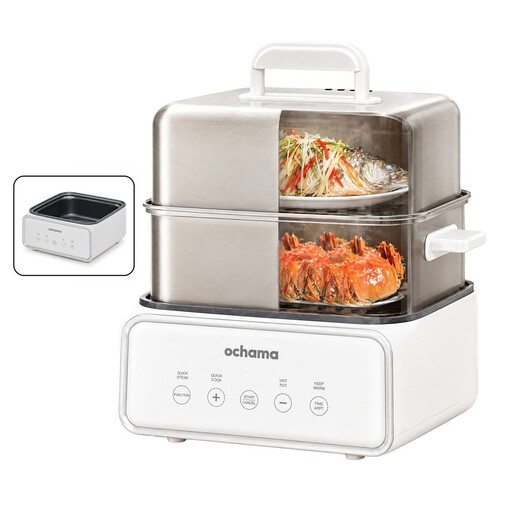 No image available
This appliance may be worth considering for a larger soup meal; the product details list soup among its uses. Check the fill markings and instructions for your recipe.
The title lists 1500 W, 12 L, and steaming, simmering and cooking functions.
Follow the manufacturer’s guidance on hot parts and steam. Place the appliance on a flat, heat-resistant surface and supervise children while it’s in use.
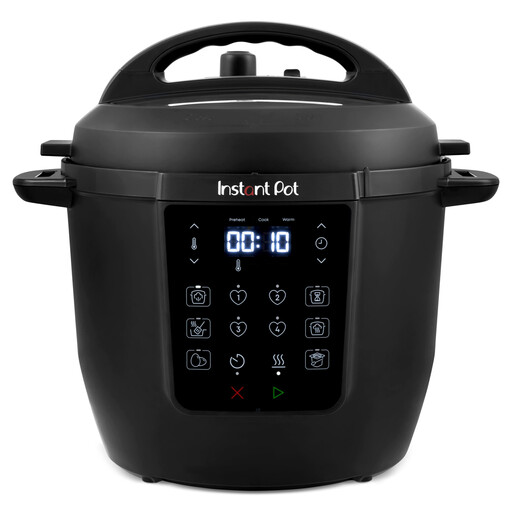 No image available
If you’re cooking for several people and are happy to use a pressure-cooking process, this version is an option; blend the soup separately if needed.
The German Joybuy product page lists a capacity of 5,7 L, along with pressure cooking, slow cooking, browning and keeping warm.
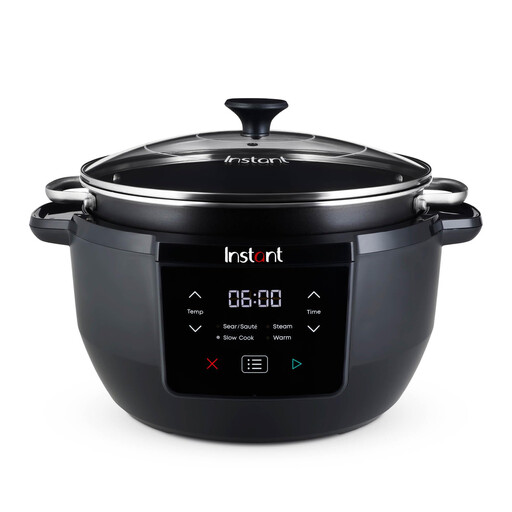 No image available
If you want to cook a meal slowly without pressure cooking, this slow cooker could be a good fit. Plan your portion size according to the appliance instructions.
The product title lists a capacity of 7 L.
According to the product details, the inner pot isn’t suitable for use in an oven, on a hob or on an induction hob.
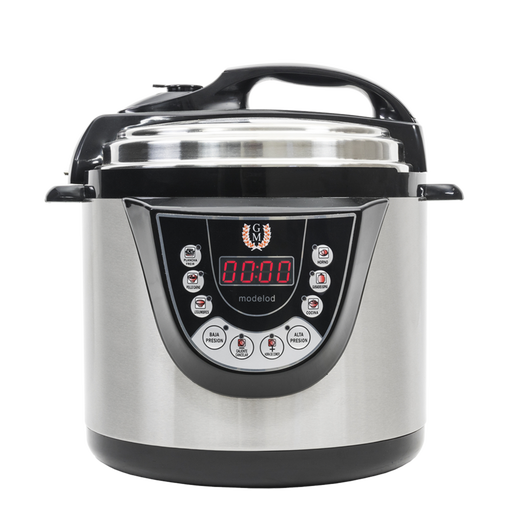 No image available
The stated usable capacity may help when planning a meal for a larger group; compare it with your recipe quantity and the fill markings.
The product details distinguish between a 6 L pot capacity and a usable volume of 5 L. The title also lists 9 cooking programmes.
 No image available
If you’re planning to pressure-cook a meal to share, check the recipe quantity and fill markings. You may also need to blend the soup separately to get a creamy finish.
The title lists 8 L, 1200 W and 12 preset menus.
When using the pressure-cooking function, don’t force the lid open and follow the fill markings.
No. If your appliance only cooks, you can use a suitable separate blender. A Tefal recipe for the Turbo Cuisine & Fry CY7788 says to let the soup cool slightly after releasing the pressure, then blend it in a blender. You can’t assume that the same process applies to other models.
Follow the instructions for your specific model. Instant Pot recommends placing its 5,7-litre multi-cooker on a stable, level surface and warns that parts can get hot. Tefal’s recipe for the CY7788 says to release all the pressure before opening the appliance; this is a recipe step for that model, not a general cooking-time recommendation.
The Verbraucherzentrale explains that statutory rights apply to faults and are claimed from the seller, while a guarantee is an additional voluntary service subject to its own terms. If a product is faulty, the first step may be to ask for it to be repaired or replaced.
According to the European Union’s information on CE rules, the manufacturer uses the marking to declare that the product meets the applicable requirements. It isn’t an approval issued by a central EU body; check the marking and the manufacturer’s details for the exact model version you’re considering.