
Lieferung heute & morgen

Qualitätsgarantie

Willkommens-Angebote freischalten: KOSTENLOSE Lieferung | Bis zu 80 % RABATT | Kostenlose 30-Tage-JoyPlus-Testphase
App herunterladen
For many, independence from a fixed power outlet is a central aspect of modern mobility and emergency preparedness. Whether in an RV, on a job site, or as an emergency power supply at home, a reliable power inverter that converts 12V DC from a battery into 230V AC is often indispensable. However, the market is confusing and full of technical pitfalls. Incorrect assumptions about power ratings or waveforms can quickly lead to a poor purchase that, in the worst case, can damage expensive electronics.
This guide highlights the most common sources of error and explains which technical parameters truly matter when selecting a Pure Sine Wave Power Inverter 12V to 230V 2000W.
Many products advertise impressive numbers that, in practice, fail to meet expectations. Pay attention to these three typical marketing traps to make an informed decision.
To avoid the pitfalls mentioned above, focus on the following non-negotiable technical features.
Add up the power consumption (in watts) of all devices you plan to run simultaneously. Include a buffer of at least 20%. The continuous power of the inverter must cover this value. Peak power is only relevant if you operate devices with high inrush currents (e.g., compressors, pumps, power tools). A unit with 2000W continuous power and 4000W peak power is a common and flexible configuration for most applications.
For anyone wanting to operate more than just a simple lamp, a Pure Sine Wave Inverter is the only sensible choice. It ensures that all 230V devices function as intended by the manufacturer—without humming, flickering, or the risk of electronic damage. This is especially important when used as a power inverter for an RV or as emergency power for camping, where laptops, cameras, and other sensitive devices are often charged.
A complete safety package is essential. Look for the following protection mechanisms:
A car battery inverter with a display also offers the advantage of monitoring input and output voltage in real-time, allowing for better control over the battery status.
Based on the criteria above, we have identified some models that are particularly suitable for specific user groups.
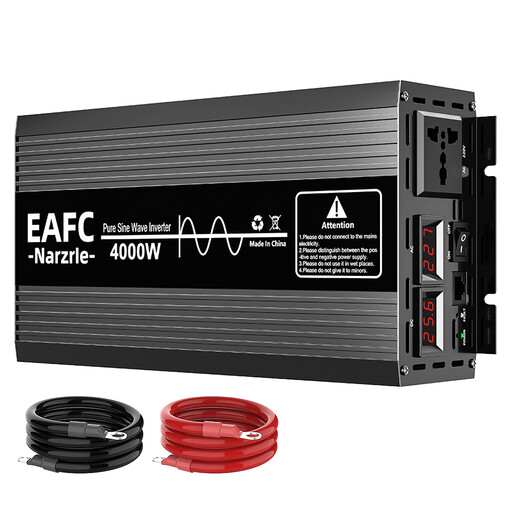
Why This Fits Their Persona: Ideal for RV owners who need a reliable power source for consumer electronics, kitchen appliances, and laptops. The quiet operation and real-time battery status display are major advantages on the road.
It produces a pure sine wave that protects sensitive devices, and the dual digital display provides transparency about the actual input and output voltage, so you're not left in the dark.
The real-time voltage monitoring on the display allows for active management of battery resources. The temperature-controlled fans ensure quiet operation under low load.
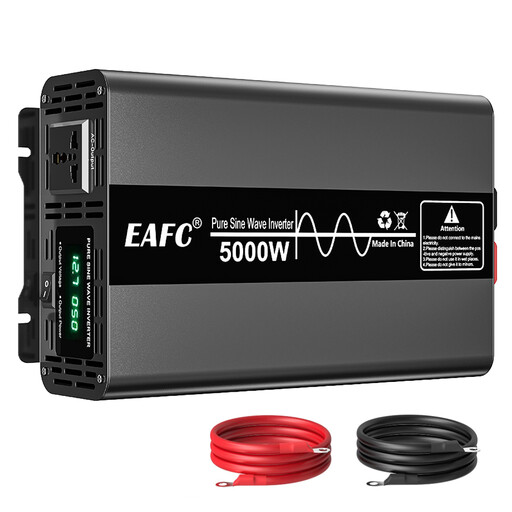
Why This Fits Their Persona: For tradespeople, truck drivers, or field service professionals who need to run powerful tools, chargers, or multiple devices simultaneously. The higher continuous power of 2500W provides the necessary reserves.
This model bypasses the peak power trap by delivering a robust 2500W of continuous power, which is sufficient even for demanding consumers like angle grinders or small compressors.
Offers high continuous and peak power for professional use. The comprehensive protection system ensures safe operation even under harsh conditions on job sites or in commercial vehicles.
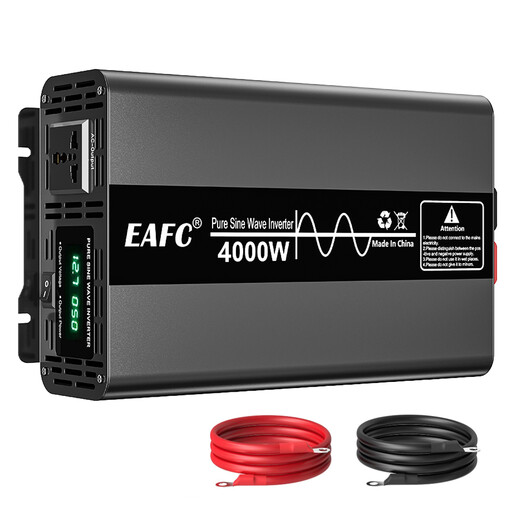
Why This Fits Their Persona: Perfect for home emergency power. The pure sine wave is safe for heating controls, refrigerators, and communication devices. Its high efficiency maximizes the runtime of the connected battery during a power outage.
According to the manufacturer, the amorphous silicon technology provides higher conversion efficiency. This means less energy loss and a more stable power output, which is critical for emergency power supply.
The high efficiency extends the available energy from the battery. The wide operating temperature range of -30°C to 60°C ensures reliability in all weather conditions.
Once you have a stable 230V source, the next step is to safely distribute the power to multiple devices.
To safely distribute your inverter's power to multiple devices, you need the right distribution blocks. We've compiled a selection of products that meet safety requirements.
1. What battery capacity do I need for a 2000W power inverter? A simple rule of thumb is: Power (Watts) / Voltage (Volts) = Current (Amps). A 2000W inverter at full load draws approximately 167 amps from a 12V battery (2000W / 12V ≈ 167A). To draw full power for one hour, you would need a battery with a capacity of at least 167 Amp-hours (Ah). Since lead-acid batteries should not be fully discharged, a capacity of 300-400Ah is recommended for a reasonable usage time. Lithium batteries (LiFePO4) can be discharged more deeply and are therefore a lighter and more durable alternative.
2. Can a pure sine wave inverter drain my car battery? Yes. Every inverter consumes power from the battery. High-quality models feature under-voltage protection, which automatically shuts off the inverter before the battery voltage drops to a critical level. This protects the battery from deep discharge. However, it is advisable not to run the inverter for extended periods with the engine off to ensure the vehicle can still be started. For use in an RV, a separate house battery should always be used.
3. How do I safely install a 2000W inverter in my vehicle? A safe installation is crucial. Use sufficiently thick battery cables (at least 35mm? cross-section for short distances) to handle the high current flow and prevent a cable fire. The cables should be as short as possible. Install a fuse (approx. 200A-250A for a 2000W inverter) near the positive terminal of the battery. The inverter itself should be mounted in a dry, well-ventilated area to prevent overheating. If you are unsure, the installation should be carried out by a certified technician.