
Lieferung heute & morgen

Qualitätsgarantie

Willkommens-Angebote freischalten: KOSTENLOSE Lieferung | Bis zu 80 % RABATT | Kostenlose 30-Tage-JoyPlus-Testphase
App herunterladen
A tricycle with a push handle promises to be a faithful companion for several years—from the first birthday to kindergarten age. The market is flooded with models advertised as "convertible" or "multi-functional." Yet, the reality is often quite different. Many parents invest in a supposed all-in-one product, only to find it impractical, unsafe, or already broken after just a few months.
As your Joybuy Product Recommendation Officer, I filter the essential information from the marketing noise for you. In this guide, I'll show you the two most common traps to avoid when buying and which objective criteria you need to consider to make a durable and sensible choice for your child.
Before we turn to the recommended features, it's important to know the typical weaknesses that often only become apparent after the purchase.
To avoid the problems mentioned above, you should base your purchase decision on three objective criteria. These define the quality, safety, and longevity of a tricycle with a push handle.
A true 5-in-1 tricycle or a model that is convertible to a balance bike adapts to your child's developing motor skills. Look for clearly defined and easy-to-implement configurations:
Certain safety features are non-negotiable, especially for a toddler tricycle from 1 year. Check for the following:
The choice of material affects weight, durability, and ride comfort.
Based on the criteria above, we have identified some models from our range that are suitable for different needs and lifestyles.
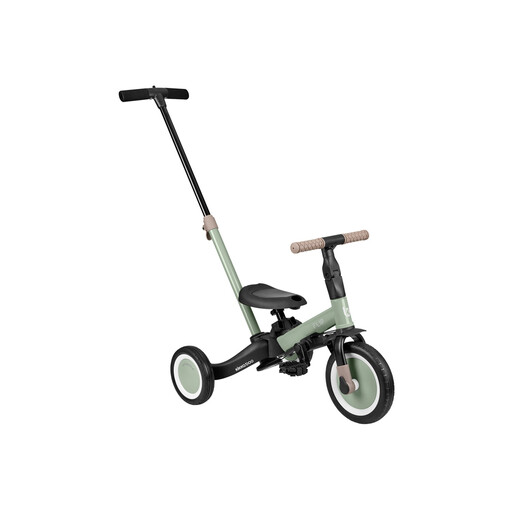
Why This Fits Their Persona: This model is designed for parents seeking a single, durable investment for the 1-to-5-year age range. It covers all developmental stages from being pushed to independent riding.
It bypasses the "grows-with-you" trap with a well-designed 5-in-1 system featuring clearly defined conversion stages, including a balance bike mode. The push handle is height-adjustable and designed for steering.
The carbon steel frame promises high stability throughout its entire service life. The versatility of five modes justifies the purchase as a long-term vehicle.
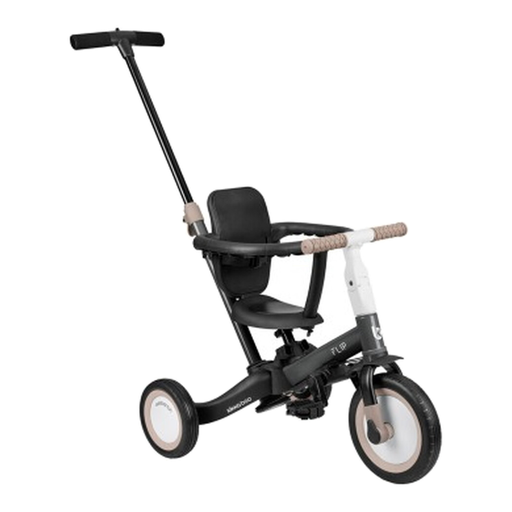
Why This Fits Their Persona: For parents of the youngest riders (from 12 months), direct eye contact is crucial. This model offers a 360-degree rotating seat, allowing the child to face either the parent or the front.
The combination of a rotating seat, 3-point harness, and removable safety bar provides a comprehensive safety package that goes far beyond simpler models. The push handle is fully functional for steering.
The 360° rotating seat is the standout feature for the initial phase of use. EVA wheels ensure a quiet ride on smooth surfaces.
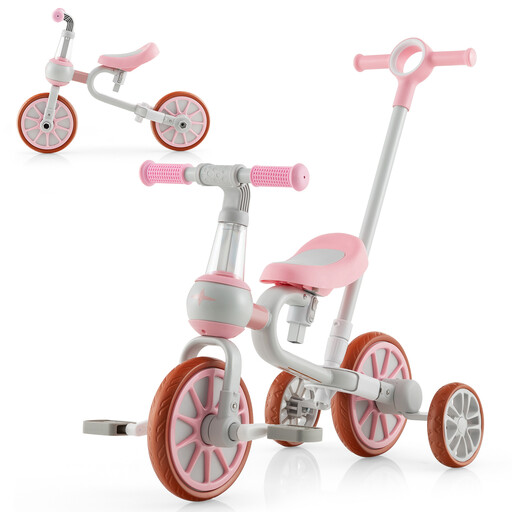
Why This Fits Their Persona: Ideal for parents whose child is already out of the baby stage (from 2 years) and who are looking for a straightforward, functional model for the most important phases of use, without needing the full feature set of a 5-in-1 model.
This model focuses on the core functions for the 2-4 age group and features an adjustable, steerable push handle. It avoids the trap of a non-functional bar and offers solid basic features.
A straightforward 4-in-1 concept that covers the phases from a pushed trike to a self-propelled one. A pragmatic solution for the core years of tricycle use.
We have compiled a complete, up-to-date list of products that fully meet these strict selection criteria and UK/EU safety regulations.
Models with appropriate safety equipment (seat with high backrest, harness, safety bar) are suitable for children from approx. 1 year of age. In this phase, the child is exclusively pushed and steered by the parents. From the age of about 2 to 2.5 years, children begin to pedal and take control of the steering themselves.
EVA tyres are made of a lightweight, puncture-proof plastic foam. They are maintenance-free and quiet, making them ideal for smooth surfaces like asphalt or indoor floors. Air-filled tyres are similar to classic bicycle tyres. They offer significantly better cushioning and more comfort on uneven ground such as park paths or cobblestones, but they need to be inflated regularly and can get a flat.
Yes, most modern tricycles are designed for transport. Some models are designed as a foldable tricycle and can be reduced to a compact size. On many others, at least the push handle and the sun canopy can be removed tool-free to store the tricycle in a car boot. It is advisable to check the exact folded dimensions or disassembly options before buying.