
Lieferung heute & morgen

Qualitätsgarantie

Willkommens-Angebote freischalten: KOSTENLOSE Lieferung | Bis zu 80 % RABATT | Kostenlose 30-Tage-JoyPlus-Testphase
App herunterladen
A child's first steps are an unforgettable milestone. A push walker can be a valuable support during this phase, providing security while encouraging play. However, the market is vast, and not every model delivers on its promises. Many parents face the challenge of distinguishing a safe, developmentally supportive walking aid for their baby from an overpriced toy.
This guide will show you which critical features to look for and how to avoid common purchasing pitfalls, helping you make an informed decision for your child.
Before we dive into the important features, let's look at three common problems that can arise from hasty purchases.
To avoid the pitfalls mentioned above, you should focus on the following three core parameters when making your selection. These form the foundation for a safe and beneficial play and push walker.
The most important feature is stability. Look for a wide base and a low centre of gravity to minimise the risk of tipping. A heavier walker also contributes to stability. The construction should be robust, with no sharp edges or corners. Check that all parts are securely attached and that no small parts can come loose and be swallowed.
A high-quality push walker will have an adjustable brake function or regulated rolling resistance on the wheels. This feature is crucial for adapting the speed to the child's abilities and the floor surface. On smooth floors like parquet or tiles, higher resistance is needed than on carpet. This ensures the child can push the walker in a controlled manner.
Push walkers are typically made of wood or plastic. Both materials have their advantages. More importantly, they must be non-toxic and saliva-resistant. Look for relevant certifications (e.g., CE marking).
The integrated motor skills toys for learning to walk should be age-appropriate and promote fine motor skills, hand-eye coordination, and logical thinking. Elements like spinning discs, shape sorters, or small mazes are often more beneficial than purely electronic gadgets.
Here are some recommendations tailored to different needs and priorities.
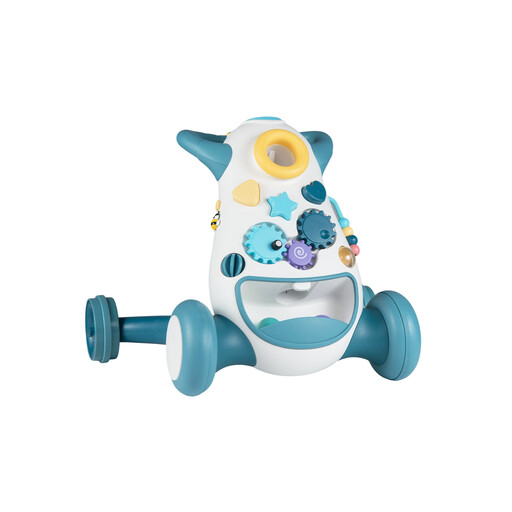
Why it's a good fit: This model offers a solid set of basic features, including walking support and an integrated activity centre, at an accessible price point. It's a great choice for families looking for a functional solution without a major investment.
The wide wheelbase provides good foundational stability. The toy elements are interactive but not overly complex, which helps prevent overstimulation.
Combines walking support with a shape sorter and spinning gears, offering excellent value for multi-functional use.
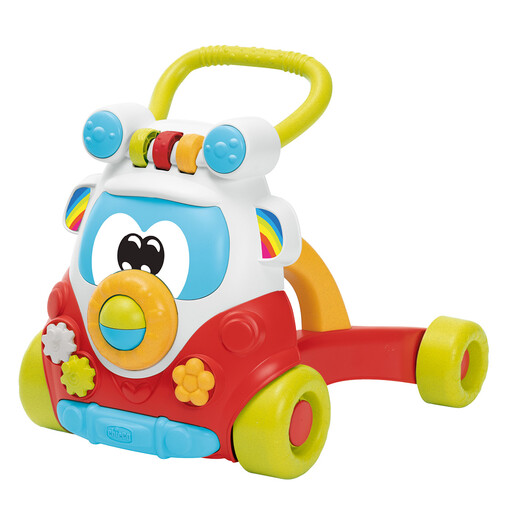
Why it's a good fit: With its charming retro bus design, this walker is a real eye-catcher. It comes from the well-known brand Chicco and appeals to parents who value aesthetics and brand quality.
The four large, wide wheels ensure high stability and prevent tipping. The model deliberately avoids electronics, focusing instead on manual play activities to prevent overstimulation.
The 2-in-1 function as a push walker and activity centre with five manual activities specifically promotes fine motor skills. According to the manufacturer Chicco, it is suitable for children from 9 to 24 months.
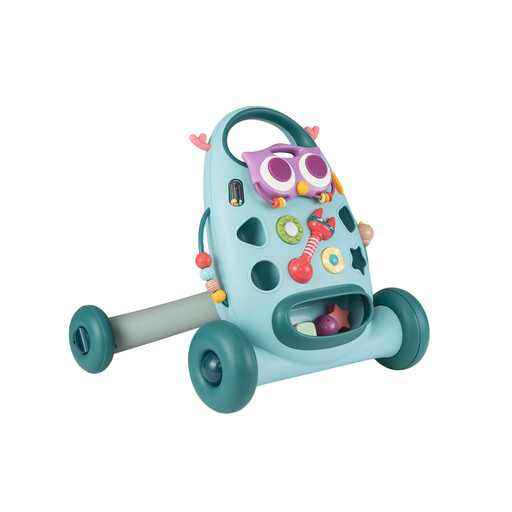
Why it's a good fit: The focus here is on versatile development. The removable playboard can be used separately on the floor, and the integrated shape-sorting game specifically trains cognitive skills and fine motor control.
The sturdy frame provides secure support for learning to walk. The play elements are educationally designed to support development rather than just entertain.
The flexibility of the removable playboard extends the product's lifespan, as it remains engaging even after the child can walk confidently.
A push walker promotes gross motor development. To also support auditory perception and creativity, we have put together a selection of engaging baby musical toys.
A push walker from 9 months is a common recommendation. However, the crucial factor is not age, but the child's developmental stage. A walking aid is useful when your child can pull themselves up to a standing position and stand while holding on. It serves to support existing skills, not to force walking. Always follow the manufacturer's guidelines.
The three most important safety aspects are:
These terms are often confused. A push walker is a device that the child pushes in front of them while holding on. This type is recommended by experts because it supports the natural development of balance and walking motion. A classic sit-in walker is a seat suspended in a frame that the child sits in. These models are often viewed critically as they can promote an unnatural posture and hinder the development of independent walking. This article refers exclusively to the recommended push walkers.