
Lieferung heute & morgen

Qualitätsgarantie

Willkommens-Angebote freischalten: KOSTENLOSE Lieferung | Bis zu 80 % RABATT | Kostenlose 30-Tage-JoyPlus-Testphase
App herunterladen
A pushchair often accompanies families for several years and needs to handle a wide range of situations: walks on pavements, shopping trips, car journeys, holidays and the occasional nap while out and about. However, the product name alone tells you little about whether a model suits your everyday needs.
Three common buying misconceptions regularly lead to the wrong choice:
Pay attention to the age and weight limits specified by the manufacturer. Many buggies and sports pushchairs are designed for children from around 6 months, while a combination pushchair or 2-in-1 pushchair can be used from birth.
The specific design is important:
A model rated for a child weighing 22 kg is not automatically designed to support a higher total weight including luggage. Bags should be placed in the designated shopping basket rather than hung from the handlebar, as this can affect stability.
For flats, public transport and small car boots, the folded dimensions matter. Measure your car boot, the intended storage space and, where applicable, the lift.
A compact buggy or folding buggy is generally easier to carry than a combination pushchair. However, wheel size, basket capacity or ride comfort on uneven paths may be reduced. A travel buggy weighing around 5 to 8 kg is practical if you need to carry it frequently; a sibling pushchair or twin pushchair naturally weighs more because of its additional seat.
Also check:
The claim “suitable as hand luggage” should always be checked against the relevant airline’s requirements. It does not guarantee that the pushchair will be allowed into the cabin.
A 5-point safety harness should be height-adjustable and correctly fitted. Before every journey, check that all fasteners click into place and that the harness is not twisted. A parking brake on the rear wheels is essential for short stops.
The following details are relevant when considering wheels and the chassis:
A pushchair with UV protection does not protect against every type of weather. UPF 50+ describes the protection level of the textile used; a sun canopy is not a substitute for suitable clothing, breaks and avoiding direct sunlight. Ventilation windows can help improve air circulation in warm weather.
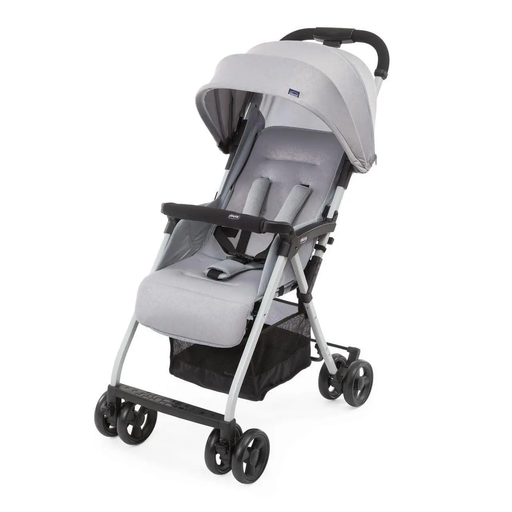
Why this product suits this profile: With a stated weight of 4.2 kg and one-handed folding, this buggy is ideal for short trips around town, public transport and frequent carrying.
Its low weight and stated flat reclining position help avoid unnecessarily bulky designs for use in town. The load limit is 15 kg.
4.2 kg weight, stands upright independently when folded, UV50+ sun canopy and adjustable footrest.
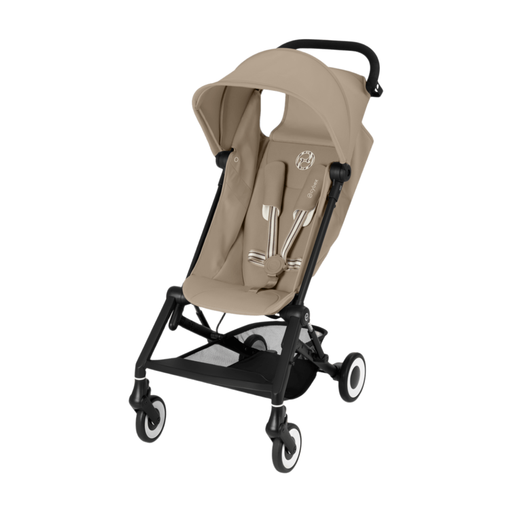
Why this product suits this profile: The Agis combines compact folded dimensions with suspension, an adjustable lie-flat position and a sun canopy with UPF 50+.
The features go beyond simple compactness: according to the product details, the chassis has suspension and the seat can be reclined into a lie-flat position with one hand.
Hand-luggage-compatible folding design according to the manufacturer, 5-point harness, 5 kg shopping basket and use up to 22 kg.
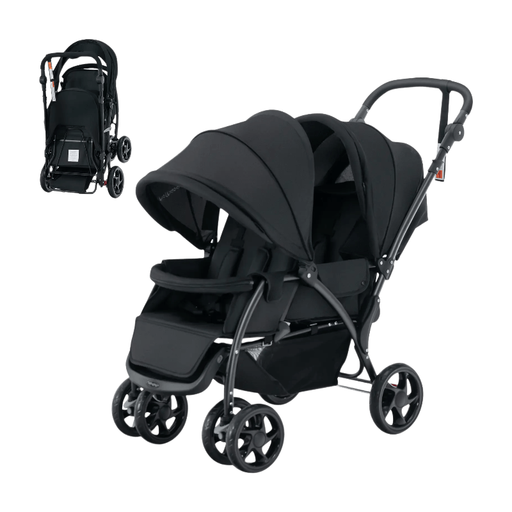
Why this product suits this profile: This sibling pushchair is designed for two children and offers separately adjustable backrests, footrests and canopies.
Instead of combining two separate pushchairs, it provides two seats, each with its own 5-point harness. The age recommendations differ: the rear seat is suitable from birth, while the front seat is suitable from 6 months.
Two seats with a load capacity of 15 kg each, rear-wheel brakes, adjustable handlebar and folding design.
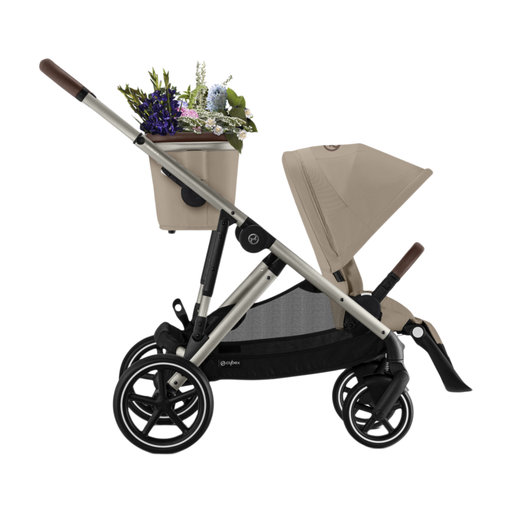
Why this product suits this profile: According to the product details, this combination pushchair can be adapted into more than 20 configurations for one child, siblings or twins.
The modular design reduces the risk of needing to buy a new pushchair immediately if your family situation changes. Check accessories and adapters separately for compatibility.
Two shopping baskets with a stated combined load capacity of 23 kg, flat lie-down position and use up to 22 kg per child in double mode.
We have put together a complete, regularly updated list of products that fully meet these strict selection criteria and the safety regulations applicable in the EU.
Before every use, check the locks, brakes, wheels and harness system. Sand, small stones and moisture can put strain on the folding mechanism and wheel bearings. Removable covers should be cleaned in accordance with the care instructions. An electric pushchair also has a battery, charging socket and cables that require attention. Keep electrical components dry and observe the manufacturer’s stated limits for gradients and load.
A pushchair can be used into the toddler years provided that the weight, height and seating position remain suitable. Age is not the only factor: it is also important that the child can sit securely and cannot climb out of the harness. If there is visible damage to the frame, harnesses, wheels or brakes, stop using the pushchair.
A traditional pushchair or combination pushchair is often designed for use from birth with a carrycot or lie-flat unit. A buggy is usually lighter and more compact, but depending on the model may only be suitable from a certain age. The manufacturer’s age, weight and lie-flat specifications are always the deciding factors.
A travel buggy or folding buggy with a low weight, compact folded dimensions and a transport bag is practical for travelling. The term “suitable as hand luggage” must be checked against the airline’s size requirements before you fly. For uneven paths, suspension and sufficiently large wheels are more important than an especially small folded size.
Many models are designed for use up to around 4 years of age or up to a stated child weight of 22 kg. A twin or sibling pushchair may have different limits for each seat. Check the condition of the components regularly and stop using the pushchair as soon as the weight, size or safety harness is no longer suitable.