
Lieferung heute & morgen

Qualitätsgarantie

Willkommens-Angebote freischalten: KOSTENLOSE Lieferung | Bis zu 80 % RABATT | Kostenlose 30-Tage-JoyPlus-Testphase
App herunterladen
A pushchair should be easy to steer in everyday situations, safe to use and as space-saving as possible to store. At the same time, models differ considerably. A compact travel pushchair with a small folded size meets different needs from a combination pushchair suitable from birth or a sibling pushchair for two children.
Those who focus only on weight or a particularly low price often overlook important details. These three buying misconceptions are especially common:
For newborn babies, consider models that are expressly approved from birth. Depending on the design, these may include a seat that adjusts to a fully flat position, a carrycot or a 2-in-1 unit. A pushchair with a lie-flat function should not be selected based on its name alone. Check the following:
According to the product details, a classic travel pushchair such as the CYBEX Libelle is designed for children from around 6 months to approximately 4 years of age and up to 22 kg. For a baby from birth, choose a model expressly approved for this age group, such as the Kikka Boo Eden, or a 2-in-1 pushchair.
A lightweight pushchair makes it easier to carry up stairs, onto public transport or through railway stations. However, always consider the frame weight together with the accessories and load capacity. For example, the Kikka Boo Eden is listed as weighing 7.1 kg for the pushchair and 7.8 kg including accessories.
The folded size must also fit your vehicle and storage space. The CYBEX Libelle is described as having a folded size of 20 × 32 × 48 cm and a weight of 6 kg. This is practical for travelling and small flats. The CYBEX Beezy is compact when folded at 27 × 48.5 × 64.5 cm, but according to the specifications it weighs 8.5 kg.
When it comes to a hand-luggage pushchair, measure the folded model and compare the dimensions with the airline’s current requirements. A travel bag can make handling easier, but it does not replace approval from the airline.
For everyday use in UK towns and cities, swivel front wheels, an effective brake and an easily accessible shopping basket are useful. For cobbled or uneven surfaces, suspension and larger wheels can help. Also look out for:
A compact pushchair is not automatically suitable for every type of terrain. If you regularly use gravel paths, give greater priority to the wheels and suspension than to the smallest possible folded size.
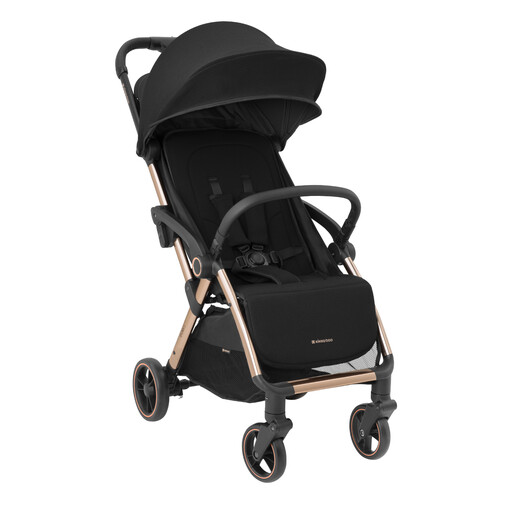
Why this product suits this profile: According to the product details, this pushchair is suitable from birth up to 22 kg and combines a weight of 7.8 kg including accessories with automatic folding. It is ideal for families looking for a versatile everyday companion that does not require excessive storage space.
The age approval and flat backrest position are clearly specified. Before buying, you should also compare the folded dimensions of 47 × 30 × 77 cm with your available storage space.
Automatic folding, 360-degree swivel wheels with suspension, a 5-point harness and a maximum seat load of 22 kg.
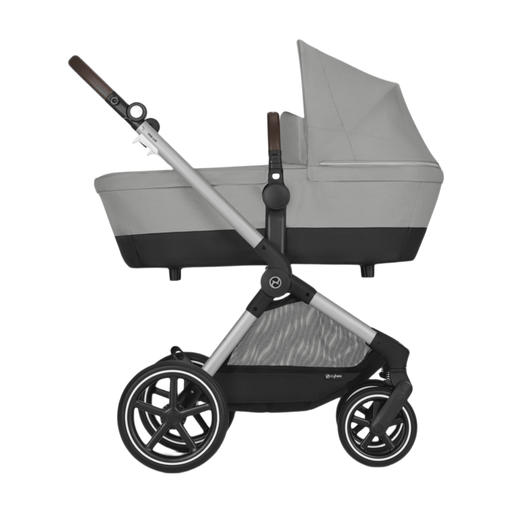
Why this product suits this profile: The Eos Lux is described as a 2-in-1 pushchair suitable from birth to around 4 years of age or 22 kg. The unit can be used as both a lie-flat and a seat solution, while the reversible seat supports different everyday situations.
The design clearly separates use as a lie-flat unit from use as a seat. A suitable adapter is required for an infant car seat and must be checked and purchased separately.
2-in-1 unit, reversible seat, puncture-proof wheels, front-wheel suspension and an adjustable handle.
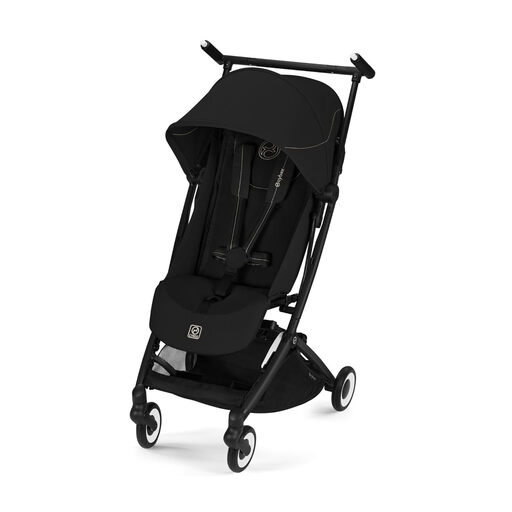
Why this product suits this profile: According to the specifications, this travel pushchair is suitable from around 6 months up to 22 kg, weighs 6 kg and folds down to 20 × 32 × 48 cm. This makes it a good choice for train journeys, air travel and small car boots.
The minimum age of 6 months prevents incorrect use for newborns. Before flying, check the airline’s cabin baggage dimensions.
6 kg frame weight, very small folded size, adjustable backrest and shopping basket with a load capacity of up to 5 kg.

Why this product suits this profile: The Gazelle S is designed for families with one child, siblings or twins. According to the manufacturer’s specifications, the system offers more than 20 configuration options and can carry up to 2 × 22 kg in double mode.
Its expandability is demonstrated through specific combinations and load ratings. For two children, additional seats, carrycots or adapters must be checked for compatibility.
More than 20 configurations, two storage baskets with a combined capacity of 23 kg and compact folding despite a weight of 12.9 kg.
We have put together a complete, regularly updated list of products that fully meet these strict selection criteria and the safety regulations applicable in the EU.
A city pushchair should be easy to steer and control in narrow hallways, shops and on public transport. A height-adjustable handlebar can be useful for parents of different heights. If you regularly use the pushchair for shopping, take a close look at the shopping basket’s load capacity. This should not be confused with the maximum seat load.
For families with two children, sibling pushchairs and twin pushchairs are suitable options. Do not just check the seat width; also check the age approvals for each seat. With models featuring seats arranged one behind the other, the length and turning circle can affect everyday use.
An electric pushchair such as the CYBEX eGazelle S can provide powered assistance on hills and uneven ground. However, you must take the battery, charger, overall weight, brake operation and permitted usage limits into account. Electric assistance does not replace safe handling and should only be used in accordance with the manufacturer’s instructions.
This depends on the relevant age approval and features. A pushchair expressly approved from birth may have a suitable lie-flat unit. Many lightweight travel pushchairs, on the other hand, are only designed for use from around 6 months. The manufacturer’s specifications are always decisive, not merely an adjustable backrest.
Many models are designed for children weighing up to 22 kg or aged approximately 4 years. The actual end of use also depends on the child’s height, seating comfort, harness adjustment and ability to climb out of the pushchair independently. The maximum load limit must not be exceeded.
Regular costs mainly include cleaning, possible replacement wheels, rain covers, adapters or a travel bag. Air-filled tyres may also require a pump and occasional maintenance. Before buying, it is worth checking whether replacement parts and compatible accessories are available, and which fabrics can be cleaned according to the care label.