
Lieferung heute & morgen

Qualitätsgarantie

Willkommens-Angebote freischalten: KOSTENLOSE Lieferung | Bis zu 80 % RABATT | Kostenlose 30-Tage-JoyPlus-Testphase
App herunterladen
A pushchair needs to suit your family’s everyday life – not just look good in a product photo. In town, manoeuvrability and a compact folded size matter; on uneven paths, suspension and wheels are key. Newborns have different needs from toddlers, while width, seat configuration and weight limits are important considerations for twins or siblings.
A compact pushchair or travel buggy can be handy in the boot and when travelling. What matters, though, is whether the seat, storage space and ease of use suit your daily routine. A very compact fold may mean less room for shopping or a narrower seat. So always check:
The term ‘cabin baggage size’ doesn’t mean the same thing on every airline, either. For example, the Chicco Travel Stroller WE is listed with folded dimensions of 59 × 21,5 × 46,5 cm. You should still check the airline’s current requirements before travelling.
A pushchair suitable from birth should offer a suitable lie-flat position or come with a separate carrycot. If the seat reclines, check how flat the backrest can actually go and what age or weight limits the manufacturer specifies.
A travel system with a carrycot can often see families through several stages of a child’s development. A compact buggy with a fully adjustable backrest may take up less space instead. When choosing, always follow the manufacturer’s guidance on age, weight and use.
A pushchair with an infant car seat, carrycot, seat unit and adaptors is versatile, but it often means extra weight and more parts to manage. So a complete set isn’t automatically practical for every family. Check that the infant car seat is compatible, whether adaptors are included and how much the whole set weighs.
Models listed as ‘from birth to 22 kg’ are worth considering if you’d like to use the same pushchair for several years. The weight limit applies to the child and must not be exceeded. For twin and sibling pushchairs, also check whether each seat has its own weight limit.
Look for:
A nimble city buggy is often all you need for pavements and public transport. An all-terrain pushchair, on the other hand, should have larger wheels, suitable suspension and plenty of ground clearance. Air-filled tyres can provide a comfortable ride on uneven paths, but need regular checks. Puncture-proof tyres mean less maintenance, but can change how the pushchair feels to use.
So don’t judge a pushchair on the ‘all-terrain’ label alone. Consider the wheel material and size, suspension, whether the front wheels can be locked and the weight of the pushchair as a whole.
A lightweight pushchair is easier to carry up stairs or on and off buses and trains. Always compare the stated weight with the accessories included. A model with a carry bag, rain cover, footmuff or adaptors may be considerably heavier than the frame alone.
Removable covers that can be machine-washed at 30 °C are handy. Clean sand and dirt off the wheels regularly. Before each use, check the brakes, harness, locks and attachment points.
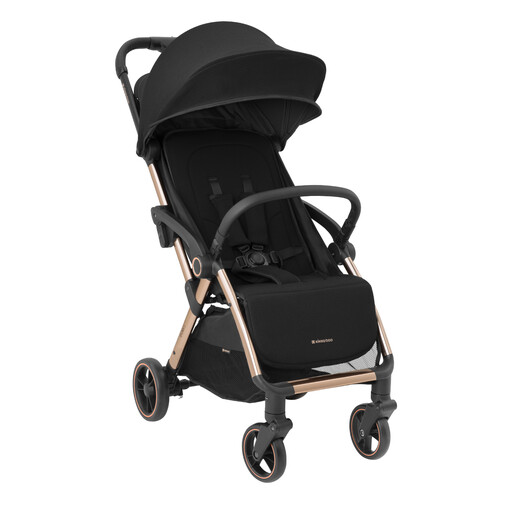
Why this product suits this profile: According to the product details, this folding pushchair weighs 7,8 kg including accessories and is suitable from birth up to 22 kg.
The product details give specific dimensions, weight and weight limit, as well as a backrest with four recline positions, rather than making vague promises about comfort.
One-hand automatic fold, 360° swivel front wheels, suspension, 5-point harness and rain cover.
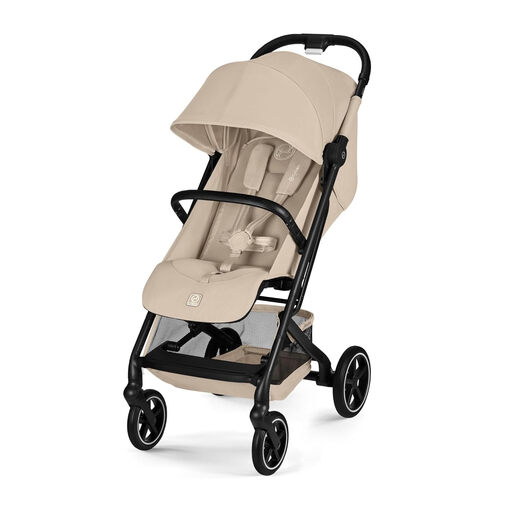
Why this product suits this profile: This city pushchair combines a fully adjustable lie-flat position with a compact fold that stands upright on its own.
The product details list the folded dimensions, a weight of 8,5 kg, a weight limit of 22 kg and a shopping basket that holds up to 5 kg.
UPF50+ sun canopy, 5-point harness with one-hand adjustment and all-terrain wheels with four-wheel suspension.

Why this product suits this profile: According to the product description, this versatile sibling pushchair can be configured for one child, siblings or twins.
The configurations, seat weights and storage details are clearly specified, making it easier to work out how much space you’ll need.
More than 20 listed configurations, two storage areas with a combined capacity of 23 kg and folded dimensions of 73,5 × 56,5 × 32 cm.

Why this product suits this profile: According to the manufacturer, this lightweight travel buggy weighs 5,5 kg and is suitable from birth up to 22 kg.
The folded dimensions, weight and included carry bag make it easier to check whether it’s right for your trip. You’ll still need confirmation from your airline.
One-hand fold, fully flat recline, mesh panels, water-repellent canopy with UV protection 50+ and backpack.
We’ve put together a complete, regularly updated list of products that meet these strict selection criteria and fully comply with the safety regulations in force in the EU.
Look for a model with a carrycot or a fully reclined position that the manufacturer explicitly approves for newborns. Check the age guidance, backrest adjustment and instructions for using the harness. A buggy approved only from around six months should not be used for newborns.
Many models are designed for children up to 22 kg, or roughly four years old. Always follow the manufacturer’s guidance. You should stop using the pushchair sooner if your child can climb out unaided, has outgrown the seat or if you notice damage to the harness, wheels or locks.
As well as the purchase price, you may need to budget for a rain cover, footmuff, adaptors, replacement wheels or an infant car seat. Air-filled tyres may also need checks and occasional repairs. Before buying, check what’s included, the care instructions and whether suitable replacement parts are available.