
Lieferung heute & morgen

Qualitätsgarantie

Willkommens-Angebote freischalten: KOSTENLOSE Lieferung | Bis zu 80 % RABATT | Kostenlose 30-Tage-JoyPlus-Testphase
App herunterladen
A pushchair or pram needs to suit your family’s everyday routine – not just look good in a product photo. In the city, manoeuvrability and a compact folded size are important, while uneven paths call for good wheels, suspension and stability. If you regularly travel by car, train or plane, you should also compare the weight and packed dimensions carefully.
A travel pushchair may fold very compactly and still exceed the dimensions permitted by individual airlines. Statements such as “suitable for cabin luggage” often refer to a specific folded size, not guaranteed carriage in the aircraft cabin. Before travelling, check:
A lightweight pushchair is easier to carry. However, particularly compact models may have a smaller seat, shopping basket or wheels. This may be sufficient for short trips around town. For long walks or frequent naps while out and about, an adjustable backrest, leg rest and adequate padding are more important.
A pram suitable from birth should offer a fully flat position explicitly approved by the manufacturer or a suitable carrycot. A seat that is only slightly reclined is not the same as a completely flat lying position. With a 2-in-1 pram or combination pram, you should also check which attachments are actually included in the delivery.
The stated age range must match your child’s stage of development. According to the manufacturer, some travel pushchairs are intended for use from around six months, while other models can be used from birth. The maximum load is also crucial: several of the models considered here have a capacity of 22 kg, which may correspond roughly to use up to the age of four.
Pay attention to the difference between:
A sibling pushchair or twin pushchair, for example, requires a different handling and storage concept from a compact single pushchair.
Measure your car boot, the intended storage space and, where applicable, your hallway. A folding pushchair with a compact packed size is practical when storage space is limited. If you regularly carry it up and down stairs, however, its own weight is the main consideration.
Examples from the product specifications:
A 5-point safety harness, a working braking mechanism and securely locking folding and attachment connections are among the key points to check. Before every use, make sure that the frame is fully opened and locked.
For Germany and the EU, information about the relevant standard, manufacturer responsibility and conformity is also important. If information is missing, ask for an EU Declaration of Conformity and check the guidance in the instruction manual. The presence of a stated standard does not replace correct use: children must be supervised and secured with the restraint system.
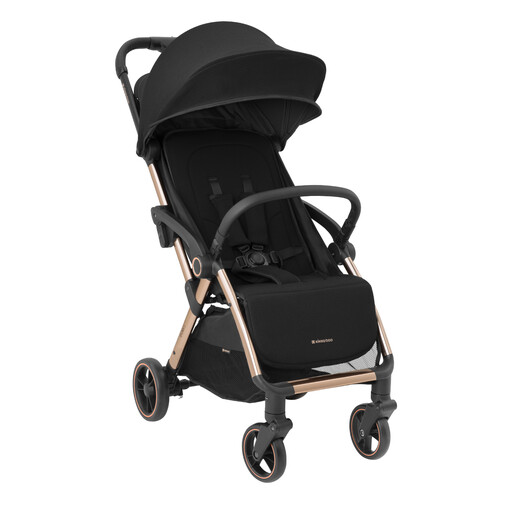
Why this product suits this profile: According to the product specifications, this pushchair combines automatic folding with a lie-flat position and is suitable from birth up to 22 kg. It is a practical choice if you are looking for one model for trips around town, shopping and occasional travel.
The folded dimensions of 47 × 30 × 77 cm and the weight of 7.8 kg including accessories are clearly stated. According to the manufacturer, the 4-position adjustable backrest includes a lie-flat position.
Automatic folding mechanism, 360-degree swivel wheels with suspension and a 5-point harness. A shopping basket and rear pocket complete the features.
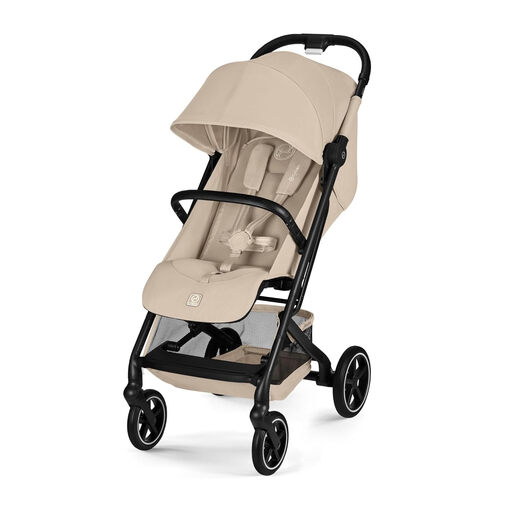
Why this product suits this profile: This compact city pushchair is designed for use from birth to around four years and combines a lie-flat backrest with a self-standing folded position.
The specifications state both the usable weight of 22 kg and folded dimensions of 27 × 48.5 × 64.5 cm. This makes it easier to assess the space required before buying.
An 8.5 kg frame, 5-point harness with one-hand adjustment, suspension on all four wheels and a shopping basket with a capacity of up to 5 kg. According to the product specifications, the sun canopy offers UPF50+ protection.

Why this product suits this profile: This pushchair is designed for families with one child, siblings or twins. According to the product description, it offers more than 20 configuration options.
The specifications state the single- and double-child configurations, along with the respective weight limits of 22 kg and 2 × 22 kg. This makes it easier to plan realistically for a growing family.
23 kg of combined storage capacity, an adjustable handlebar, a lie-flat position and an extendable sun canopy with UPF50+, according to the product specifications.

Why this product suits this profile: This model is designed for use from birth up to 22 kg and, according to the manufacturer, can be used as a travel system with the Chicco Kory i-Size car seat.
The folded dimensions of 59 × 21.5 × 46.5 cm and weight of 5.5 kg are clearly stated. However, you must still confirm whether it can be taken into the cabin with the airline.
One-hand folding, a continuously adjustable backrest that reclines to a lie-flat position, a transport rucksack and a water-repellent canopy with UV 50+ protection, according to the product specifications.
For cobblestones, park paths and uneven pavements, a terrain-ready pram with larger wheels and suspension is more suitable than an ultra-compact travel pushchair. Air-filled tyres can improve ride comfort, but they require regular checks. Puncture-resistant tyres need less maintenance.
Also check:
A pram with an infant car seat can only be used as a travel system if the car seat, adapter and frame are compatible with one another. You should not assume that the infant car seat is suitable based on the brand name alone.
We have put together a complete, regularly updated list of products that fully meet these strict selection criteria and the safety regulations applicable in the EU.
It depends on the model and its features. A pushchair with a completely flat position approved by the manufacturer may be suitable from birth according to the product specifications. Many travel pushchairs, however, are intended for use from around six months. The instruction manual and your child’s individual development are the deciding factors.
Many models are designed for children weighing up to 22 kg or aged approximately four years. The actual end of use also depends on the seat width, the child’s height, the safety harness and whether your child can climb out of the pushchair independently.
Regular costs mainly include cleaning, replacement wheels where necessary, inner tubes for air-filled tyres and additional adapters. A model with removable, washable covers may be easier to maintain day to day. Before buying, check whether spare parts and accessories are available separately.