
Lieferung heute & morgen

Qualitätsgarantie

Willkommens-Angebote freischalten: KOSTENLOSE Lieferung | Bis zu 80 % RABATT | Kostenlose 30-Tage-JoyPlus-Testphase
App herunterladen
By a Joybuy Product Recommendation Officer, August 29, 2026
Puzzle games, from classic puzzle cubes to complex 3D puzzles, offer a welcome break from digital screens and help boost concentration. But the market is saturated and confusing. Many buyers invest in a product only to find that it jams, its colours peel, or it's unsuitable for the intended user. This guide will help you recognise the common pitfalls and make an informed decision.
Before you decide on a model, you should be aware of the most common problems that often only become apparent after the purchase.
To avoid the problems mentioned above, you should check three key features before buying. These are crucial in determining the longevity and fun factor of a puzzle game.
The internal design of a twisty puzzle is critical to the user experience. A simple mechanism is sufficient for casual solving. However, those with speedcubing ambitions or who simply appreciate a smooth feel should look for the following features:
The design of the coloured faces has a direct impact on durability.
The world of puzzle games is diverse and extends far beyond the classic puzzle cube.
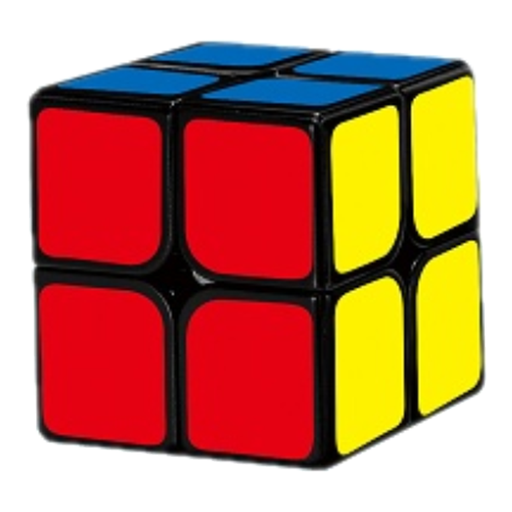
Why This Fits Their Persona: Ideal for anyone looking to get into the world of twisty puzzles. The 2x2 configuration is manageable and allows for quick learning progress, which keeps motivation high. Its compact size makes it a practical companion on the go.
The simple 2x2 structure is mechanically less prone to failure than complex cubes, thus avoiding the pitfall of a quickly defective mechanism. It is clearly positioned as an entry-level model, preventing frustration from excessive complexity.
The optimised internal mechanism ensures smooth turning right out of the box. Perfect for learning the fundamentals of patterns and solving algorithms.

Why This Fits Their Persona: For users who want to improve their solve times and need a reliable, fast device for practice and competition. The standard 5.5 cm size fits well in the hand and meets competition standards.
The stickerless design, made of solid-coloured plastic, completely eliminates the problem of peeling stickers. The advanced core structure ensures stability and prevents a janky mechanism, even at high speeds.
Engineered for high performance with excellent corner-cutting and smooth turns. The robust ABS plastic construction is designed for durability and intensive use.
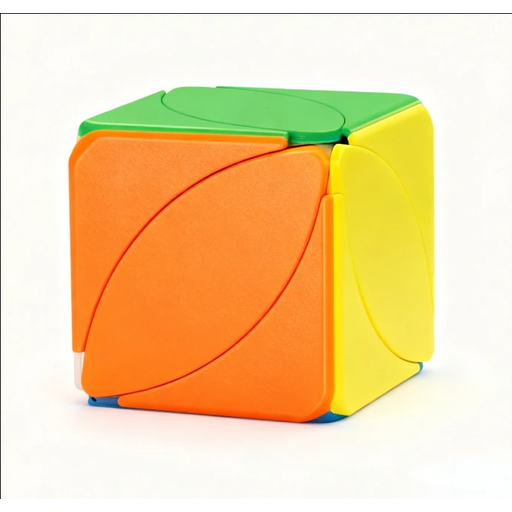
Why This Fits Their Persona: For experienced puzzlers looking for a change from the standard cube shape. This shape-shifting puzzle requires a different kind of spatial reasoning, as it completely changes its form when scrambled. An eye-catcher in any collection.
As a niche product for enthusiasts, it sidesteps the trap of unclear suitability—it's aimed squarely at advanced users. The stickerless design in solid plastic guarantees a lasting premium look without peeling colours.
Offers a unique challenge that goes beyond mere colour-sorting to include restoring the shape. Its precise mechanism allows for smooth turning despite the complex form.

Why This Fits Their Persona: An excellent screen-free alternative that playfully introduces children aged 5 and up to cognitive challenges. It's not a classic twisty puzzle but an electronic game designed to train concentration, observation, and memory.
As an electronic game, it bypasses the mechanical weaknesses of twisty puzzles. The 100 progressive challenges offer a clear difficulty curve, thus avoiding the trap of unclear suitability.
Features three different game modes (Focus, Observe, Memory) for varied training. The robust and travel-friendly design makes it a great companion on the go.
We have compiled a complete, up-to-date list of products that fully meet these strict selection criteria and all relevant safety regulations.
1. What is the difference between a traditional puzzle cube and a speed cube? A speed cube is specifically designed for fast solving. Its mechanism allows for a high degree of "corner-cutting," is often adjustable via screws, and is sometimes equipped with magnets for stabilisation. A traditional cube usually has a simpler, stiffer mechanism that is unsuitable for high speeds.
2. How do you maintain a speed cube to keep it turning smoothly? Keep the cube clean and protect it from dust and dirt, as particles can jam the mechanism. To maintain smooth turning, the occasional application of a specialised silicone-based lubricant for speed cubes is recommended. Avoid water or household oils, as these can damage the plastic.
3. From what age are puzzle games like the puzzle cube suitable? This depends heavily on the complexity. Simple 2x2 cubes or peg puzzles can be suitable for children as young as 5 or 6. The classic 3x3 cube is often recommended for children from age 8 and up. For more complex models like a 7x7 cube or shape-shifting puzzles, the age recommendation is usually higher. Always check the manufacturer's specifications on the packaging.