
Lieferung heute & morgen

Qualitätsgarantie

Willkommens-Angebote freischalten: KOSTENLOSE Lieferung | Bis zu 80 % RABATT | Kostenlose 30-Tage-JoyPlus-Testphase
App herunterladen
By the Joybuy Product Recommendation OfficerUpdated August 28, 2026
Puzzle games promise a welcome break from the digital grind and a stimulating mental challenge. But that joy can quickly fade when your newly purchased magic cube jams, the 3D puzzle is made of low-quality material, or the brain teaser for kids causes more frustration than educational fun. Many buyers invest in products that make big promises through clever marketing but lack fundamental quality.
This guide will show you what to look for to avoid common purchasing pitfalls. We'll focus on the objective criteria that define a good puzzle game, so you can make an informed decision—whether it's a gift for children, for your own hobby, or as an anti-stress cube for your desk.
Before we dive into the important features, let's look at three typical problems that can lead to a bad purchase:
To avoid these problems, you should check three key aspects before buying. These will help you objectively evaluate the quality and suitability of a puzzle game.
The material is crucial for feel, durability, and safety. For mechanical puzzles like the magic cube, ABS plastic has become the standard. It is robust and holds its shape. An important distinction is between stickered models and so-called "stickerless" versions.
The mechanism determines how a puzzle "feels." A good speed cube has a precise internal mechanism that allows for fast, fluid turning and "corner cutting" (turning a layer even when others are not perfectly aligned).
The complexity should match the target user:
Safety is non-negotiable, especially for a gift for children. Pay attention to compliance with relevant standards.
Based on the criteria above, we have compiled a few products for different user groups.
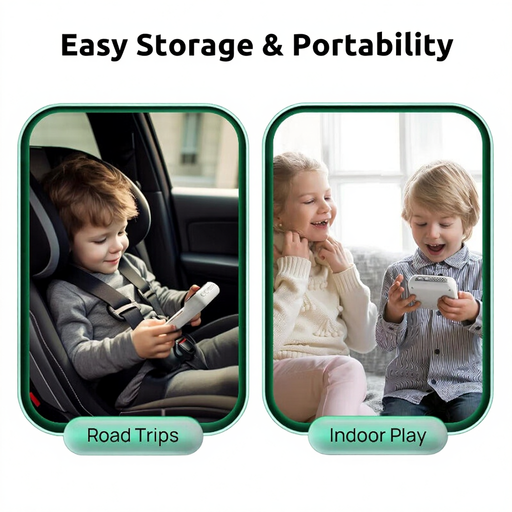
Why This Fits Their Persona: Ideal as a modern educational toy for children aged 5 and up. It combines entertainment with the development of concentration, observation, and memory, and its compact design makes it perfect for travel.
As an electronic game, there are no mechanical parts to jam or stickers to peel off. The 100 built-in challenges offer a clearly structured and progressive difficulty curve.
Three different game modes (Number, Graphics, and Memory) provide variety. The device is designed as a STEM toy and specifically promotes cognitive skills.
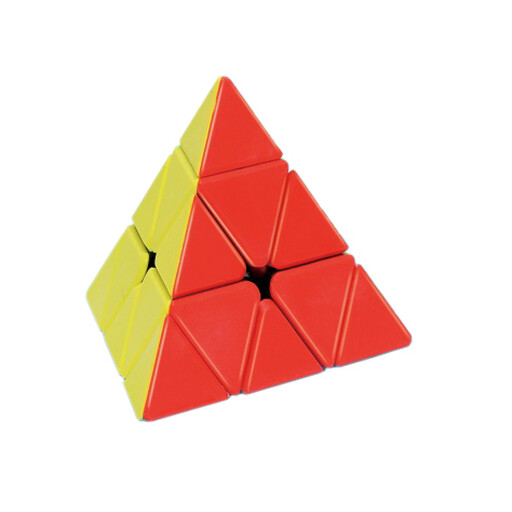
Why This Fits Their Persona: Perfect for anyone looking for a change from the classic cube and who values performance. The pyramid shape requires different solving algorithms and trains spatial reasoning in a new way.
The steel ball positioning mechanism ensures precise, tactile clicks and prevents corner twisting. The stickerless design made of solid-colored plastic makes it extremely durable.
The combination of smooth turning and precise positioning is optimized for speedcubing. The material meets the EN71 safety standard.
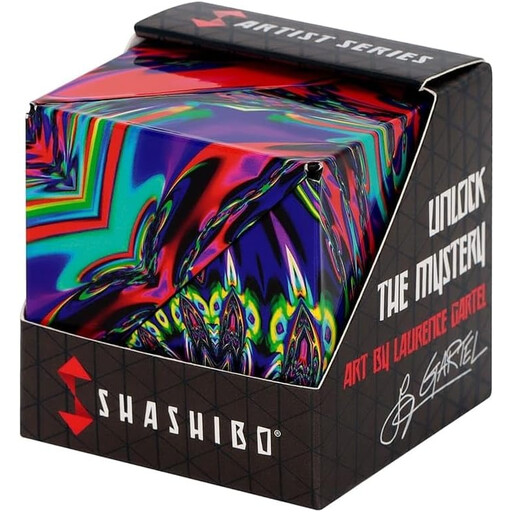
Why This Fits Their Persona: For users who want more than just a puzzle to solve. The Shashibo is a creative tool and an anti-stress object that fascinates with its ability to transform into over 70 shapes, inviting users to create 3D art.
The high-quality construction from injection-molded plastic and the 36 integrated rare earth magnets ensure a stable and durable design. There are no mechanical parts to wear out or stickers to peel off.
The magnetic connectivity allows multiple cubes to be joined into larger sculptures. The patented design offers high replay value and fosters creativity.
We've compiled a complete, up-to-date list of products that fully meet these strict selection criteria and European safety regulations.
To maintain a speed cube's smooth action, it should be stored away from dust and dirt. A dry microfiber cloth is sufficient for cleaning. For optimal performance, a special silicone-based lubricant for speed cubes can be used periodically. Apply only a very small amount inside the cube and distribute it by turning all layers multiple times.
Both versions have their merits. Stickerless models are generally more durable and easier to maintain, as the colors cannot wear off. They are the standard choice for intensive practice and speedcubing. Stickered models offer greater design variety, such as carbon fiber or mirror effects. On high-quality cubes, the stickers are also of good quality and last a long time. The choice therefore depends on personal preference and intended use.