
Lieferung heute & morgen

Qualitätsgarantie

Willkommens-Angebote freischalten: KOSTENLOSE Lieferung | Bis zu 80 % RABATT | Kostenlose 30-Tage-JoyPlus-Testphase
App herunterladen
Puzzle games for children combine engaging activities with logical thinking, stories and time together. But choosing the right one isn’t always easy for parents, grandparents and families. A game may look challenging on the box but prove too complicated for a child of that age. Others may contain less than you expected or be suitable for just one play-through.
The age recommendation is a useful starting point, but it’s worth looking more closely too. A puzzle for children aged 8 and up with 200 pieces presents a different challenge from an escape room game involving several text-based, combination and logic puzzles. For games that involve reading, it’s also worth considering whether your child can read independently or will need help from an adult.
Some EXIT games involve folding, writing on or cutting up cards. This makes them a one-time experience. They’re well suited to a family games night, but less suitable if you want to pass a game on or keep it for future use. Before buying, check whether the materials can be used more than once.
Labels such as educational games for children or children’s brain-teasers don’t tell you much about how a game actually works. The amount of text, time pressure, number of players and type of puzzles all matter. A solo game is a good fit for a child who enjoys solving puzzles independently; a cooperative detective game for children is better suited to siblings or a family game.
First, check the manufacturer’s age recommendation. Options for children aged 8 and up include card puzzles, 200-piece puzzles, adventure puzzles and simple escape room games. For younger children in this age group, clear rules and a manageable amount of text can be helpful.
The number of players is just as important:
A 200-piece puzzle offers a manageable challenge for many children aged 8 and up. The finished size, the size of the individual pieces and whether a picture guide is included can all affect how easy it is to get started. A 258-piece adventure puzzle may also include a story or clues, making it more time-consuming than a traditional picture puzzle.
Compact card games or magnetic travel games for children are more practical on the go than large-format puzzles. Look for packaging that seals securely, so small pieces don’t get lost in a rucksack.
Puzzle games are often made from cardboard, paper or plastic. The packaging should include a clear age recommendation and safety warnings. Small parts can pose a choking hazard, so products carrying a relevant warning should be kept away from children under 3.
The language of the game is also important for German-speaking families. A game with extensive instructions or stories in another language may require extra help for children aged 8 and up. If the game comes with an app, check whether it’s optional or needed to understand how to play.
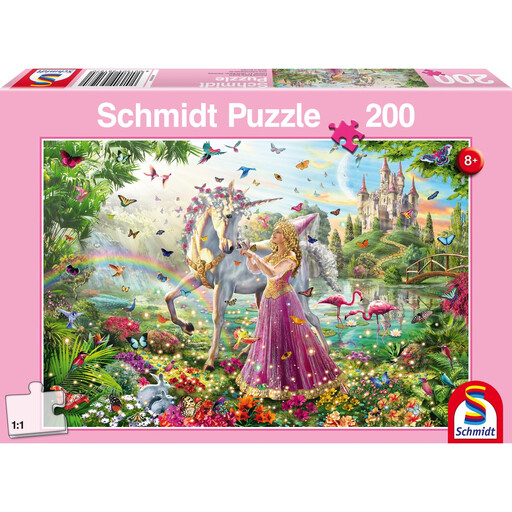
Why this product suits this type of player: Designed for children aged 8 and up, this puzzle offers a clearly defined introduction to puzzle games for children, with 200 pieces to put together.
The number of pieces, age recommendation and picture guide are all clearly specified, making it easier to gauge the difficulty before you buy.
200 pieces, cardboard, picture guide and a finished size of approximately 27,5 × 19 cm.
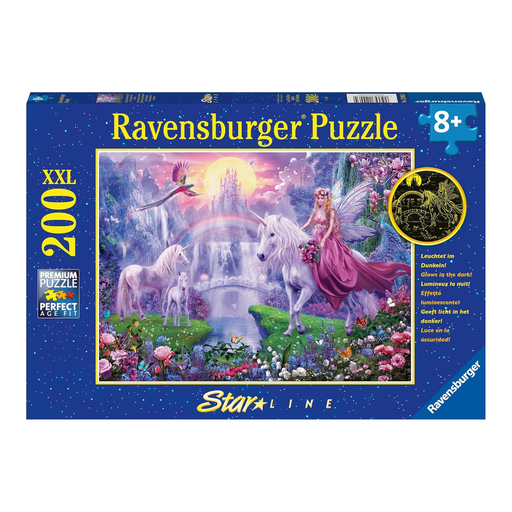
Why this product suits this type of player: This 200-piece puzzle features a glow effect and is suitable for children aged 8 and up.
The product details clearly state the number of pieces, finished size of 33 × 21 cm, material and that no batteries are needed.
200 XXL pieces, cardboard, finished size of 33 × 21 cm and a glow effect that works without batteries.
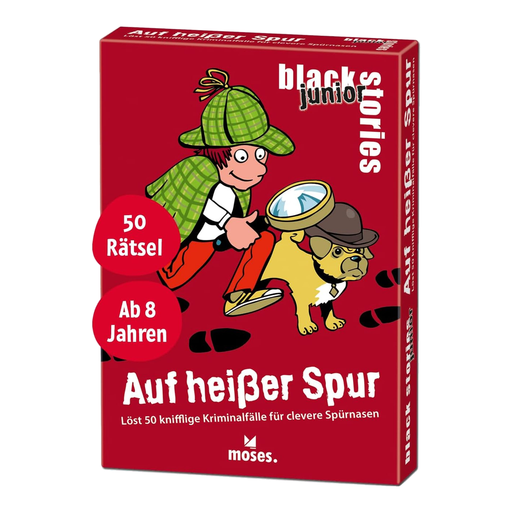
Why this product suits this type of player: This compact detective game for children includes 50 mysteries and is ideal for travel, birthdays or quick games with at least two players.
Its dimensions of 9,4 × 13,3 × 2,4 cm make it easy to see how much space it takes up. The rules are based on yes-or-no questions, so they’re quick to explain.
50 cards, paper, German edition, with cooperative and competitive ways to play.
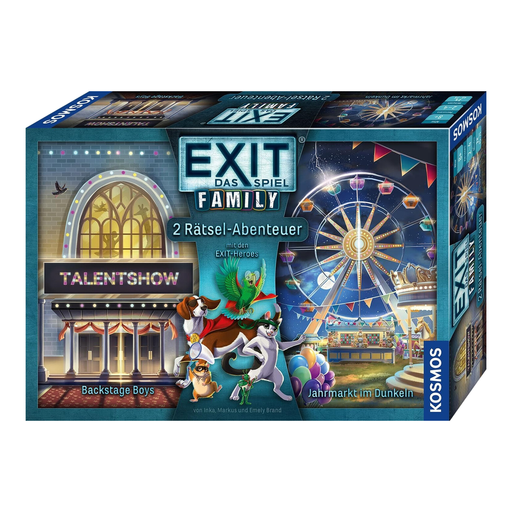
Why this product suits this type of player: Two adventures in one box, for 2 to 4 players aged 8 and up, with an optional KOSMOS app for the tutorial and clues.
The number of players, age recommendation and both included adventures are clearly stated, so you can get a good idea of what’s included before you buy.
Two escape room adventures, 2–4 players, recommended for ages 8 and up, with an optional app.
Other options to consider include a 258-piece adventure puzzle such as “Into the Depths of the Volcano”, an EXIT game for children aged 9 and up, or a dinosaur-themed detective puzzle. For older children aged 10 and up, EXIT games such as “The Magic Academy” or “The Enchanted Forest” are worth considering. If your child prefers spatial reasoning, you could also choose a game such as Ubongo or a compact IQ Puzzler travel game.
We’ve put together a complete, regularly updated list of products that meet these strict selection criteria and fully comply with the safety regulations in force in the EU.
It depends on the type of game. A 200-piece puzzle is usually easy to understand and can be played without extra instructions. An escape room game for children aged 8 and up is a good choice if several players want to work together to put clues together. Adults may need to lend a hand at first if the game involves a lot of reading.
Many EXIT games involve changing or using up certain materials by folding, writing on or cutting them. They’re therefore often designed as a one-time experience. Before buying, parents should check the product description and any information about reusability.
Compact card games, magnetic family games and small logic games are handy for car journeys, train trips or flights. Look for a sturdy case, a manageable number of pieces and rules that are easy to understand without a lot of set-up.