What should you look for when choosing?
Larger diffused panel on a stand
A good fit if: you need to light a larger puzzle area and moving hands, and there’s room beside the table or bed for a stable stand.
Consider: The stand takes up space. Whether one is included with the NEEWER NL660 depends on the package option you choose. NP-F batteries are not included, according to the manufacturer.
Adjustable panel mounted on a desk
A good fit if: your puzzle is on a table and there’s a suitable edge to attach the clamp to.
Consider: According to the manufacturer, the Elgato Key Light Air MK.2’s maximum brightness depends on the power source. Check that the clamp height and light direction work with your setup.
Compact battery-powered video light
A good fit if: you often set up and pack away your equipment, or only need extra light on a small area of the frame.
Consider: The Ulanzi VL49 RGB’s illuminance is specified by the manufacturer at 0.5 m. That doesn’t tell you directly how well it will light the whole puzzle.
First, check whether you can light the whole work surface with minimal shadows. Then consider which mounting option and power supply will work best in your shared room. The figures below outline the main priorities when buying for this type of filming setup.
| Priority |
What to check before buying |
Who it matters to |
| Seeing puzzle pieces clearly despite shadows |
Check the diffuser, angle and mounting option; record a short camera test across the whole surface. |
When I film from above, I want the pieces and hand movements to remain visible. Around 33% of consumers put clear detail and shadow control first. |
| Space in a shared bedroom |
Measure the available table edge, the distance to the puzzle and a possible position for a stand; check what’s included with the mount. |
If you need to set up and pack away the light quickly in a shared room and keep walkways clear, its footprint is especially important. Around 27% of consumers prioritise a space-saving option that’s easy to put away. |
| Piece colours under changing light |
Check that the white light and brightness are adjustable; test the footage with the actual puzzle pieces and room lighting. |
If similar colours need to remain distinguishable as the room lighting changes, adjusting the white light is important. Around 20% of consumers put colour adjustment first. |
| Longer recordings without banding |
Check the power source and accessories; record a test clip using your camera, frame rate and planned brightness. |
For longer solutions, I need a suitable power supply and want to avoid distracting bands in the video. Around 20% of consumers prioritise recording conditions and power supply. |
Which brands are worth considering?
The models and specifications below can help you compare different lighting setups. Manufacturer claims about features and measurements are not independent tests carried out on a puzzle surface.
NEEWER
The NL660 Bi-Colour is a larger panel for a setup where you’ll need to check whether a stand is included.
- According to the manufacturer, a diffuser and mains adapter are included. The panel is dimmable, with an adjustable range of 3200 to 5600 K.
- NP-F batteries are not included, and the “NL660 Only” option does not include a stand.
Elgato
According to the manufacturer, the Key Light Air MK.2 is designed for desk setups and comes with a desk mount.
- The manufacturer specifies an adjustable colour temperature range of 2900 to 7000 K and different power options.
- Maximum brightness depends on the power source, and the desk edge and light direction need to suit your puzzle setup.
Ulanzi
The VL49 RGB is a compact light for adding illumination to a small area or for setups you assemble and pack away frequently.
- Ulanzi specifies a 2000-mAh battery, USB-C charging and several mounting options.
- The manufacturer’s 800-lux figure applies at 0.5 m and doesn’t show how well it will light a large puzzle area. RGB doesn’t automatically make the solution easier to see.
amaran
The P60x is a 60 W bi-colour panel for a lighting setup you can position as needed.
- The manufacturer’s manual specifies 3200–6500 K, CRI 95+ and 5070 lux at 1 m and 5600 K.
- These figures apply under the stated conditions and are manufacturer specifications. The manual also warns about hot surfaces and incorrectly routed cables.
Godox
According to the manufacturer, the P260C Pro combines a larger diffused panel with a choice of control and power options.
- Godox specifies 2800–6500 K, 45 W input power and a diffuser.
- Claims about softer light and colour rendering come from the manufacturer. Make sure the unit and mount fit in your shared room.
Joybuy products for portable lighting setups
This selection includes compact camera and video lights for flexible setups, including portable lights and a ring light.
 No image available
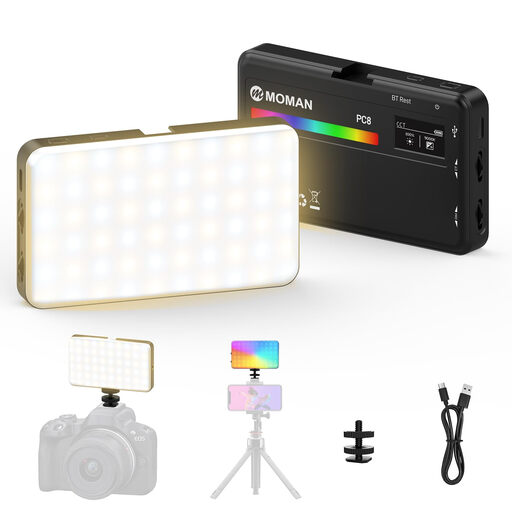
MOMAN PC8 RGB camera light
This portable video light is an option if you’re looking for a compact light for a flexible setup.
View at Joybuy
 No image available
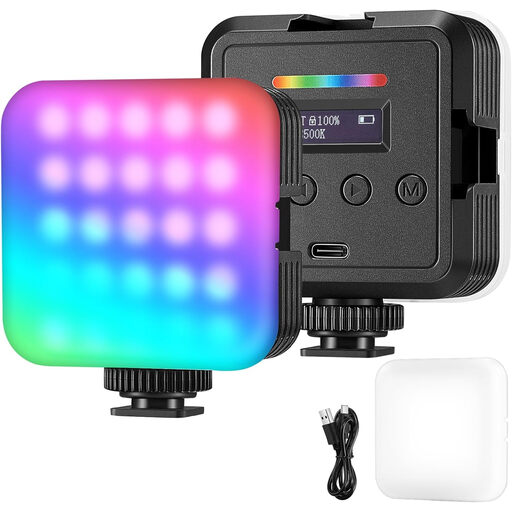
Portable RGB camera light for photography, video and streaming
If you’re looking for a compact light for video recording, this product title describes a portable camera light with adjustable lighting modes.
View at Joybuy
 No image available
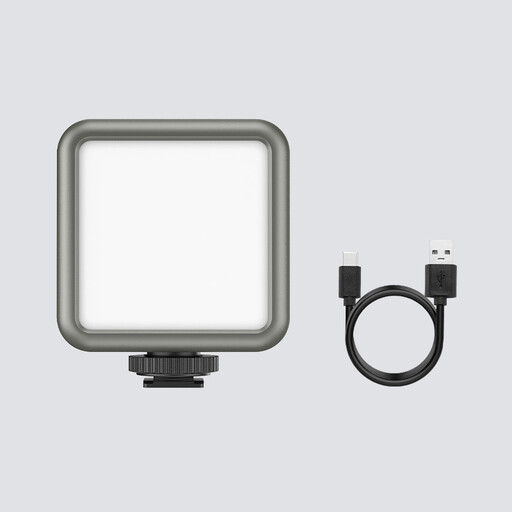
Ulanzi VL49 LED video light
This compact light is an option to consider if you often change your setup. Test whether it reaches the puzzle area you need from your planned distance.
Listed in the product title: 2000-mAh battery and adjustable colour temperature range of 2500K–9500K.
View at Joybuy
 No image available
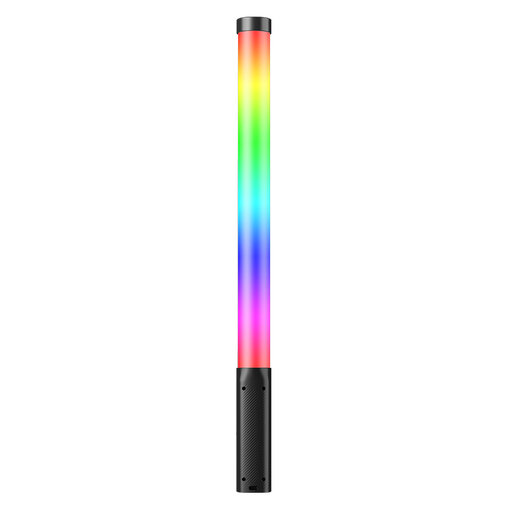
Ulanzi VL119 handheld video light, 10 W
This handheld video light may suit a mobile setup. Check whether it can light the puzzle evenly enough.
Listed in the product title: 10 W, 360 lux at 0.5 m, 3300-mAh battery and adjustable colour temperature range of 2500K–9000K.
View at Joybuy
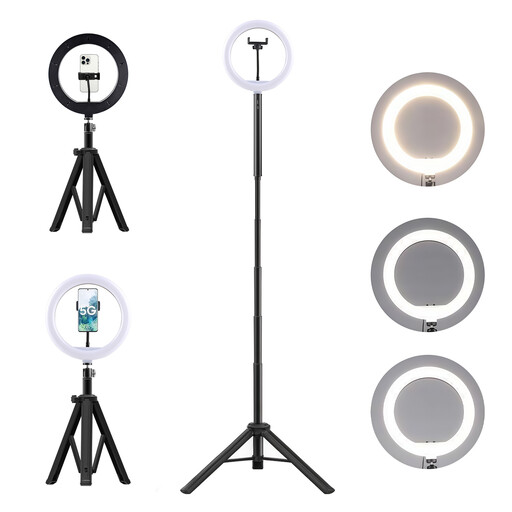 No image available
LED ring light with 10000-mAh power bank
This ring light is an alternative to a panel if a setup with adjustable positioning works for your recording.
Listed in the product title: 10000-mAh power bank and floor stand.
View at Joybuy
Frequently asked questions about puzzle videos and LED lighting
How should I position the light if my hands cast shadows on the puzzle?
Start by angling a diffused panel towards the work surface from one side. Check the camera view to see whether your hands or raised puzzle pieces obscure important steps. For an overhead shot, the camera should also be stable above the puzzle. The best light position depends on your particular setup.
Does “flicker-free” on the packaging mean there won’t be any bands in my video?
Not necessarily. Sony Support notes that adjusting the shutter speed may help reduce flicker in video footage. Test the light and planned brightness by recording a clip with your camera.
What should I bear in mind about power, cables and cleaning?
Check what’s included with the specific option. According to the manufacturer, the NEEWER NL660 comes with a mains adapter, but not NP-F batteries. The amaran P60x manual recommends routing cables safely, unplugging the device before cleaning and letting it cool before putting it away. Follow the relevant instructions for other models.
What are my rights if a light I bought online is faulty?
The Verbraucherzentrale explains that, in general, new goods are covered by statutory consumer rights against the seller, with a statutory limitation period of two years. Online purchases also generally come with a 14-day right of withdrawal. This is different from a voluntary manufacturer’s guarantee or a voluntary returns policy.
What should I look out for when it comes to product safety in Germany?
According to information from the European Union, CE marking is only required for products covered by the relevant harmonised EU rules; it is not an official quality mark. The Bundesnetzagentur lists clear product and manufacturer identification, along with instructions and safety warnings in German, among the points to check. The applicable requirements depend on the specific device.
Can I show someone filmed in the bedroom in my puzzle solution video?
Under § 22 KunstUrhG, you generally need the person’s consent to distribute or publicly display an image of them. § 23 sets out exceptions, but whether they apply must be checked on a case-by-case basis. Where possible, point the camera only at the puzzle, and speak to anyone who may be recognisable in the footage before publishing it.


