
Lieferung heute & morgen

Qualitätsgarantie

Willkommens-Angebote freischalten: KOSTENLOSE Lieferung | Bis zu 80 % RABATT | Kostenlose 30-Tage-JoyPlus-Testphase
App herunterladen
The market for puzzles and brain teasers is vast, ranging from simple children's puzzles to complex 3D puzzles for adults. But this wide selection can quickly become overwhelming. A purchase often leads to frustration when the product doesn't meet expectations. Certain marketing promises and hidden flaws are frequently the cause of a poor decision.
This guide will help you identify common pitfalls and evaluate crucial quality features. This way, you can find a game that provides lasting enjoyment, whether as a relaxing hobby, a gift, or an educationally valuable activity for children.
Before you make a decision, you should be aware of three common problems that often lead to disappointment:
To avoid a bad buy, you should check three core parameters. These will give you an objective basis for your decision, independent of advertising claims.
The quality of the puzzle pieces is crucial for the entire experience. Pay attention to the thickness and stability of the cardboard. High-quality puzzles, like those from renowned brands such as Ravensburger, often use a special, multi-layered cardboard. A linen finish on the surface reduces distracting light reflections and provides a pleasant tactile feel.
With 3D puzzles, the precision of the fit is even more important. Systems like "Easy Click Technology," where plastic pieces hold together securely without glue, are an indicator of a well-thought-out design. For traditional puzzles, precise cutting technology ensures that each piece fits only in its intended spot.
The right level of challenge is the key to success. Instead of relying solely on the age rating, you should consider the following aspects:
Consider how the game will be used. A classic puzzle is assembled once and then often serves as decoration. In contrast, many brain teasers offer high replay value.
Travel games are typically compact and designed for one person. They often contain dozens or hundreds of tasks with increasing difficulty levels. This ensures long-term motivation and makes them an ideal companion for on-the-go entertainment. Games that allow for variable solutions or creating your own challenges further encourage creativity.
Here are some recommendations tailored to specific needs and use cases.
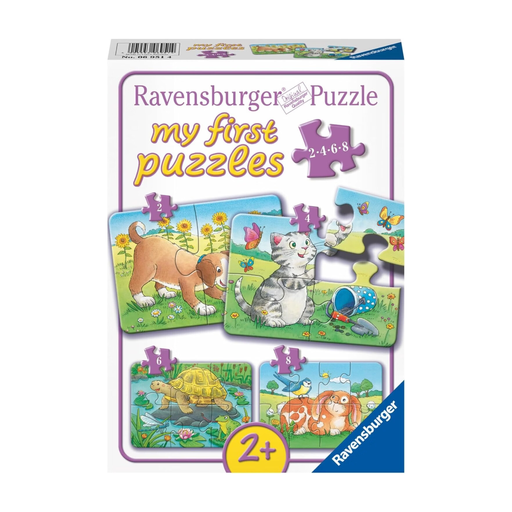
Why This Fits Their Persona: This set is specifically designed for toddlers. The large, thick cardboard pieces are easy to grip and sturdy enough for little hands. The simple, everyday motifs spark interest.
It bypasses the pitfall of inaccurate age ratings by including puzzles with increasing piece counts (2, 4, 6, 8 pieces), accompanying the child's development and preventing them from being overwhelmed or under-challenged.
Playfully promotes fine motor skills and concentration. The set includes four puzzles, offering a gradual learning progression.
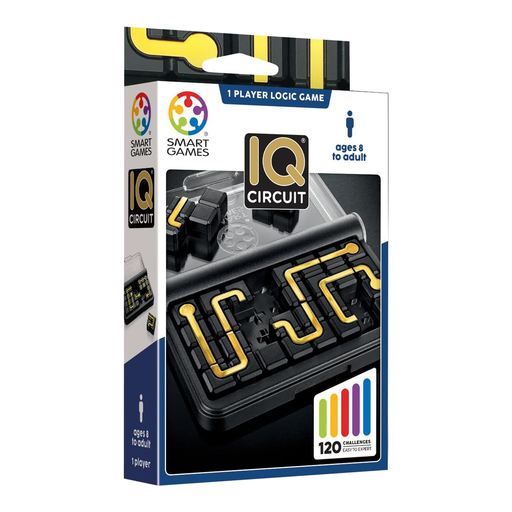
Why This Fits Their Persona: Ideal for children seeking a mental challenge. Designed as a compact travel game for one person, it encourages independent problem-solving and is perfect for quiet moments at home or on the go.
This game avoids the trap of vague educational claims. It offers 120 concrete, logic-based tasks that demonstrably train spatial reasoning and planning skills.
High replay value with 120 challenges across various difficulty levels. The durable plastic material and compact case make it long-lasting and portable.
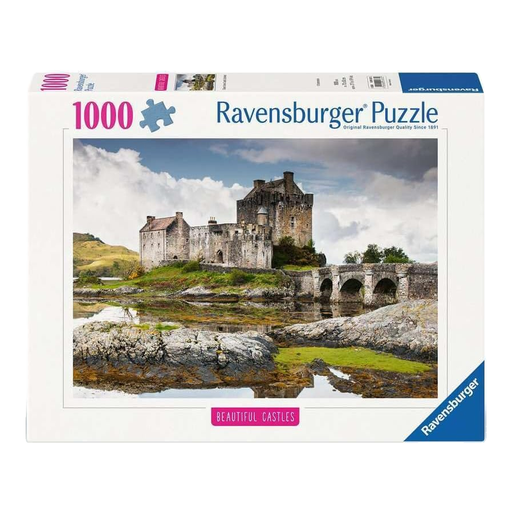
Why This Fits Their Persona: A classic 1000-piece puzzle for adults looking for a relaxing escape. The atmospheric motif and high-quality pieces ensure a satisfying puzzle experience.
It counters the problem of poor material quality by using thick, recycled cardboard and a precision-cut die that ensures a perfect fit, preventing frustration.
The linen finish on the surface prevents glare. The manufacturer's Softclick Technology ensures a characteristic clicking sound when pieces fit together.
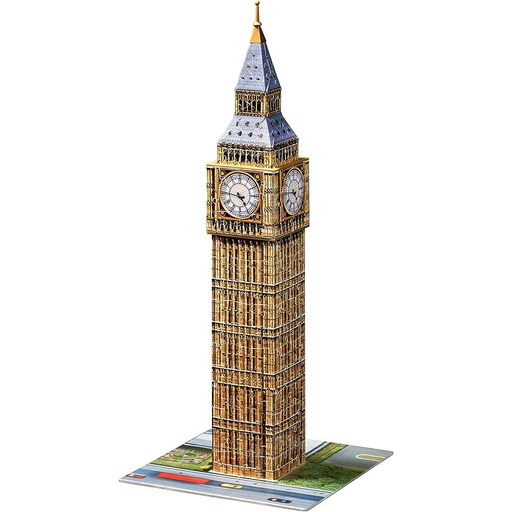
Why This Fits Their Persona: This 3D puzzle combines the fun of puzzling with the joy of model building. It is ideal for anyone who wants to create a tangible result that also works as a decorative object.
It solves the problem of ill-fitting pieces in 3D constructions. The "Easy Click Technology" ensures that the plastic parts fit together precisely and securely without any glue.
The numbered puzzle pieces and illustrated instructions make assembly easier. The finished model is stable and can be displayed immediately.
We have compiled a complete, up-to-date list of products that fully meet these strict selection criteria and German safety regulations.
You can recognize a high-quality puzzle by several features. The puzzle pieces should be thick and sturdy to prevent bending. A matte surface or linen finish prevents distracting reflections. The most important criterion is the precision of the fit: the pieces should snap into place with light pressure and hold together firmly without wobbling.
Yes, many 3D puzzles are suitable for children, as long as the complexity is appropriate. Models with numbered pieces and click systems that don't require glue are often a great choice for children aged 8 and up. They promote spatial reasoning and fine motor skills in a different way than classic puzzles and lead to an impressive, tangible result.
The terms are often used interchangeably, but there are subtle differences. Logic games, like those in the IQ series from Smart Games, are usually based on a set of rules and offer a large number of challenges with increasing difficulty. Brain teasers can also be individual mechanical puzzles, like a Rubik's Cube or disentanglement puzzles made of wood or metal, where the goal is to find a single, tricky solution.