
Lieferung heute & morgen

Qualitätsgarantie

Willkommens-Angebote freischalten: KOSTENLOSE Lieferung | Bis zu 80 % RABATT | Kostenlose 30-Tage-JoyPlus-Testphase
App herunterladen
Whether it’s a children’s puzzle from age 4, a 1000-piece puzzle for adults, a logic game or a family game: the choice is vast, yet product descriptions often focus mainly on attractive images and supposed learning benefits. For a sensible buying decision, however, other factors matter. What’s crucial are the age rating, piece size, material, number of players, space required and the actual difficulty level.
The age rating on the packaging is not purely marketing information. Small pieces can pose a choking hazard for younger children. A puzzle with 24 large pieces may be suitable for a four-year-old, whereas a complex Rubik’s Cube or a magnetic game demands more skill and concentration, even with a simple basic concept.
Family circumstances also play a role: a game for children aged 8 and up might work for a seven-year-old with support, but it shouldn’t automatically be considered age-appropriate for all younger children.
A 1000-piece puzzle for adults requires enough space and a longer playing time. A motif with many similar colour areas can be significantly more challenging than a picture with clear outlines. For beginners or occasional players, a 500-piece puzzle could be the more suitable choice.
For children: a high piece count doesn’t replace age-appropriate design. Large, sturdy puzzle pieces, a frame or a reference image make starting easier and reduce frustration.
Terms like educational toy, STEM toy or pedagogically valuable are not sufficient selection criteria on their own. Instead, check what action is actually required: spatial thinking, matching, asking questions, planning or fine motor placement. This makes it easier to assess whether the product suits the intended activity.
Pay attention to the manufacturer’s stated age rating and the warning labels. Special care is needed with products containing small parts or magnets. Magnets must not be swallowed; with magnetic building blocks, parents should regularly check the elements for cracks, loose parts or exposed magnets.
A children’s puzzle from age 4 should have a manageable number of pieces, easily recognisable motifs and, ideally, sturdy cardboard. For logic games, brain teasers and travel games, the ability to read or follow rules independently is also relevant, alongside age.
With a classic puzzle, the motif, piece count and cut shape determine the challenge. Brain games, on the other hand, offer different mechanics:
A 1000-piece puzzle often measures around 70 × 50 cm when finished. This requires a flat surface that can remain undisturbed during puzzling. Travel games, such as compact guessing games or an IQ puzzle game, can easily be carried in a bag or rucksack.
With family games, check whether the number of players matches your household. A game for two people isn’t automatically suitable for a family evening with four or five players.
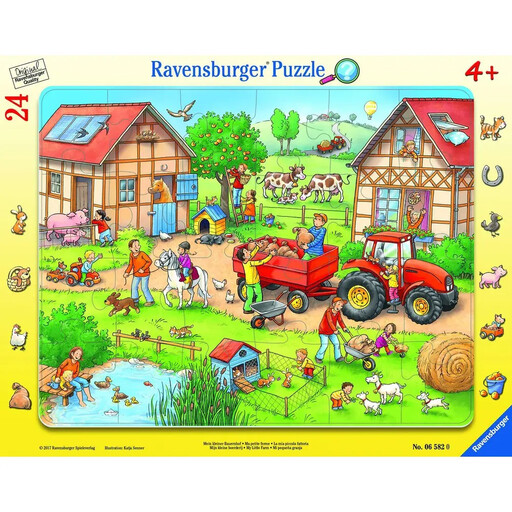
Why this product suits the profile: The frame with a pre-printed guide and 24 pieces is designed for first puzzle experiences from age 4. The farmyard motif also offers a search activity.
The manageable piece count prevents a starter puzzle from becoming unnecessarily challenging due to too many small elements. The warning about small parts should still be observed.
24-piece frame puzzle, dimensions approximately 32.5 × 25 cm and additional search pictures.
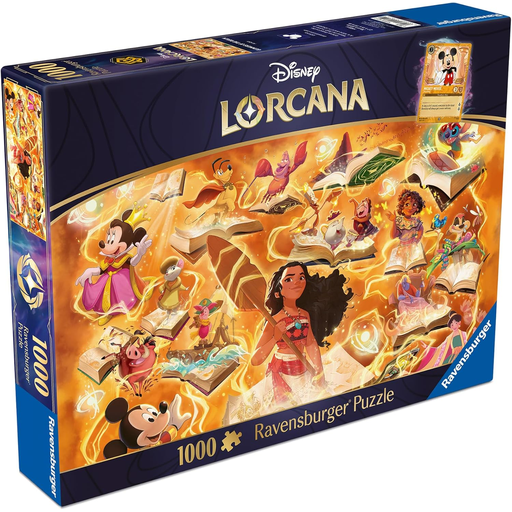
Why this product suits the profile: According to the product details, this puzzle is aimed at people aged 14 and over and offers a format of 70 × 50 cm for longer puzzling sessions.
The stated piece count, finished size and age recommendation make the space and time requirements assessable before purchase.
1000 pieces, recycled cardboard and a structured surface according to the manufacturer.
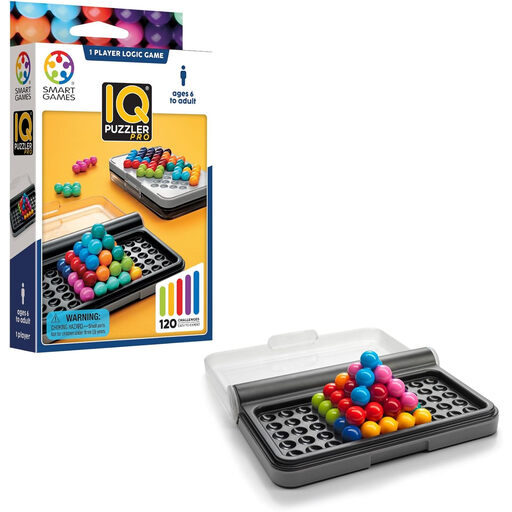
Why this product suits the profile: This compact single-player game offers 120 challenges in two- and three-dimensional game variants, making it suitable for home or on the go.
It requires no batteries and no large table. The tasks are provided in the accompanying booklet, rather than being advertised with a vague learning promise.
120 challenges, one player and compact dimensions for travel.
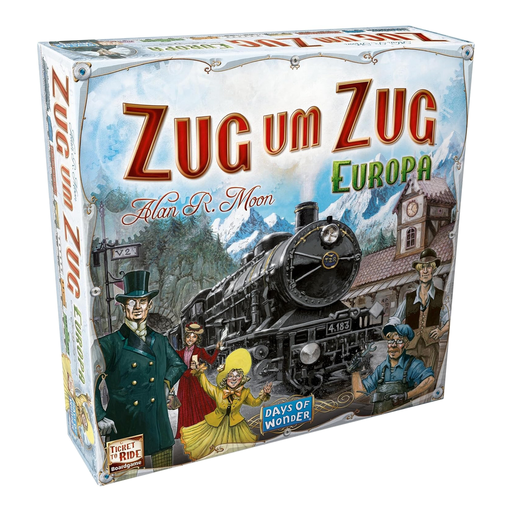
Why this product suits the profile: This German-language strategy game is designed for 2 to 5 players aged 8 and up, combining route planning with a straightforward rule structure.
The number of players and minimum age are clearly stated. This allows you to check before buying whether the game suits your planned family group.
2–5 players, around 45 minutes or longer per game and a game board featuring European routes.
We’ve put together a complete, regularly updated list of products that fully meet these strict selection criteria and the safety regulations in force in the EU.
For birthdays, Christmas or a family evening, you can choose products based on the desired play moment:
Products with a clear age rating, larger pieces and manageable difficulty are suitable. A 24-piece frame puzzle can make starting easier. For games with small parts, the age recommendation and adult supervision should be observed.
Many 1000-piece puzzles have a finished size of approximately 70 × 50 cm. You’ll also need space for the box, pre-sorted pieces and a flat surface. A puzzle mat can be useful if the area needs to be cleared between play sessions.
Most classic puzzles, card games and mechanical logic games work without batteries. Some individual products may have an optional app available. Check before buying whether the basic functions can be used without a smartphone or additional accessory costs.