
Lieferung heute & morgen

Qualitätsgarantie

Willkommens-Angebote freischalten: KOSTENLOSE Lieferung | Bis zu 80 % RABATT | Kostenlose 30-Tage-JoyPlus-Testphase
App herunterladen
A puzzle should suit the age, patience and available space of the person putting it together. Yet product images and terms like "XXL", "3D" or "Exit" don't always lead you to the right purchase. If you decide based only on the picture or the number of pieces, you might end up with a puzzle that's too difficult, quickly goes missing pieces, or has nowhere suitable to live once it's finished.
A 1000-piece puzzle for adults isn't automatically harder than a children's puzzle with 200 pieces. Large, clearly defined motifs can make starting easier, while areas of solid colour, lots of detail or nature scenes increase the time it takes. With an XXL puzzle, "XXL" usually refers to larger pieces – not necessarily a bigger finished picture.
A puzzle for ages 3+ may contain small pieces that could pose a choking hazard for younger children. The age recommendation on the box is therefore an important factor when choosing. A puzzle for ages 4+ with 24 to 40 pieces can be more suitable for beginners than a more extensive children's puzzle with a challenging motif. For younger children, an adult should supervise play and follow the manufacturer's safety instructions.
A 3D puzzle, a glow-in-the-dark effect or an exit-style riddle changes the way you play. A 3D model, for example, needs precise assembly instructions and a place for the finished object. With an exit puzzle, you don't just put the picture together – you then search it for clues. If you're looking for a classic, reusable puzzle, you should check whether these extra features really match the experience you want.
For toddlers, large, chunky wooden pieces or sturdy frame puzzles are practical. The HABA wooden puzzle is designed for children from 12 months according to the product details, and has large wooden knobs on the pieces. However, the age rating doesn't replace direct supervision. Damaged pieces or loose knobs should not be used.
For children aged 3 and over, simple frame puzzles with 12 to 15 pieces are a good option. For children aged 4 and over, 24 to 40 pieces can be a suitable next step. From age 8, 200-piece puzzles, interactive adventures or simple 3D models become appropriate. For teenagers and adults, 759 to 1000 pieces are possible if you have enough time and a large, flat surface.
A frame puzzle has the advantage that a base board or outline guides where the pieces go. This helps with independent matching and reduces pieces sliding around during play. Before buying, you should compare the dimensions of the finished puzzle with the table space you have available.
A 1000-piece puzzle from Ravensburger has a finished size of approximately 70 × 50 cm. For assembly, a non-slip mat is recommended. If you want to keep the picture permanently, you should also check whether a suitable frame is available and whether the puzzle can still be moved after gluing.
Paper and cardboard pieces should be stored in a dry place and only cleaned with a soft, dry cloth. Wooden puzzles should not be soaked in water or cleaned in a dishwasher. For plastic pieces in a 3D puzzle, pay attention to the connection method and the instructions.
The manufacturer's age recommendation, the warning about small parts that could be swallowed, and information about the material are all important. Statements like "promotes concentration" or "supports problem-solving" should be understood as educational product descriptions and do not represent medical claims.
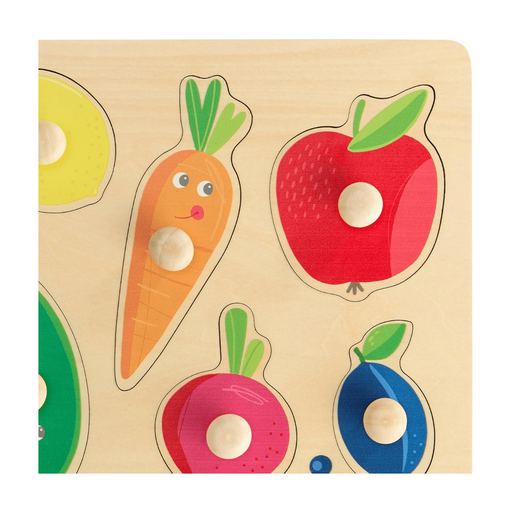
Why this product fits the profile: This first wooden puzzle is designed for children from 12 months according to the manufacturer, and uses large handles along with simple shapes and colours.
The low complexity prevents a high piece count from making the start too difficult. The age recommendation and warnings should still be followed.
Solid wood, large wooden knobs and motifs featuring fruit and colours.
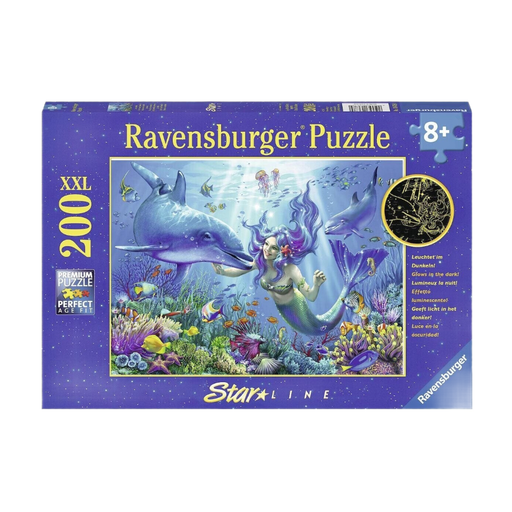
Why this product fits the profile: This 200-piece XXL puzzle is designed for children from age 8 according to the product details, and has a finished size of 49.5 × 36.2 cm.
The XXL pieces are matched to the age group. The glow effect is described as an additional feature and, according to the details, requires no batteries.
200 cardboard pieces, an underwater motif and glow-in-the-dark details in the finished picture.
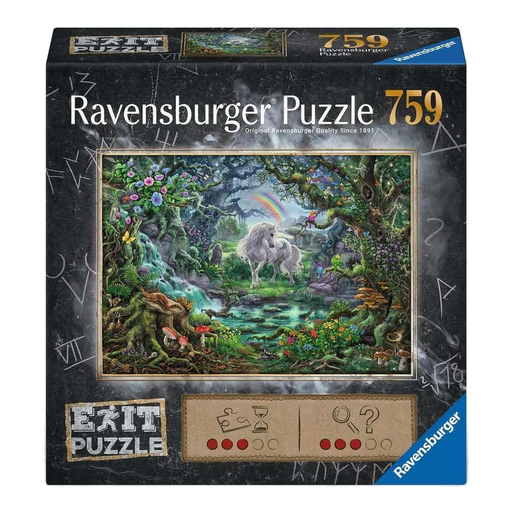
Why this product fits the profile: This 759-piece puzzle is recommended for adults and children aged 12 and over, and combines assembly with a final puzzle challenge.
The product description clearly states the age, piece count and gameplay. Buyers here expect not a standard puzzle, but a riddle game with additional materials.
For individuals or groups, with hidden clues and a final puzzle.
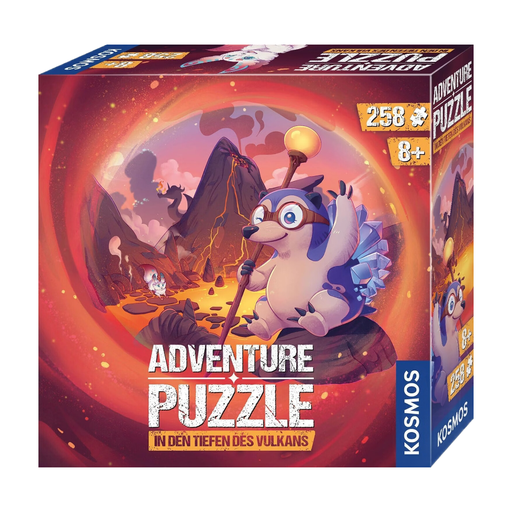
Why this product fits the profile: This interactive adventure puzzle has 258 pieces, is recommended for ages 8 and over, and can be played by one to three people according to the description.
The story is discovered in sections. This means the extra feature is clearly separate from the classic assembly and, according to the details, is also suitable for reading aloud.
258 pieces, an adventure story and optional use of the Kosmos explanation app.
We've put together a complete, regularly updated list of products that fully meet these strict selection criteria and the safety regulations in force in the EU.
That depends on experience and the motif. For beginners, frame puzzles with 24 to 40 pieces can be useful, as the base board and outlines provide guidance. For children with puzzle experience, a higher piece count may also work. The manufacturer's age recommendation should remain the key guide.
With dry storage and careful handling, cardboard puzzles can be used many times. Moisture, creasing and incomplete storage shorten their lifespan. A sealable box or the original packaging protects the pieces. Wooden puzzles should be checked regularly for splinters, damage and loose knobs.
Not necessarily. With the Ravensburger underwater puzzle mentioned, the glow effect is described as battery-free. The finished puzzle is first exposed to light and then viewed in a darker room. The exact way it works should be checked in the product details before you buy.