
Lieferung heute & morgen

Qualitätsgarantie

Willkommens-Angebote freischalten: KOSTENLOSE Lieferung | Bis zu 80 % RABATT | Kostenlose 30-Tage-JoyPlus-Testphase
App herunterladen
A puzzle for children aged 4+ should be enjoyable, age-appropriate and easy to use in everyday life. Children develop at different rates at this stage: some can already concentrate on puzzles with 48 pieces, while others prefer to start with a frame puzzle and a clear guide. So for parents, grandparents, relatives and nurseries, the picture is not the only thing to consider.
“40 pieces” or “48 pieces” might seem to indicate a clear difficulty level. In reality, piece size, the layout of the picture, colour contrast and the guide all affect how challenging a puzzle is. A 40-piece puzzle with large areas of similar colours can be trickier than a well-defined 48-piece puzzle.
Popular characters, such as those in a Paw Patrol puzzle or Disney Frozen puzzle, can help keep children interested. However, without a base or with very small pieces, putting the puzzle together on a busy table can be difficult. A frame puzzle for children provides a fixed guide.
The “age 4+” label is a guide from the manufacturer, and does not replace an assessment of a child’s individual abilities. Small pieces can also pose a choking risk to younger children. Products like these should not be used by children under three. Younger four-year-olds may benefit from adult supervision.
For beginners, clearly recognisable pictures with around 35 to 40 pieces and a firm base are often a good choice. A 48-piece puzzle for children offers more combinations and may suit children who have already gained some experience. If a set includes several puzzles, you can choose the difficulty level to suit your child.
Also check the completed puzzle’s dimensions. At around 24 × 32 cm, it takes up less space than a large-format game. Easy-to-manage storage is important in nurseries and other educational settings, too.
A frame puzzle for children has a printed base or firm border. This can make it easier to get started, as it helps children work out where each piece belongs. For classic puzzles without a frame, the picture on the packaging can be helpful. Some sets also include posters with the cut lines marked.
Puzzle pieces are usually made from printed cardboard. Check whether the manufacturer provides information about the materials, recommended age and safety warnings. The products featured here include details such as a matt finish, linen-textured surface or precision-cut pieces. These features can affect how easy the picture is to see and the pieces are to assemble, but they are no substitute for checking the actual age recommendation.
Children’s puzzles should be stored in a dry place and checked regularly for damaged or missing pieces. The same applies to games with dice or small cards: they are not suitable for children under three, and younger children should ideally use them under supervision.
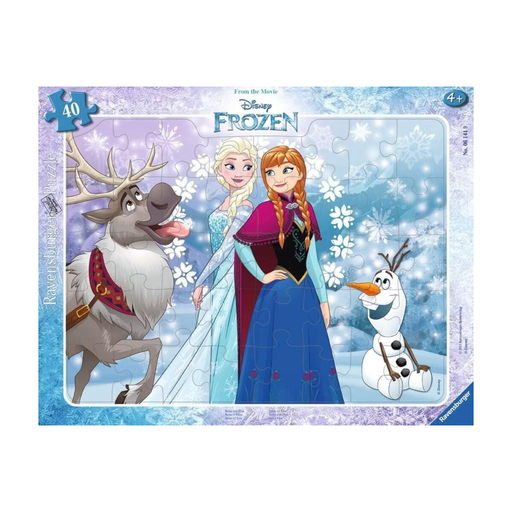
Why this product suits this profile: Designed for children aged 4+, it combines 40 pieces with a printed base. This makes it a manageable introduction to puzzles for children aged 4 and over.
The base keeps the picture in place while the puzzle is being assembled. The piece count is clearly stated, and the age recommendation is 4+.
40 pieces, a frame base and a size of around 37,3 × 28,8 cm.
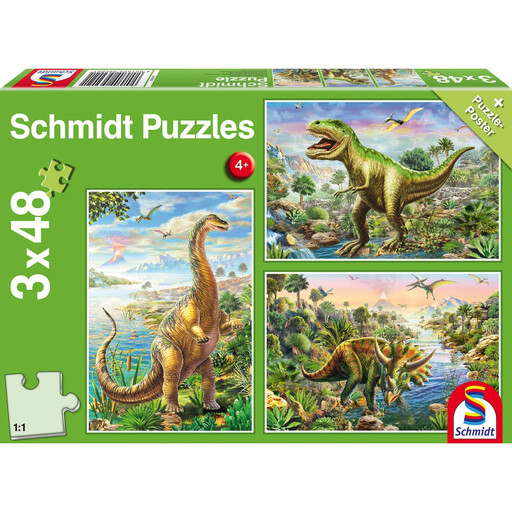
Why this product suits this profile: The set contains three individual dinosaur-themed pictures. According to the manufacturer, the puzzle pieces have precision-cut edges and a matt, linen-textured finish. Posters with cut lines are also included.
The piece count is specified for each picture: three puzzles with 48 pieces each. The posters offer beginners an extra guide if needed.
Three dinosaur-themed pictures, 48 pieces each, recommended for ages 4+, no batteries required.
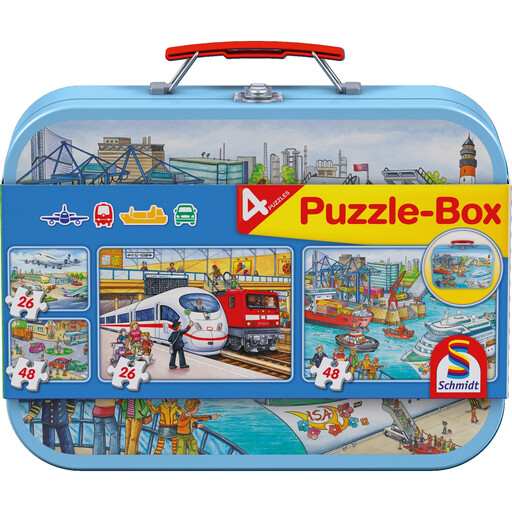
Why this product suits this profile: The metal box contains four pictures with different piece counts. It’s a good option for families, siblings or settings that need puzzles at several difficulty levels.
Rather than offering just one piece count, the box contains two 26-piece puzzles and two 48-piece puzzles. The metal case helps keep loose packaging to a minimum.
Four vehicle-themed pictures, metal storage case, 2 × 26 and 2 × 48 pieces, age recommendation 4+.
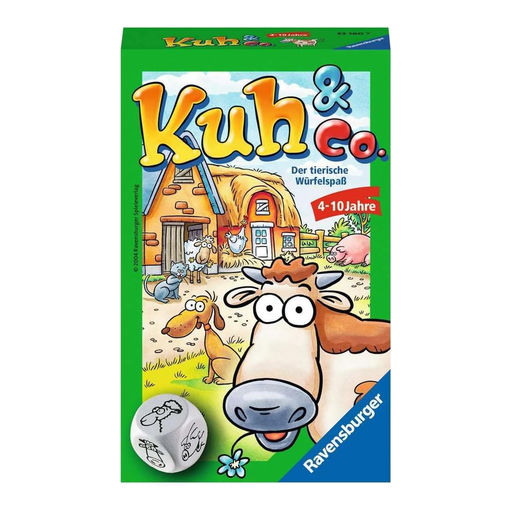
Why this product suits this profile: This dice and card game is designed for two to six players. It’s an alternative to a traditional children’s puzzle when playing together is the priority.
The player count and age recommendation of 4+ are clearly stated. No batteries are needed, and the game is compact enough to take on trips.
For 2 to 6 players, no batteries required, card and dice gameplay, suitable for ages 4+.
We’ve put together a complete, regularly updated list of products that meet these strict selection criteria and fully comply with the safety regulations in force in the EU.
There’s no set number. For beginners, 35 to 40 pieces with a frame or base can be a good choice. Children with some puzzle experience can often manage 48 pieces too. The picture, piece size and option to use a guide are also important.
Its lifespan depends on the thickness of the cardboard, how it’s stored and how it’s handled. Keeping it dry, storing it in its complete packaging and using it on a flat surface all help protect the pieces. If it’s used frequently in a nursery, check regularly for bent or missing pieces and signs of moisture.
Either can make a good puzzle gift for a child. A puzzle is a good fit for children who enjoy playing independently in quiet spells. A family game for ages 4+ is a good choice when several people want to play together. Consider the theme, age recommendation, player count and storage options together when choosing.