
Lieferung heute & morgen

Qualitätsgarantie

Willkommens-Angebote freischalten: KOSTENLOSE Lieferung | Bis zu 80 % RABATT | Kostenlose 30-Tage-JoyPlus-Testphase
App herunterladen
The right children’s puzzle should be neither overwhelming nor boring after just a few sessions. However, colourful pictures and big promises do not automatically make for a good buying decision. The key factors are the recommended age, piece size, material and how the puzzle will actually be used.
A 24-piece puzzle is not automatically more difficult than a 15-piece puzzle. A picture with clearly defined areas of colour is easier to assemble than an image with lots of similar details. A frame with outline markings can also make it much easier to get started.
For children aged 2 and over, large pieces that are easy to handle and simple pictures are usually the more sensible choice. With a puzzle for ages 3 and up, a frame, base and clearly recognisable themed pictures can help children match the pieces. Children aged 4 and over can often manage 24 to 40 pieces or several small puzzle pictures, provided this matches the manufacturer’s recommendation.
Small puzzle pieces can pose a choking hazard. The age recommendation is therefore not merely a guide to the level of difficulty. A product marked “not suitable for children under 3 years” should not be given to younger children, even if they can already handle similar toys.
With a puzzle for ages 3 and up and a puzzle for ages 4 and up, parents should also check whether the pieces must be used under supervision. The packaging and product page contain the relevant safety warnings.
Puzzle pieces made from thin card are more likely to bend and lose their precise fit. For younger children, extra-thick cardboard pieces or a sturdy frame are practical features. Sets with several pictures should also come with a box or container to prevent the pieces from getting mixed up.
Start by following the official age recommendation, and only then consider the number of pieces:
A learning puzzle for children can introduce shapes, colours, picture matching and careful observation. This is a playful activity, but it is not a substitute for targeted educational or therapeutic support.
A frame puzzle for children provides a defined boundary and can make the position of each piece easier to see. Especially with a child’s first puzzles, a printed base reduces the potential for frustration. Pay attention to the actual dimensions: a larger format requires more free space and is less suitable for the car or holidays.
Cardboard and paper puzzles should be stored in a dry place and, when necessary, cleaned carefully with a dry cloth. Moisture can warp the surface. You should also check:
The following recommendations categorise specific products according to typical use cases. The information is based on the respective product descriptions.
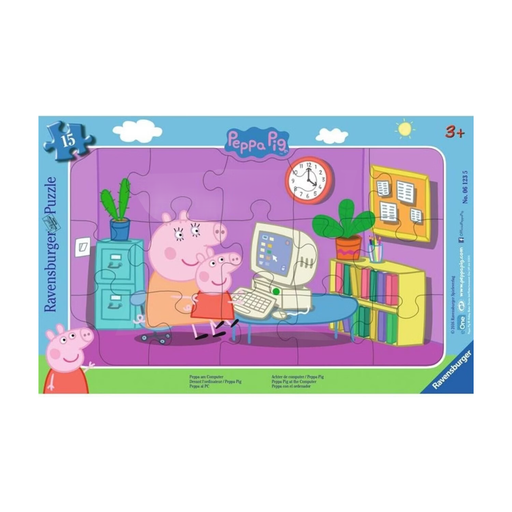
Why this product fits the profile: According to the product description, this 15-piece puzzle with a Peppa Pig picture is suitable for children aged 3 and over and features a frame with outline markings.
The limited number of pieces and predefined frame shape make the selection more manageable than with a loose puzzle without a base.
15 pieces, Peppa Pig picture, frame puzzle and extra-thick material according to the product details.
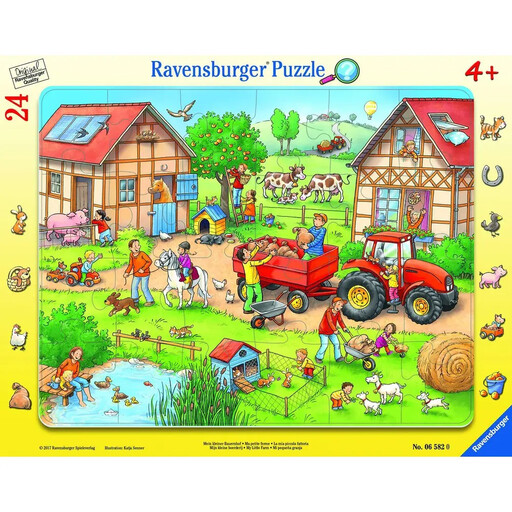
Why this product fits the profile: This 24-piece frame puzzle for ages 4 and up combines a guided base with an additional seek-and-find game based on a farm picture.
The outlines on the base provide guidance, while the seek-and-find task offers an extra activity once the picture is complete.
24 pieces, frame with visual guidance, seek-and-find game and dry cleaning according to the product details.
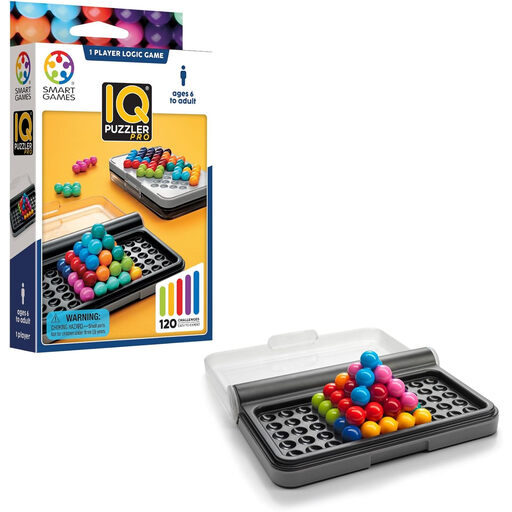
Why this product fits the profile: According to the product description, this compact one-player logic game is suitable for ages 6 and up and offers 120 challenges in several game modes.
Instead of simply repeating one fixed picture template, it offers different tasks and levels of difficulty.
120 challenges, 2D and 3D modes, single-player gameplay and a compact format as a travel game for children.
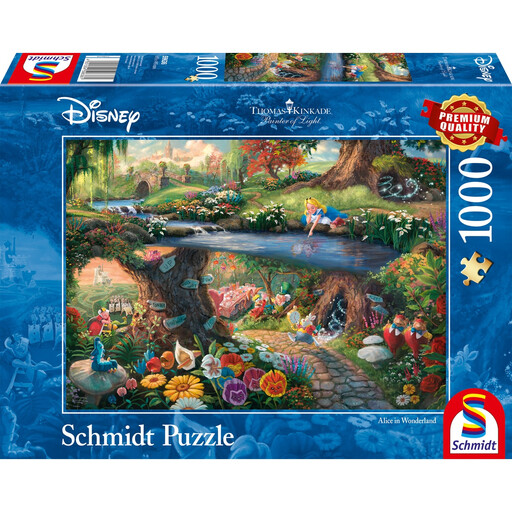
Why this product fits the profile: According to the product details, the detailed picture is intended for people aged 12 and over and is aimed at users who enjoy longer puzzle projects.
The high number of pieces makes the level of challenge clear. According to the product description, the structured, matt surface is designed to reduce reflections.
1000 pieces, linen texture, matt surface and a Disney picture from the Thomas Kinkade Studios collection.
For children who like construction vehicles, a construction-site puzzle featuring clearly recognisable vehicles is a good choice. An animal puzzle can encourage conversation and is often easy to match by colour and shape. For children whose interests change frequently, sets with several pictures, such as vehicle puzzles with 26 and 48 pieces, are a flexible option.
For children aged 5 and over, a co-operative puzzle game such as “EXIT – The Game Kids: Monster Puzzle Fun” may be an interesting choice. It is designed for 1 to 4 players and combines cards, clues and shared tasks. For longer journeys, a small logic game for children that does not require batteries is often more practical than a large cardboard puzzle.
We have put together a complete, regularly updated list of products that fully meet these strict selection criteria and the safety regulations applicable in the EU.
For a puzzle for ages 3 and up, 12 to 15 pieces with large, easy-to-handle elements are a natural starting point. A frame with outline markings can make matching easier. The manufacturer’s age recommendation and safety information remain the most important factors.
Yes, a frame can define the play area and provide guidance through its outlines. This is particularly helpful with a child’s first puzzles. Even so, check that the format fits on the intended table and that the pieces are sturdy enough for the child to handle.
Compact games with their own storage are a practical choice for travelling. SmartGames IQ Mini and IQ-Puzzler PRO do not require batteries and are designed for solo play. For traditional cardboard puzzles, a sealable bag or box is recommended to prevent the pieces from getting lost.